There’s a version of this story that writes itself: first-class graduate, 112-hectare integrated farm, a business spanning livestock, oil palm, and agritech. All of that is true of Juwon Akin-Olotu. But that’s not where his story actually starts. It starts on a street in Ondo State, just after secondary school, when a stranger stopped him mid-walk and asked a question he couldn’t shake: Do you know who you are? Juwon Akin-Olotu, a self-described consumer of books and ideas who’d spent his teenage years torn between medicine, law, and everything in between, didn’t have an answer. So he went looking for one, and what he found is what eventually put him on a farm.
That’s the version of Juwon Akin-Olotu we sat down with, founder of Forthwith Global Limited, co-founder of agritech startup CodeGreen Africa, and a man who now introduces himself, before anything else, as a farmer. In this conversation, he explains why he thinks “follow your passion” is bad advice, why Nigeria’s biggest agricultural problem isn’t land or labour but knowledge, and why he believes young people should stop waiting for “the future” and start acting now.
Tell us about yourself, your background, and anything else you think we should know about you.
I’m Akin-Olotu Juwon. I’m from Ondo State, Nigeria, and I grew up here for most of my life. I studied agricultural science, first at Ladoke Akintola University of Technology (LAUTECH) in Ogbomosho, though with the strikes, it was chaotic, and after three years there, I moved to Afe Babalola University, where I finished my degree. It was an amazing experience.
I’m also the son of a farmer, but growing up, I was genuinely torn between a lot of things. I love reading, I love consuming information, and at different points I wanted to be a doctor, a lawyer, you name it. So in secondary school, I hedged my bets and took both science and social science classes, planning to decide later.
But for me, agriculture isn’t just something I’m passionate about; I believe it’s something I was mandated to do. I was sharing this story recently at a speaking engagement: right after secondary school, I was walking down the street when a stranger struck up a conversation with me, trying to invite me to his fellowship. Then he asked, “Do you know who you are?” I said sure and gave my name. He said no, that’s not what he meant. That question stayed with me.
I’m a Christian, and everything I do is rooted in that. So I prayed and studied the Word, and I was drawn to the story of Abraham, Isaac, and Jacob, and how Esau chose to be a hunter instead of a shepherd like the rest of them, an agriculturalist. One phrase stuck with me: your father’s son. That was it. That’s what started my journey.
I was also lucky to build relationships early on. My father was the first Commodity Chairman for the Agricultural Institution in Ondo State, so I met farmers and saw what they were actually doing; unlike the rigid curriculum we were taught in school, “the poor person suffering under the sun.” There is truth in that, but it’s not the whole story. Seeing that difference made my resolve bigger. That’s pretty much how I got started, reading, researching, seeing the problems in the space, and trying to find ways to solve them.
So, was that encounter on the road a defining moment for you?
Yes, absolutely.
You graduated with a first-class degree in a field many students treat as a last resort. Given that agriculture is often seen as a fallback for those who miss out on medicine or nursing, what drove you to excel, and how has that achievement influenced your career?
Honestly, my driving force was my dad; that’s the truth. It was what he always wanted for his children. My siblings came close, but not close enough. I’m the last child, so I guess I was his last opportunity for that to happen.
But more importantly, when I moved to Afe Babalola, I met people who chose agriculture; they weren’t forced into it. There weren’t many of us, but the competition was intense. It was a healthy rivalry; we pushed each other. In a lot of institutions, if you fail elsewhere, you get transferred into the agric faculty. For us, it was the opposite; people who weren’t performing well enough had to leave the department. That’s how serious it was.
I’ll also say this: if I’d stayed at LAUTECH, I might not have graduated with a first-class, not because the environment there was less academically rigorous, but because Afe Babalola was simply more suited to me. I could access lectures and resources easily. It was a lot different from sitting in a class of 1,500 students, waking up at 5 a.m. just to get a seat, sometimes unable to even hear the lecturer because the sound system wasn’t working. I didn’t have to deal with those issues there.
Funny enough, since I graduated, no one has ever asked me for my degree professionally, but then again, I chose a different path. I went into business, into doing things for myself. The jobs I had were while I was still in school, not after. What I’ve learned is that your utility is what matters in the marketplace. People want to know what you can do for them, and whether it’s worth what they’ll pay you.
That said, being serious about school does translate into the real world; it builds consistency and a hunger for success. I know how proud my parents were when I graduated, and how that pushed me to want to do better. I’m also a competitive person by nature. When I see what others are doing, I don’t want to copy them, but I want to add my own twist and make it better. I think academic seriousness builds that competitive edge, and you need that in the marketplace. And for young people still in school, seeing your parents happy and proud makes all that stress worth it.
Let’s talk about your business, Forthwith Global Limited. How did it start, and what’s your mission and vision?
Before Forthwith Global Limited, I was in the Netherlands, midway through a program in International Poultry Management and Feed Production at Aeres University of Applied Sciences. After my first degree, everyone was pushing me toward a master’s and a PhD, but I knew I had no interest in academia. I’d already seen the disconnect between what school teaches and what the market actually needs. What you learn in school doesn’t always translate into the real world.
I asked myself: What can I actually do with the knowledge I have? It came down to two things: technical knowledge transfer and the business side. I’d seen people with excellent agronomic practices, great SOPs for livestock or whatever they were doing, who had zero understanding of the business side of things. So I started a business consulting firm focused solely on agribusiness, working with businesses looking to enter markets like Nigeria and Ghana, and with local businesses looking to close that technical and knowledge gap.
We started with dairy, partnering with people in the Netherlands and finding clients in Nigeria. But for me, it couldn’t stop there, because sustainability meant building local capacity. If young people are going to be impactful in this space, we need to upskill them, equip them to build scalable agribusinesses, not just subsistence farming. So we added that training component.
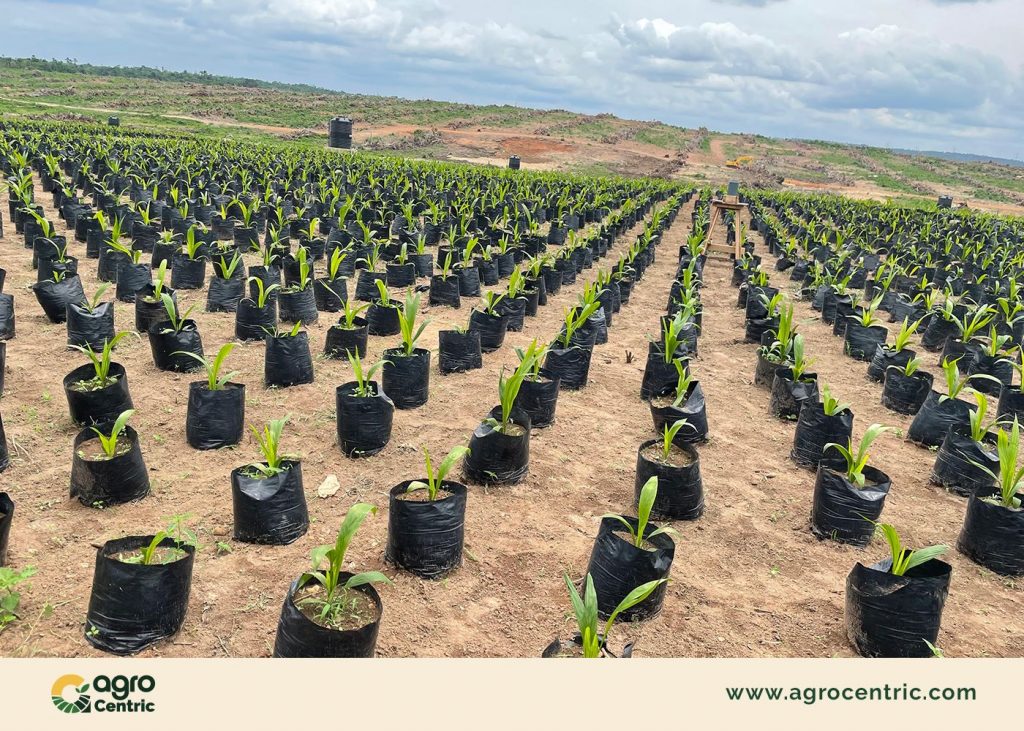
Then I started our own farm, an integrated project in Ore, on 112 hectares. We began with 40 hectares of oil palm, with another 40 to follow. We’re also doing livestock, goats, cattle, dairy, and meat, plus poultry, etc. At the centre of it all is what we call the Forthwith School of Agribusiness. The farm doubles as a training centre and a commercial business, so people can see the principles we teach actually being applied. They can learn the technicalities, producing tomatoes or peppers, raising an oil palm nursery, improving milk yield, alongside the business skills.
I often end what I write with: Africa will feed Africa. The goal is to build a skilled workforce, talented people. Every year, thousands of agriculture graduates leave school with nowhere to go, while businesses spend heavily on training staff because schools aren’t producing job-ready graduates. The curriculum doesn’t cater to that, and it needs to be addressed. Our goal is to train as many people as possible through our curriculum, and hopefully influence Nigeria’s and Africa’s agricultural sector enough to get us to a place where we can feed ourselves.
I’m curious about the name. Is there a story behind “Forthwith”?
While I was in school, I ran a nonprofit called The Now Initiative to galvanise young people. We’re always told we’re “the leaders of the future,” and I found that interesting, because I kept thinking: why the future, why not now?
So when I named the business Forthwith, “forthwith” means immediately, without delay. The idea was: we keep saying young people are the future, but we can be the now. We can get to work immediately and solve these problems. I feel like agriculture, in the continent and in Nigeria specifically, should be treated like a state of emergency, something we prioritise, not something we approach the way we always have. Forthwith is about saying: now is the time to act. Not some time later in the future.
You’ve rejected the ‘future leader’ narrative to “act now”. As a young agripreneur in Nigeria, what unique challenges have you faced, and how have you navigated them?
The first is knowledge. At the university, you study a course, but I quickly realised that if I needed to know more, I had to go find it myself, and there’s no blueprint for that. I went down so many tangents before I found my lane. Bridging that knowledge gap is one of the biggest challenges any young person in this space faces; it comes up constantly when I talk to other young people.
Related to that is accessibility. A lot of young people don’t lack will or capability; they lack access. So much of what opens doors comes down to knowing the right person or having the right conversation. If I hadn’t had access to certain individuals, certain doors wouldn’t have opened for me. I think the industry needs to make itself more accessible to younger people.
Here’s an example: last year, I attended the World Food Forum flagship event in Rome. Nigeria has a WFF chapter, and before that event, I’d been trying for ages to get into that community; it felt almost impossible, and honestly, it still does. People gatekeep in this space, which I think is short-sighted. If you’re thinking long-term, you’d know that the more people who come on board, the more respect a community garners. But that doesn’t seem to be the thinking.
Then there’s financing. The average person might have good ideas and even the knowledge to execute them, but resource constraints are a real problem. There’s no clear path to funding. We have institutions, Bank of Industry, Bank of Agriculture, and others, but there needs to be a structured pathway: bring your ideas, get selected, receive training, then receive funding with close monitoring, and reward the people who perform well with more funding. That structure doesn’t exist right now. The intervention programs we have aren’t well-designed, and no data backs what’s been done; we keep repeating the same approaches without knowing if they’ve actually worked over the past decade or two. Without access to capital, the sector stays subsistent.
We also need policies that protect everyone in the value chain, farmers, middlemen, processors, and consumers. In 2023, I spoke with the Poultry Association of Nigeria, Southwest chapter, about antibiotic resistance and the need for enforceable standards. About 60% of newborn babies in Nigeria are resistant to one or more antibiotics, much of it linked to what we consume, including antibiotics in chicken, because withdrawal periods aren’t followed. If we codified and enforced standards, it would benefit consumers and farmers, and biosecurity measures would reduce reliance on drugs and cut costs. But that conversation didn’t land the way I’d hoped; maybe I didn’t explain it well, or it just wasn’t a priority for them at the time.
On technology, most agritech in Nigeria focuses heavily on supply chain and produce movement, and very little on other parts of the sector, and I think that’s a policy problem too. Look at fintech, Nigeria’s fastest-growing tech sector: it has structure. There’s a roadmap. Innovators know the guidelines they’re working within. Our sector is scattered by comparison; something that works in Ondo State might be incredibly difficult to replicate in Kaduna because there’s no shared framework.
Even our biggest businesses struggle to scale into regional powers because of external shocks. Take rice: prices have dropped recently, but not because farmers produced more, because we’ve allowed heavy importation, at the expense of local farmers who are now making losses. Some farmers who scaled up production expecting high demand are now selling at a loss because prices don’t cover their cost of production. I actually wrote a paper on price parity, looking at the U.S. Steagall era and how price controls protected both farmers and consumers, farmers sold at a profit, consumers bought affordably, and local infrastructure and production developed. There’s a lot we need to codify in Nigeria’s agricultural space.
You mentioned technology. How are you currently integrating it into your business?
I’m also a co-founder of a startup called CodeGreen Africa, where we’re building solutions in traceability and farm management. We’re also developing learning management software for the Forthwith School of Agribusiness, because the plan is to eventually go pan-African, and people should be able to take our courses from anywhere.
Technology is vital, from the simplest things, GPS, precision agriculture, irrigation that gives crops exactly what they need, to resource efficiency in poultry, where monitoring what your animals consume matters a lot. The tools exist. But the biggest barrier to technology adoption here is cost.
My farm sits beside one of the largest oil palm farms in the country, in Ore, a 10,000-hectare operation. I’ve had the chance to visit and talk with the owner and staff several times, and I’ve seen why, even at that scale, there’s still heavy reliance on manual labour; they employ close to 5,000 people. In Nigeria, it’s often more cost-effective to use people than machines, especially for crops like grains, where yield per hectare doesn’t justify the cost of mechanisation, fuel, maintenance, and operators.
Take livestock: if we get 10 litres of milk from an animal here, we’re thrilled. In Europe, they get 80 to 90 litres from one animal. If I import a milking parlour that costs about €200,000 and I’m only getting 10 litres per animal, while my counterpart in Europe gets 80, the economics just don’t add up, especially since what I’d be paid for my milk here is far less than what they’re paid there. We have to find ways to make production and technology compatible.
I’ve seen the drone space grow, too. I actually worked for a drone startup as a student, but I moved away from it because of the scaling challenge: how many farmers can afford to fly a drone on their farm? It’s not impossible, and I’m glad it’s a growing space. I really respect what Femi Adekoya is doing there; it takes tenacity to push into a space with so many obstacles.
Ultimately, technology is what’s missing from our data problem, and data is a huge issue. Government policy, intervention, agricultural finance, insurance, loans, grants, and even investment decisions should all be driven by data. If I want to be investable, my investors need to see data that proves this is a viable business. That’s why we’re building an operating system people can use across the board, including for traceability.
Starting this year, the European Union requires proof that cocoa isn’t grown in forest areas, a traceability requirement. Every cocoa bag entering Europe needs to be geolocated to prove it wasn’t linked to deforestation. If Nigerian cocoa farmers can’t meet that standard, buyers will shift further toward Côte d’Ivoire, Ghana, Costa Rica, and Latin American producers. We need to solve that traceability problem for our cocoa farmers now.
You’re a farmer, a technologist, into livestock, operations, and farm management. When someone meets you for the first time, which role do you lead with?
Honestly, these days I start with “I’m a farmer.” It’s an interesting question for me, because I’ve had to unlearn something. For a while, I internalised the idea that agriculture “isn’t cool.” It wasn’t so much at LAUTECH, but at Afe Babalola, especially, you’d tell people what you studied, and you’d get a certain look. It just wasn’t the cool subject, not engineering, not medicine.
Looking back, that was ridiculous of me to feel that way, but it’s not just my experience; a lot of people carry that same stigma. We need to be proud of this sector; we need the best minds in it. The idea that you’re “not smart enough” for anything else if you studied agriculture is absurd; this is an intelligent industry. If you’re not sharp, you’ll fail, and fail badly. People sometimes tell me, “You’re too smart to be in agric,” and I don’t take that as a compliment. You can’t take an industry with millions of people and box them all into one stereotype. I’m sure there are plenty of bad engineers and negligent doctors out there, too.
Agriculture is important. Everyone complains when food prices rise, about inflation, about how much we import and how that weakens the naira. So now, I lead with “I’m a farmer,” and I’m proud of that statement. As the conversation goes on, we can get into everything else I’m involved in.
What personal or professional milestones stand out in your journey?
My father has a saying: “You must be willing to plant trees whose shade you will not enjoy.” Even as a young person, I hold onto that. There’s also something Charlamagne Tha God, the U.S. radio and media personality, said that resonates with me: whatever you build that only caters to your own needs isn’t big enough. In everything I do, I keep in mind that it’s not just for me; I’m building for as many people as possible. Some of what I want to do still feels a bit scary, but it’s never just about me.
One thing I’m genuinely proud of is completing the Forthwith Innovation Hub in Akure, where we train young people in livestock, cattle, goats, ducks, and poultry, and we’ve trained close to 100 youths so far. The Ore project is another big one; 80 hectares of oil palm is no small feat. At the innovation hub, we also experimented with forage grasses like Brachiaria. Importing 1kg of grass seed from Barenbrug in South Africa costs close to a million naira. We tested planting cuttings instead, and they performed well. That matters because, at our main integrated farm in Ore, we’re starting with 50 cattle, and non-local breeds eat a lot, we’re developing 10 hectares of grasses and forage, which would cost roughly 2 million naira per hectare, or 20 million for 10 hectares, if done the expensive way. Finding a way to cut that cost through cuttings instead of imported seed is exactly the kind of knowledge worth passing on.
Through my nonprofit, I’ve had mentees win grants, some from the Tony Elumelu Foundation, some from international sources. Through AgriImpact Policy Lab, the policy arm of the organisation, people I’ve mentored have gotten into rooms I once applied to and couldn’t get into myself, like the World Food Forum Policy Board. That rejection actually inspired me to start my own policy lab, and now the people who joined me have gone on to achieve what I couldn’t. I’m glad I could build something other people could use to get where they wanted to go.
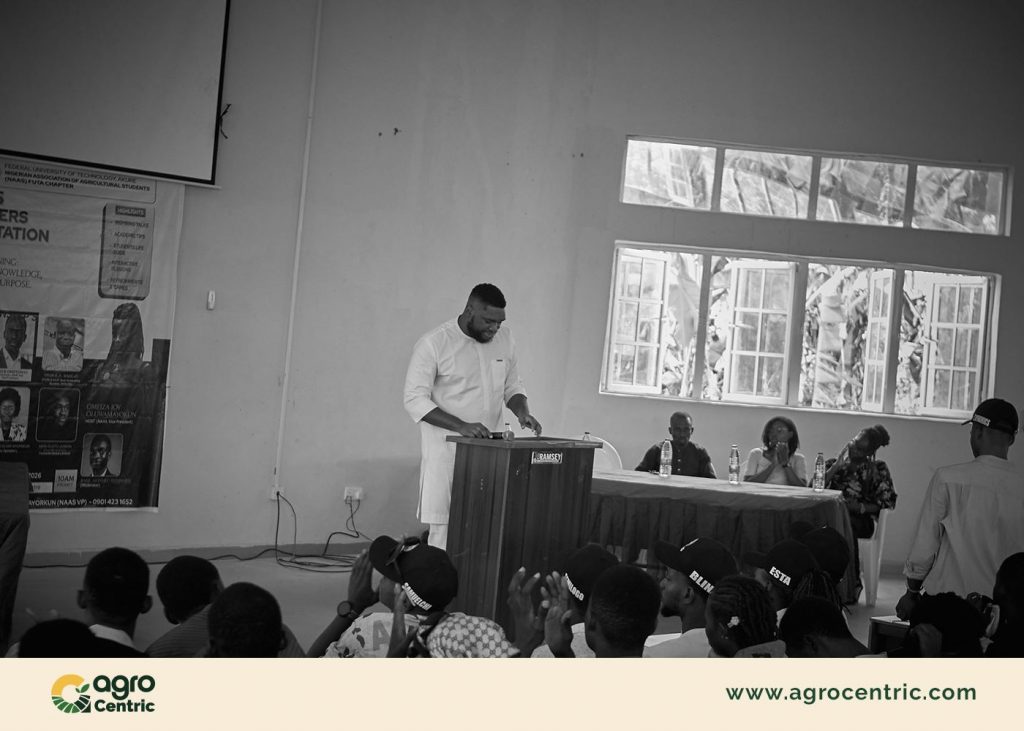
One of the things I’m most excited about right now came out of that same lab. The School of Agricultural Policy (S.O.A.P) is a program under the AgriImpact Policy Lab. We launched Cohort 1 in February with 60 participants from across the continent, and that grew significantly for Cohort 2, which kicked off July 13 with 300 participants selected from over 1,500 applicants across more than 20 countries, with deliberate priority given to women and non-Nigerian applicants.
Behind those numbers is a real curriculum: policy review documents aligned with continental frameworks like CAADP, ECOWAP, AfCFTA, the Malabo Declaration, NAIP, and AU Agenda 2063. For both cohorts, we’ve brought in outstanding African speakers from across the continent, alongside contributors from institutions like Stanford and the University of Edinburgh, among others. That mix has been deliberate: it reflects what SOAP is built to do, which is solve the problem of policy education, giving young Africans access to the same calibre of thinking and instruction that shapes policy conversations globally, without having to leave the continent to get it.
Honestly, I’m more excited about what’s still ahead than what’s already been done. There’s so much more to do.
What advice would you give a young entrepreneur starting in agriculture today?
First: there’s purpose in anger, and there’s purpose in discontent. What keeps me going isn’t passion, it’s the things I’m angry about, the problems I feel discontent toward. A lot of people chase what they’re passionate about, or what they think their talent suits them for, but that’s often not where their real purpose lies. Passion fizzles out. Follow your discontent instead. Once you’ve identified what you’re unhappy about, seek knowledge, pursue it relentlessly. There’s a lot out there you won’t discover until you go looking for it, and often, the things you seek end up seeking you too.
I always say: you can’t dream past what you know. Your dreams are tied to your knowledge; if you don’t know something is possible, you’ll never think to try it. So seek knowledge, seek people, seek networks and partnerships. And then be useful. Certifications are great, a first-class degree is great, but are you a solution bringer? Are you useful? Value follows utility. When people know you’re capable, money follows one way or another. Don’t chase money first; build capacity, and the rest follows.
Juwon Akin-Olotu’s story is a reminder that the future of Nigerian agriculture isn’t something to wait for; it’s something being built right now. Through Forthwith Global Limited, he’s betting that knowledge, not just land or capital, is what will finally let Africa feed itself. Want to follow his work more closely? Connect with Juwon Akin-Olotu and Forthwith Global Limited to see how the Ore farm, the Forthwith School of Agribusiness, and CodeGreen Africa are progressing.