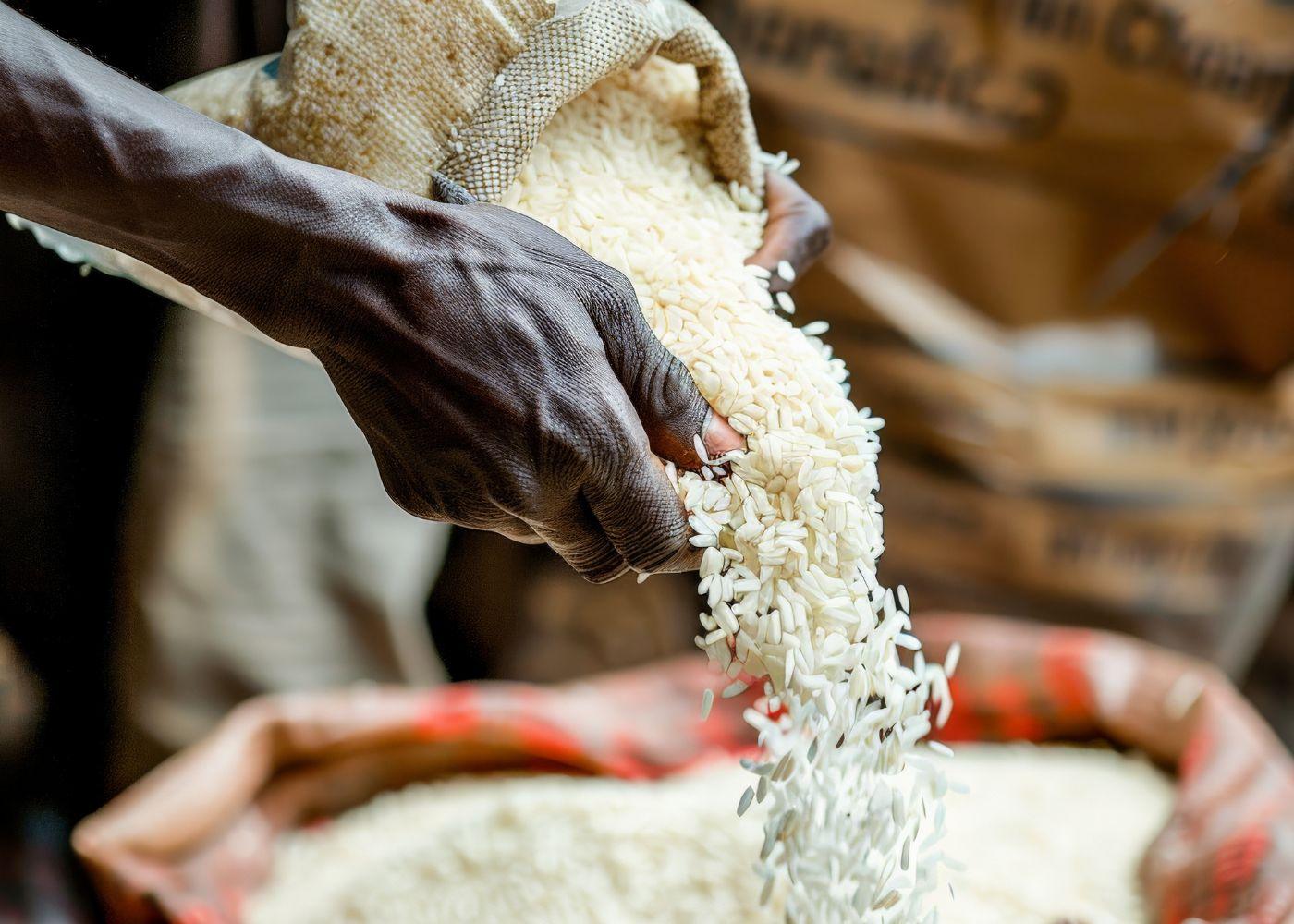
The African rice value chain stands at a turning point. Driven by relentless demographic pressure, rapid urbanisation, and shifting dietary preferences, the continent’s rice market is projected to expand by a significant $5 billion by 2030, maintaining a compound annual growth rate (CAGR) of 4%. Rice, as a convenient and stable food source, has cemented its place as a pillar of regional food security, particularly in West Africa, where demand continues to surge.
Despite vast agricultural potential, the region’s profitability is fundamentally constrained by persistent reliance on external supply. In key consuming nations like Mali, 70% of demand is covered by imports, straining national economies and necessitating strategic intervention to strengthen local systems. This dependency has driven a focused effort by development finance institutions and regional bodies to stimulate import substitution and fortify regional resilience.
The critical determination for profitability in this environment is that African producers cannot win solely on volume or simple cost competition against heavily subsidised global exporters. To secure margins, domestic profitability must be structurally insulated from low international prices. The investment must target systemic bottlenecks, Post-Harvest Loss (PHL) and inconsistent quality, to allow local rice to justify a sustainable premium price point, thereby escaping the volatility of the global commodities market.
Leveraging the Policy Momentum (2024-2026)
The African rice value chain is currently bolstered by an unprecedented convergence of regional and national policy initiatives designed to de-risk investment and accelerate modernisation. Investors now have the strategic opportunity to align their capital deployment with these mandated funding streams.
At the regional level, economic cooperation is transforming into tangible financial commitments. The Economic Community of West African States (ECOWAS) and the African Development Bank (AfDB) signed a Protocol of Agreement allocating an $11.78 million grant to finance the Regional Resilient Rice Value Chains Development Program in West Africa (REWARD-ECOWAS).
Furthermore, the African Continental Free Trade Area (AfCFTA), operational since 2021, is intensifying efforts to dismantle trade barriers and foster regional agricultural value chains. The United Nations Economic Commission for Africa (ECA) is actively facilitating pilot projects, such as a mid-2025 study focused on cross-border cocoa and rice value chains between Côte d’Ivoire and Ghana. This work supports the creation of frameworks like the proposed Common Agro-Industrial Park (CAAP), which will boost agro-processing capacity and reduce post-harvest losses through formalised regional logistics and infrastructure sharing. The AfCFTA framework thus provides a strategic mechanism for achieving economies of scale beyond national boundaries.
Nigeria’s Public Investment Portfolio
In Nigeria, the largest rice producer and consumer in the region, massive public sector funds are being deployed to catalyse private investment. The Federal Government unveiled a substantial $3.14 billion agricultural investment portfolio under the FAO’s Hand-in-Hand Initiative. This portfolio, which targets key staples, including rice, comprises $1.75 billion in public funding and $1.39 billion in required private sector investment. The strategy is designed to benefit over 4.1 million Nigerians and deliver strong financial returns.
Investment analysis within the portfolio indicates an impressive average Internal Rate of Return (IRR) of 14.2%. This strong return projection is coupled with a clear government mandate to facilitate high-impact projects.
The Minister of Agriculture and Food Security, Abubakar Kyari, articulated the readiness of the nation for focused agribusiness investments: “With vast farmland, irrigation potential, a market of 230m+, and clear incentives, Nigeria is ready for bankable agribusiness investments that will secure food, jobs and growth.”
Complementing the federal push, state governments are making specific, targeted investments. Jigawa State, for example, approved N7 billion (approximately $8.75 million) in 2025 for the dry season rice cultivation program, specifically financing agro-inputs and the construction of 4,600 tube-wells to enhance water access and agricultural productivity.
The convergence of the $11.78 million regional grant and Nigeria’s multi-billion dollar portfolio demonstrates that public sector spending is strategically aimed at de-risking the infrastructure and input supply sides of the value chain. Private investors are thus presented with a critical opportunity to secure Public-Private Partnerships (PPPs) that leverage these subsidised funds, minimising initial capital expenditure (CapEx) for critical infrastructure such as irrigation and agro-industrial parks.
The Supply Chain Imperative: Quality and Loss Mitigation
Operational profitability in the African rice sector is fundamentally limited by high post-harvest losses (PHL) and an inherent quality deficit compared to imported grains. Addressing these supply chain inefficiencies is the most direct path to improving processing margins.
PHL remains the most pervasive profit leak, reducing the economic worth and nutritional content of crops. Significant losses occur at critical stages:
Drying: Moisture content must be reduced to less than 14% to prevent spoilage and fungal damage.
Storage: Long-term preservation requires a moisture content below 9%, with losses below 13% for typical seed storage, fungal, insect, and rat damage.
Milling: Poor equipment leads to grain cracking and breakage, impacting up to 14% of the yield.
These losses are not merely a volume issue; they directly compromise the final product’s marketability.
Adoption of Climate-Smart Genetics
The single greatest leverage point for smallholder productivity is the accelerated adoption of high-yielding, resilient seed varieties. New Rice for Africa (NERICA) varieties demonstrate transformative potential. While regional averages often hover near 1 tonne per hectare, NERICA varieties can increase yield up to 2.5 tonnes per hectare, and even reach 5 tonnes per hectare with optimised fertiliser use.
The benefits of NERICA extend beyond volume; these hybrids resist pests, tolerate drought and infertile soils better than Asian varieties, and are taller, simplifying harvesting. They also offer nutritional advantages, containing 2% more protein than their parent lines. Establishing robust national and regional seed networks is essential to realise this potential, ensuring access to certified seeds and integrating digital traceability platforms to maintain quality and provenance. This immediate boost in output per hectare effectively lowers the cost of production per ton, providing a critical buffer against global price fluctuations.
Agritech for Precision Input Management
Climate change introduces significant unpredictability; studies show that for every one degree Celsius rise in temperature, yields can decline by more than 8%. Transformative agricultural practices are necessary, such as Alternate Wetting and Drying (AWD), intermittently draining fields rather than continuous flooding, which has proven to save farmers money through reduced input consumption.
Agritech applications are central to implementing these practices efficiently. By offering farmers and large-scale operators real-time, localised data, including insights into best farming practices and market rates for essential inputs like fertilisers and seeds, these applications enable judicious, cost-effective decision-making. This deployment of precision farming techniques directly enhances cost efficiency and minimises resource wastage, tackling the fundamental problem of high production costs that plagued Nigerian output in 2024/2025. Success relies on innovators offering user-friendly solutions that simplify the search, download, and utilisation of digital rice apps for lagging rural communities.
The Value in By-products: Circular Economy Ventures
Profitability can be significantly enhanced by expanding the revenue model beyond the milled grain. Current operations often treat rice by-products (husk and straw) as operational waste, incurring disposal costs. However, these streams hold immense value. For every tonne of paddy rice processed, approximately 40% constitutes by-products.
These materials can be monetised into higher-value industrial or consumer goods. For instance, rice husk can be converted into micronised biomass silica boards used for furniture manufacturing, or the straw can be used for other industrial purposes. Establishing a secondary processing unit focused on converting these by-products transforms a liability into a diversified income stream, significantly improving the net profitability of the overall milling complex and multiplying job creation in the agricultural ecosystem.
Developing Premium, Traceable, Branded Rice Products
Moving beyond bulk commodity trading into the realm of branded retail is essential for capturing sustainable premium value. Strategies must leverage the inherent preference for the taste profile of local African varieties.
This pathway involves establishing robust branding, utilising quality assurance mechanisms from the modernised processing chain, and creating streamlined distribution channels. By marketing rice as a speciality, traceable product, perhaps with regional or organic certification, investors can establish loyal customer bases and command a higher price point, insulating the product from direct competition with the cheapest bulk imports from Asia.
Outlook (2026-2030)
The African rice value chain is undergoing a critical transformation, shifting from a primarily volume-driven, import-substituting sector to one focused on competitive, quality-driven efficiency. The market context for 2026 demands a sophisticated approach: domestic producers must recognise that global surpluses will perpetually challenge their margins if they compete solely on price.
Profitability, therefore, is not a matter of simply increasing acreage; it is fundamentally dependent on mastering the midstream and upstream segments. Success lies in synthesising technology, finance, and policy alignment. This means securing investments that leverage public capital to deploy climate-smart genetics (NERICA) and modern processing infrastructure (Automated Mills). These interventions are non-negotiable prerequisites for achieving the quality and cost efficiency needed to sustain margins in the face of intense international price competition.
The next five years will see market consolidation around players who successfully integrate these seven pathways, from high-yield seed delivery to impeccable quality control and brand creation.