Across Africa, conversations about agriculture often focus on production. Yet for Sherifatu Yakubu, the bigger opportunity lies in transforming indigenous crops into products that solve real problems, from nutrition and food security to job creation and export growth.
As the founder of Sheridan Foods in Tamale, Ghana, Sherifatu has built a research-driven agribusiness that is redefining how traditional ingredients are used. Her innovations include a roasted locust bean beverage, nutritious food products for children, and ongoing research into sustainable ways to maximise the value of local agricultural resources.
In this exclusive interview, she shares how losing her job during the COVID-19 pandemic became the catalyst for entrepreneurship, why African businesses must invest more in value addition, and how partnerships, innovation and resilience continue to shape Sheridan Foods’ journey toward international markets.
Tell us about yourself and your journey to establishing Sheridan Foods.
I am Sherifatu Yakubu from Tamale in northern Ghana. I am married with three children, and I completed all my education in the Northern Region, including my tertiary education.
Before founding Sheridan Foods, I worked in the development sector and was employed by an international organisation focused on education. The advent of COVID-19 disrupted schools in 2020, many of us were laid off.
That period made me ask myself an important question: What can I do that will not only support my family financially but also help solve a problem in my community and create opportunities for other young people?
Growing up, I helped my mother process and sell agricultural products, particularly dried okra and baobab powder. That experience influenced my decision on a business choice. When I decided to start a business, I wanted to build on what she had done but take it further by creating more value from indigenous products.
Youth unemployment was another issue that weighed heavily on my mind. I wanted my business to become something that could eventually create jobs for others, not just generate income for my own family.
That was how I started with locust beans, most people know locust beans as a condiment for soups and stews but I saw something different. I believed they could be transformed into a beverage.
Imagine drinking locust beans as tea instead of using them only for cooking, that became my first product. I began operating informally in 2020 before officially registering Sheridan Foods in 2022.
One of the biggest turning points came when I joined the Women’s Entrepreneurship and Livelihood Initiative (WELI) by the Africa Skills hub dubbed ‘Suhuyini Food and Beverage Incubator’ in Tamale. The one-year programme completely changed how I understood business, finance, teamwork and growth.
After that, I entered the Access Bank Business Startup Innovation Challenge in 2020. More than 3,000 businesses applied. We went through several rounds of training and masterclasses, with participants being eliminated after each stage. Fortunately, I progressed all the way to the finals, and Sheridan Foods emerged as the second runner-up.
The award included GH¢5,000 in prize money, business support worth more than GH¢150,000, coaching and mentorship valued at over GH¢50,000, and a one-year Oze accounting app business management subscription. I gained a lot, it also boosted tremendous confidence in me and strengthened the foundation of my business.
In 2024, Sheridan Foods again emerged as second runner-up in the UNDP-supported District Innovation Challenge for Agribusinesses. The support enabled us to purchase additional processing equipment and continue expanding our operations.
Although we officially launched in 2022, I still consider Sheridan Foods a young business. We are still growing, learning and improving, but every lesson is preparing us to build something much bigger.
One of the things that immediately stands out about Sheridan Foods is its use of locust beans as a beverage rather than a traditional condiment. Where did that idea come from?
I have always been passionate about finding better ways to use the local resources we already have. Beyond that, I grew up seeing people use locust beans traditionally to help manage conditions like diabetes and high blood pressure. It wasn’t something you could buy as a packaged product on supermarket shelves, it was simply local knowledge that communities had passed down over time.
I began asking myself how I would transform this into a modern product, I took some time to study it and found that it was possible.
The beans go through a different process compared to the condiment, they are roasted much like coffee beans before being ground into powder. When prepared as a beverage, they have a flavour very similar to coffee.
At the time I entered the Access Bank Business Startup Innovation Challenge in 2020, this was the only product Sheridan Foods had. I believe its uniqueness was one of the reasons we reached the finals. It was a completely new way of thinking about a familiar product.
People are also interested because of its perceived health benefits. Traditionally, locust beans have been associated with regulating blood sugar and blood pressure, and many customers are curious about those qualities.
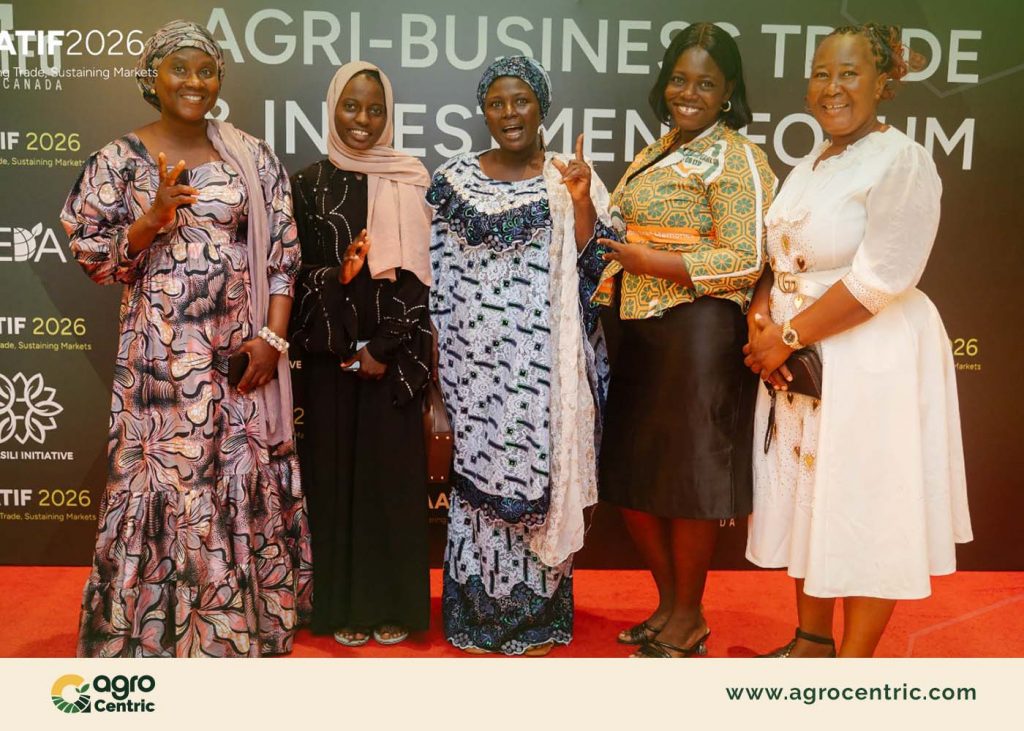
When I attended CAATIF, I brought samples with me. I also shared another idea I’m currently researching, the possibility of using locust beans to produce chocolate.
I’ve already carried out some early experiments, and I’m excited by the potential. I’m continuing to research other innovative uses for this indigenous crop.
Whenever I come in contact with people, I often ask them one question: “Have you ever imagined locust beans in a cup instead of in a pot?”
That question alone changes the conversation.
Many people associate locust beans with their strong smell. Doesn’t that discourage customers?
That is usually the very first concern from our customers, they immediately think about the smell associated with fermented locust beans used as a condiment. But this beverage doesn’t go through the fermentation process. Once people taste it, they are genuinely surprised. Most first-time customers respond by saying, “Wow.” That’s the feedback we receive repeatedly.
Looking back over the past five years, what has been your proudest moment?
I have learnt not to measure success merely only by how much we produce but by the value people find in what we produce. So, my proudest moment is seeing customers come back again and again. Every returning customer I get sends me a signal that they genuinely appreciate what we’re creating.
Every entrepreneur faces challenges, looking back, what were some of the biggest obstacles during your early years?
There have been many challenges and I still face some challenges, one of them has been obtaining certifications. If you want your products on supermarket shelves, or eventually in international markets, you must meet regulatory requirements.
Although we’ve successfully certified three of our products, I would like every product in our portfolio to be certified. The process is often expensive, time-consuming and frustrating.
There are moments when progress feels slow because of regulatory processes beyond your control. But I have learnt sometimes you simply have to acknowledge that the challenge exists, refuse to let it stop you, and keep moving.
Equipment has also been a major hurdle, processing machinery requires significant investment, and as a young business, we haven’t been able to purchase everything we need all at once. Instead, we’ve taken it one step at a time, whenever we secure funding, we buy the next machine we need.
Managing people has been another learning experience.
Marketing has also required patience because building a loyal customer base doesn’t happen overnight.
Perhaps the biggest adjustment was that I entered business without a formal business background. Everything I know, from operations to finance, production and machine handling, I have had to learn along the way.
Thankfully, we’ve received support from partners who have helped us overcome many of these challenges.
What would you say makes Sheridan Foods different from other food processing businesses?
Sheridan Foods was created to solve problems, I didn’t want to process agricultural products the same way they had always been processed. I wanted people to see familiar ingredients differently, that’s why we developed the locust bean beverage.
One thing that stands out about Sheridan Foods is our commitment to solving nutrition challenges. At the moment, we’re developing a product for children under five to help address malnutrition using locally available ingredients. The prototype is called Nutty, it combines groundnuts, groundnut oil, moringa, powdered milk, palm oil and salt to create a nutrient-rich spread.
The product is currently undergoing certification with Ghana’s Food and Drugs Authority, and we hope it will become a locally developed solution to childhood malnutrition.
We’re also working with laboratories to scientifically validate the medicinal properties traditionally associated with locust beans, particularly their role in regulating blood pressure and blood sugar.
Innovation isn’t just about creating new products for Sheridan Foods, it’s about combining scientific research with indigenous knowledge to develop solutions rooted in local resources.
That philosophy also comes from my work outside Sheridan Foods, I lecture at the School of Public Health, and that has strengthened my interest in understanding how food can contribute to better health.
I’m particularly interested in exploring how everyday foods can serve not only as nutrition but also as medicine. In fact, that is the focus of my PhD research which centers around products for children under five and began nearly two years ago.
I’m looking forward to sharing the results once everything is complete.
How do you source your raw materials? Do you work directly with farmers and local communities?
We source all our local ingredients from women farmers in rural communities across northern Ghana. Many of these women have worked tirelessly for years to support their families through agriculture, and we see them as partners rather than simply suppliers.
Some of the women we work with also live with disabilities. Alongside purchasing their produce, we try to find additional ways to support them. One initiative we introduced is a small revolving financial support programme. We started with GH¢500, providing assistance to five women farmers at a time. At the end of the agreed period, the money is returned and passed on to another group of women.
It may seem like a modest initiative, but it represents something much bigger. We also support these women with services such as land preparation and ploughing to improve their farming activities.
Every day, these women work incredibly hard to provide for their families and send their children to school. Supporting them financially is one way, but letting them know that someone recognises and values their efforts is equally important.
That is why we remain committed to growing alongside the communities that make our business possible. I often ask myself, what is a business if, at the end of the day, the people around it do not grow as well?
That belief shapes how we operate at Sheridan Foods.
How has Sheridan Foods evolved since it was established?
We’ve come a very long way, when we started, our production facility consisted of just a single room. I remember when officials from Ghana’s Food and Drugs Authority came to inspect it. They granted us a temporary facility licence because they believed in our potential, but they also made it clear that the space could not serve as a permanent production facility, they gave us two years to upgrade.
After they left, I made a promise to myself, I said, within two years, I will build a proper processing facility and return for a permanent licence. Today, I’m proud to say we achieved that goal.
We now operate from our own permanent production facility, complete with office space, improved production areas and a warehouse that is still being expanded.
Our production process has also changed significantly, in the beginning, everything was done manually, and I worked alone. Today, Sheridan Foods employs six permanent support staff, two interns and an additional temporary staff member during busy production periods.
We’ve also invested in modern processing equipment, some machines were purchased through our own efforts, while others came through partnerships and support programmes that believed in our vision.
Our customer base has expanded as well. We started by selling a single product directly to individual customers. Today, we supply bulk buyers, work with organisations that market our products online and are currently discussing partnerships that will further expand our digital presence.
Although we have not yet carried out direct exports ourselves, some of our partners have already exported Sheridan Foods products internationally.
Production volumes have also grown steadily, we used to process only a few tonnes each month. Our improved equipment has enabled us to increase production significantly.
Our long-term ambition is for Sheridan Foods products to be on shelves beyond Ghana. That is our ultimate destination, and we’re working every day to make it happen.
What products does Sheridan Foods currently offer?
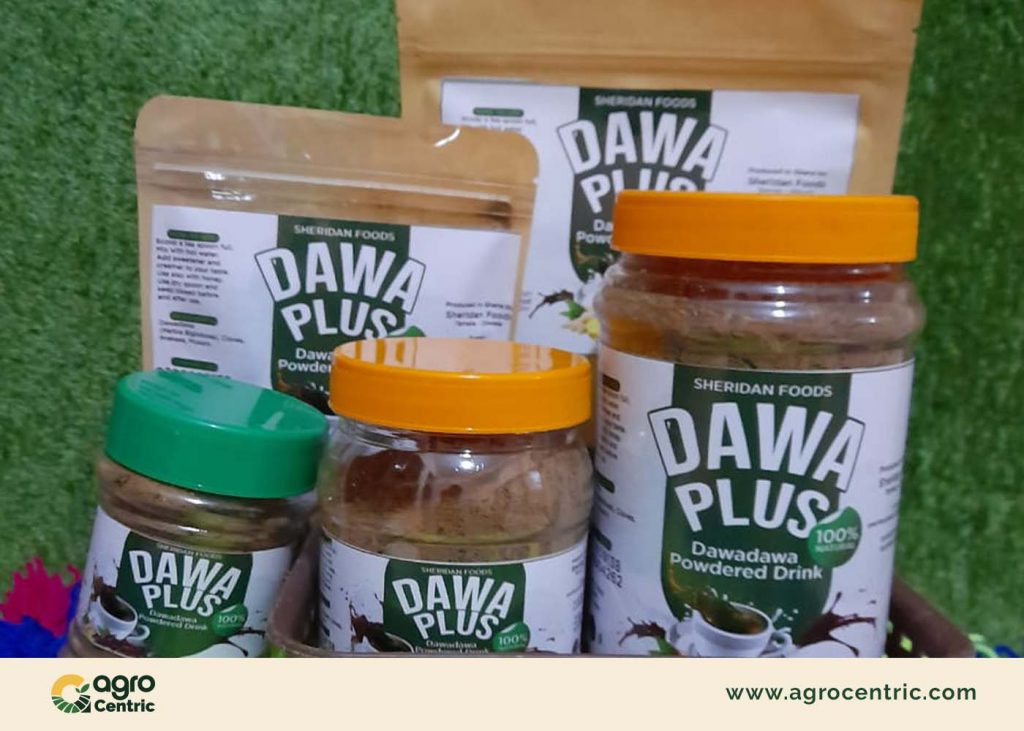
We have a number of products, Dawa Plus is the name of our locust bean beverage product. People often know us because of Dawa Plus, our roasted locust bean beverage, but that’s only one part of what we do.
We also produce both refined and raw shea butter, the refined shea butter is FDA-certified and formulated for cosmetic use, while the raw version is available for more general applications.
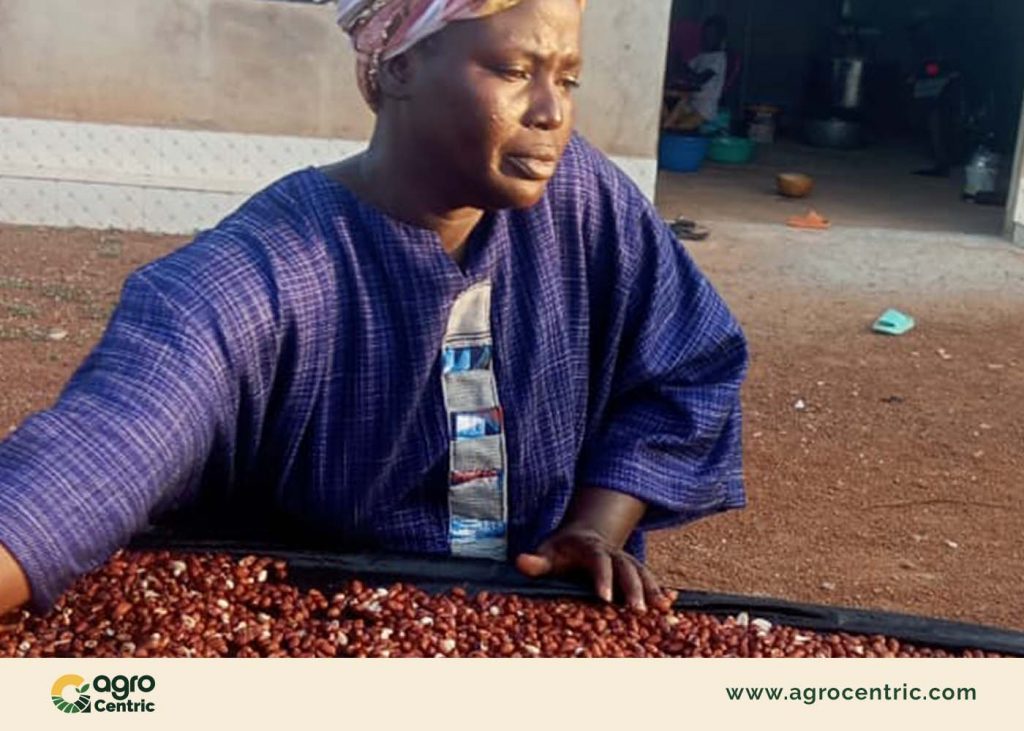
We also produce Groundnut oil, which we market as Sheridan Groundnut Oil, FDA-certified groundnut paste, Kuli Kuli, a traditional groundnut snack, P. Spice, a seasoned groundnut powder designed for kebabs, fried yams, potatoes and other local dishes.
Our newest innovation, Nutty, is still undergoing certification and is not yet available commercially.
Every product is centered around creating more value from the local ingredients.
Before joining the MEDA GROW2 Programme, what stage was Sheridan Foods at, and what were the biggest barriers preventing further growth?
Before joining MEDA GROW2, we had only two processing machines, both dedicated to shea butter production. Everything else was processed externally and it created several challenges.
Depending on the commercial processing facilities limited us, in the sense that, we couldn’t always guarantee the production environment. We had concerns about contamination, quality control and meeting regulatory standards.
In fact, one of our products failed a moisture test because of limitations beyond our control. Regulators advised us to acquire our own processing equipment, but as a young business, the financial investment required was simply beyond our reach at the time.
Production was also slow, sometimes we could only process once a week, and completing a production cycle took much longer than it should have.
Those delays affected everything, from production volumes to product certification. Then MEDA GROW2 came along.
By that point, we had already invested in building our permanent processing facility, and its value qualified as our matching contribution under the programme’s matching grant arrangement.
How did the MEDA GROW2 change Sheridan Foods?
Before joining MEDA GROW2, we were doing our best with very limited resources. Through the programme, we acquired a groundnut polisher, a kneading machine, a packaging machine and a tricycle for transporting both raw materials and finished products.
Those machines solved challenges we had struggled with for years, production became faster, our quality improved, and meeting regulatory standards became much easier.
The support went far beyond equipment; the programme also organised extensive capacity-building sessions covering accounting, record keeping, environmental and social governance (ESG), and business management.
One area that made a particularly significant difference was financial auditing. MEDA GROW2 supported Sheridan Foods in preparing audited financial statements for additional years.
To many people, that may sound like a routine administrative exercise but it changed everything for me.
Today, I’m in discussions with one of the Mastercard Foundation’s partner banks regarding financing to expand Sheridan Foods, and one of the reasons those conversations have been possible is because we now have audited financial records.
Every investor wants evidence that a business is properly managed, and without audited accounts, many opportunities will be out of reach.
So while the equipment strengthened our operations, the audited financial statements strengthened our credibility.
Both have been equally important.
The programme also opened doors beyond Ghana; it exposed us to new markets through exhibitions, business pitches and networking opportunities.
I participated in the IFIF event, local investment forums in Tamale, and eventually CAATIF, where I showcased Sheridan Foods to an even wider audience.
Looking back, I often tell people that MEDA GROW2 accelerated our growth by three years. If we had tried to acquire all that equipment on our own, it would probably have taken us another three years, or even longer.
Instead, we were able to move forward immediately; that is the difference the programme made.
Beyond the equipment and financial support, how did MEDA GROW2 change you as a business owner?
It changed the way I think, especially the lesson from the programme’s ESG training.
Like every food processing business, we generate waste. Before then, we simply viewed it as waste. The training challenged us to think about how the waste can become another product.
We’re experimenting with combining locust bean residue, groundnut husks and other organic materials to produce a soil-enhancing product. Initially, we assumed it could serve as fertilizer but, after engaging the Savannah Agricultural Research Institute, they advised us to first analyse its nutrient composition before deciding exactly how it should be classified and used.
The research is still ongoing, we’ve also partnered with vegetable farmers, who are currently testing the material on their farms to understand its potential.
Without that training, I don’t think we would have looked at our production waste in the same way.
The programme also strengthened our approach to governance by reminding us that managing people involves much more than paying salaries.
Our employees come from families, they have aspirations and responsibilities beyond work. The training encouraged us to think more intentionally about staff welfare, social security and creating a workplace where people feel genuinely supported and valued.
As a woman leading an agribusiness in Ghana, have you faced challenges that are unique to female entrepreneurs?
Yes, one of them is confidence, not my confidence, but other people’s confidence in you. Sometimes people assume that because you’re a woman, your ambitions should be smaller. Every milestone I achieve surprises people.
They don’t always expect us to reach that level, as you interact with others in the industry, you sometimes encounter people who believe you’re aiming too high.
They think you’re trying to do more than your capacity allows; they question your ambitions before they question your abilities, which can be discouraging.
We have policies promoting women’s participation in entrepreneurship, yet there are still moments when people expect women to remain within certain limits. I’ve experienced that.
Many women entrepreneurs have experienced that, but I refuse to let those attitudes define my journey. If someone believes in our vision, we welcome their support.
If they don’t, I simply ask them not to stand in our way. Our responsibility is to remain focused on where we are going. The opinions of others cannot become our destination.
What advice would you give to other women building businesses?
Always focus on the bigger picture because people will always have opinions; some will encourage you, others will try to discourage you.
But remember that everyone has a different perspective, and not everyone will understand the vision you’ve been given.
Challenges are inevitable and must be treated as distractions, you must not allow them to become your focus.
Whenever someone offers encouragement, I hold on to those words. They motivate me to work even harder. When someone brings negativity, I simply let it go. I don’t carry it into tomorrow; I don’t allow it to occupy my mind because obstacles are part of every meaningful journey. In fact, they are what make your story worth telling.
If everything came easily, there would be no story to inspire anyone else.
So don’t be afraid to dream, dream so boldly that even your own dreams surprise you. One day, the same people who doubted you may be among those applauding your success.
What would you like policymakers and development partners to understand about supporting agribusinesses like yours?
Agriculture is often described as the backbone of our economy, and for good reason.
It is one of the biggest opportunities for creating sustainable employment, particularly for young people.
But if we truly want agriculture to drive economic transformation, we have to move beyond simply producing raw materials. We need to invest much more deliberately in manufacturing and value addition.
We cannot continue depending on other people’s technology while expecting to build a competitive industry. Support programmes like MEDA GROW2 demonstrate what becomes possible when businesses have access to the right equipment, technical support and research partnerships. My journey is an example of that.
Another issue that concerns me is local manufacturing; for example, Sheridan Foods produces groundnut oil, yet imported cooking oil sells at a lower price than products made locally.
Consumers generally prefer locally produced groundnut oil, but price influences purchasing decisions, which is concerning. Why is it cheaper to import edible oil than to produce it here?
If we are serious about industrialisation and job creation, then we must consciously invest in local manufacturing. We need policies that strengthen processing, production and innovation, not just trade.
Africa cannot build sustainable economies by remaining exporters of raw materials while importing finished products cheaply.
You were featured during the Women in Trade Spotlight at CAATIF. What did that recognition mean to you?
It meant a great deal; the recognition tells me that people are paying attention to what I do. It tells me that my work has been seen, appreciated and validated.
Being selected for the Women in Trade Spotlight wasn’t simply about standing on a stage. It was confirmation that something we’re doing at Sheridan Foods is making a difference and reminded me that our story has the power to inspire others.
It also came with responsibility, because when people recognise your work, their expectations become even greater; they expect you to keep growing, continue delivering. I see that as a positive challenge; it motivates me to work even harder.
What was your biggest takeaway from CAATIF?
One conversation that stayed with me after the event ended was about looking beyond the financial performance of your business.
Investors often rely on standard indicators like sales, profits, revenue and growth; those are important. But there was another perspective that really resonated with me.
We talked about the stories behind the numbers. If a business is creating jobs, employees can send their children to school because of that business, reducing environmental waste and improving nutrition.
Those outcomes also matter; business performance should be measured holistically. Financial results are important, but so is social impact.
Sometimes the most meaningful achievements cannot be captured in a spreadsheet.
That conversation changed the way I think about investment and business growth.
Did attending CAATIF create new opportunities for Sheridan Foods?
Although I wasn’t scheduled for formal B2B meetings, the networking opportunities proved incredibly valuable.
One of the most exciting outcomes came after I spoke about my research into using locust beans for chocolate production.
One business expressed interest in mentoring me through the research and product development process. They asked me to send product samples so we could begin exploring the idea together.
Other businesses also expressed interest in working with Sheridan Foods, and some conversations are still ongoing.
Where do you see Sheridan Foods fitting into Africa’s growing trade relationships with international markets?
Exporting has always been part of our long-term vision, we’re working to meet every requirement because exporting involves much more than producing a good product.
You have to satisfy packaging standards, regulatory requirements and product specifications in both the country of origin and the destination market.
I’m happy to say we’ve already completed about half of those requirements. MEDA GROW2 helped us overcome many of the most difficult hurdles, particularly around standardisation and regulatory compliance.
Today, I would say we’re about 80 per cent ready for direct exports. Some of our products have already reached international markets indirectly through partners, but our goal is to begin exporting directly ourselves.
We’ve already received enquiries from buyers in the United States and the United Arab Emirates. Canada is another market that now interests us following conversations at CAATIF.
I hope that when Sheridan Foods begins its first direct exports, Canada will be one of the destinations.
What additional support do SMEs need to become export-ready?
Businesses need guidance from experienced organisations that understand certification processes, product registration and international market standards. Beyond compliance, we also need greater international visibility.
Many African businesses are producing excellent products, but buyers cannot purchase what they do not know exists. Creating those connections is just as important as improving production.
What does success look like for Sheridan Foods over the next five years?
Success is not simply about producing more but about creating more value. People should continue choosing our products because they genuinely improve their lives.
At the same time, everyone connected to Sheridan Foods should grow alongside us. If one of our employees can feed their family today, I want them to feed that family even better tomorrow.
If they can send one child to school today, I hope they’ll be able to educate two in the future. Growth should never belong only to the business owner. It should reach employees, suppliers, farming communities and everyone connected to the value chain.
I also want us to continue finding productive uses for materials that would otherwise become waste. If we can transform those into valuable products, then we’re reducing pollution while creating new opportunities.
That is what growth means to me, it should touch every part of the business and every life connected to it.
Finally, what is your biggest dream for Sheridan Foods?
My biggest dream is to build a business that will continue creating impact long after I’m gone. I want Sheridan Foods to outlive me, continue creating jobs, fighting hunger and malnutrition, and I want it to keep developing local solutions to local challenges using the resources we already have.
If people remember Sheridan Foods many years from now, I hope they remember a business that improved lives. That, for me, would be true success.
As Sheridan Foods continues expanding its product portfolio and preparing for direct exports, Sherifatu Yakubu remains focused on one mission: building a business that creates lasting social and economic impact long after her own journey. Follow Sherifatu Yakubu on Facebook to stay updated on their latest innovations, research, partnerships and milestones in African agribusiness.