Some conferences are remembered for the conversations they host, while others are remembered for the partnerships they create. The inaugural Canada–Africa Agri-Business Trade & Investment Forum (CAATIF 2026) set out to achieve both.
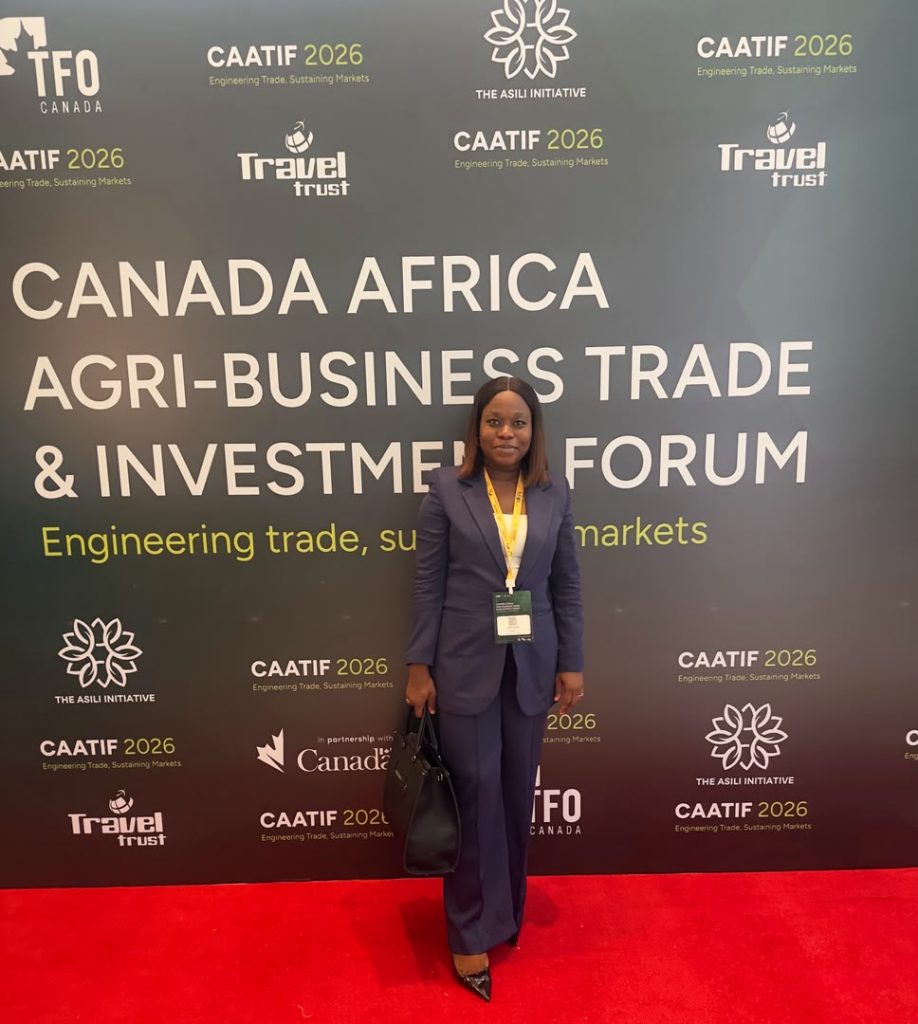
Titilayo Oderemi, our Managing Editor, represented AgroCentric Africa and the TweakCentric Solutions team at CAATIF 2026 in Accra, Ghana.
Convened by MEDA (Mennonite Economic Development Associates) in partnership with Trade Facilitation Office (TFO) Canada and other public and private sector stakeholders, CAATIF 2026 brought together entrepreneurs, policymakers, investors, development organisations and agribusiness leaders in Accra, Ghana, from 29–30 June to engineer the systems, relationships and investment frameworks capable of transforming agricultural trade between Canada and Africa.
Its ambition was evident from the moment delegates gathered under the theme “Engineering Trade. Sustaining Markets.” Over two days, participants moved beyond familiar discussions about Africa’s agricultural potential to focus on a more pressing question:
How do we build commercially viable partnerships that outlast the conference room?
That question shaped every discussion from trade policy and investment to manufacturing, workplace standards, agricultural infrastructure and business matchmaking and culminated in a simple but powerful conclusion.
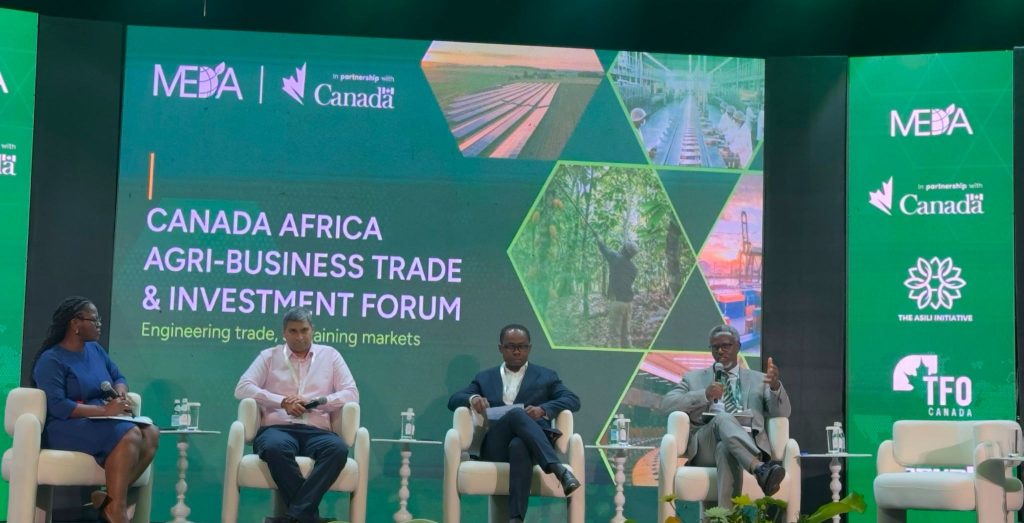
CAATIF was not the destination. It was the beginning.
The beginning of new opportunities and partnerships, just as Derek Cameron, Vice President, Global Programs at MEDA, described during the closing plenary.
For decades, conversations about Canada–Africa relations have largely centred on development assistance, technical cooperation and humanitarian support. Increasingly, however, both regions recognise that sustainable economic transformation will be driven by investment, enterprise and mutually beneficial trade. CAATIF reflected this changing reality.
Rather than presenting Africa as a recipient of development, the Forum positioned Africa as an investment destination, a manufacturing partner and an increasingly important contributor to global food systems.
This shift was evident during the Corridors of Commerce: Canada–West Africa Trade Policy Dialogue, featuring Barnabé Ndarishikanye, Counsellor, Global Affairs Canada, and Bernard Ayensu, Director of Policy, Ministry of Trade, Agribusiness and Industry, Ghana, with Kuorkor Dzani moderating the session.
Government officials, development partners and private sector leaders explored a future where joint ventures replace transactional exports, technology transfer becomes standard practice, and businesses from both regions co-invest in long-term industrial capacity rather than short-term commodity trading. This transition represents more than a policy adjustment. It represents a change in mindset.
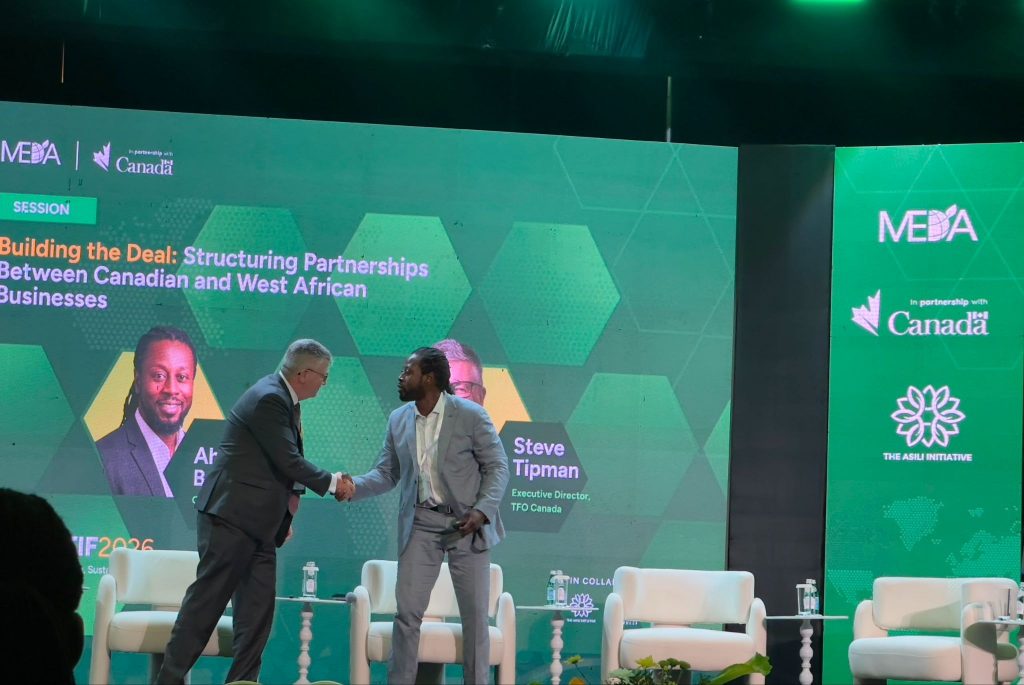
Perhaps no session captured this transformation better than Building the Deal: Structuring Partnerships Between Canadian and African Businesses, a fireside conversation featuring Steve Tipman, Executive Director, TFO Canada, and Ahmed Bawah, Founder, Mama’s Life Products.
Bawah’s story is one of two continents connected by one vision. Having lived and worked in both Ghana and Canada, he has experienced the opportunities and frustrations that define international agricultural trade. His company sources directly from women producers while manufacturing products that meet Canadian quality standards. Operating a farm-to-table model, Mama’s Life Products directly support women-led producer groups while strengthening local agricultural value chains.
He challenged the longstanding assumption that Africa’s role is simply to produce raw materials for processing elsewhere. West Africa already produces approximately 70 per cent of the world’s shea. Yet only a fraction of its economic value remains within the region.
For Bawah, this is not a market failure. It is an infrastructure failure.
The solution lies in processing closer to production, investing in manufacturing facilities, strengthening supply chains and ensuring local communities participate more meaningfully in the value created from their resources. Throughout the Forum, value addition emerged as more than a development aspiration; it became a defining strategy for building globally competitive African agribusinesses.
If manufacturing represents one side of agricultural transformation, finance represents the other.
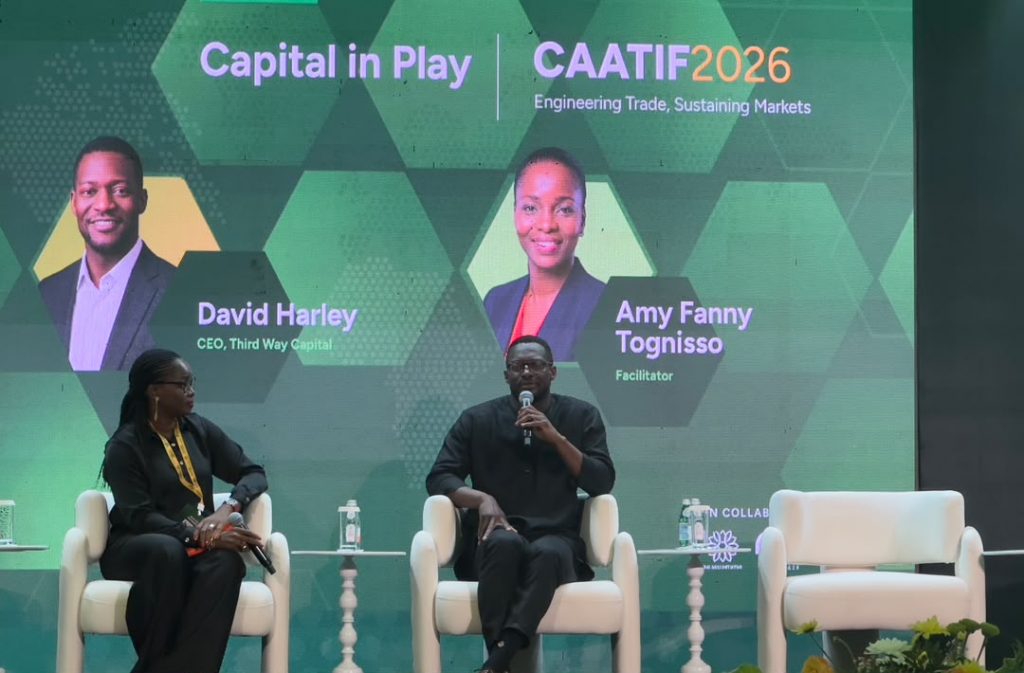
The conversation continued during Capital in Play: Unlocking Finance for Canada–Africa Trade, featuring David Harlley, Chief Executive Officer, ThirdWay Capital.
Throughout the Forum, participants challenged the assumption that traditional lending alone can drive industrial growth. Businesses pursuing significant expansion require more than working capital. They require patient capital.
Equity financing provides businesses with the flexibility to invest in processing facilities, enter new markets and develop operational capacity without exposing themselves to the cash-flow pressures often associated with debt. But investment decisions extend far beyond financial statements. Investors increasingly assess governance structures, leadership quality, operational resilience, financial discipline and long-term strategic vision.
Businesses capable of demonstrating ten-year growth ambitions, supported by transparent financial records and independent management teams, are significantly better positioned to attract investment. The message was unmistakable. Investment follows preparation.
Policy discussions broadened the conversation from individual businesses to regional competitiveness during the Corridors of Commerce: Canada–West Africa Trade Policy Dialogue.
Representatives from Global Affairs Canada and Ghana’s Ministry of Trade, Agribusiness and Industry explored a future built around integrated value chains rather than isolated transactions.
The Volta Economic Corridor emerged as one of the Forum’s most compelling examples. Its ambition extends beyond infrastructure development. It seeks to connect production, irrigation, logistics, storage, processing and export into a coordinated economic ecosystem capable of serving both regional and international markets. Discussions also highlighted the importance of developing investment-ready project pipelines, supported by pre-feasibility studies and stronger public-private collaboration.
For Canadian businesses, the corridor represents access to one of Africa’s fastest-growing agricultural investment opportunities. For Ghana, it represents a pathway towards industrialisation, value-added exports and deeper integration under the African Continental Free Trade Area (AfCFTA).
The discussion demonstrated that infrastructure is no longer measured solely by roads and ports. Modern trade corridors are built through finance, regulation, technology, institutions and trusted partnerships.
Attention later shifted to the people behind agribusiness during People First: Building Dignified and Enabling Workplaces for Agri-SMEs, featuring Bernice Shaibu-Waale of DemiPearl Company and Sherifatu Yakubu of Sheridan Foods.
While investment and policy dominated many discussions, this session redirected attention towards a less visible form of infrastructure: people.
Strong governance, fair wages, safe working conditions and employee voice are increasingly becoming commercial advantages rather than compliance obligations. Participants also explored practical assessment frameworks that enable businesses to evaluate their workplace practices while preparing for evolving international due diligence requirements.
In doing so, the discussion reframed workforce development as a strategic investment rather than an operational expense. Competitive businesses, delegates concluded, are ultimately built by empowered people.
Another recurring theme throughout CAATIF was fragmentation—fragmented value chains, fragmented financing, fragmented policy and fragmented infrastructure.
These conversations continued during The Model We Are Building Towards, featuring Dr Ishmael Nii A. Dodou, Director and Head of Innovative Finance, 24-Hour Economy Secretariat, and Kwame Oppong-Ntim, Director of Agribusiness, Ministry of Trade.
Discussions around Ghana’s 24-Hour Economy initiative highlighted efforts to connect agriculture, agribusiness and industrial policy into a single development framework capable of supporting long-term economic transformation. Technology, logistics, coordinated public-private investment and new agricultural corridors were consistently identified as essential components of this emerging model.
Rather than treating agriculture as an isolated sector, the Forum consistently positioned it as the foundation of broader industrial development.
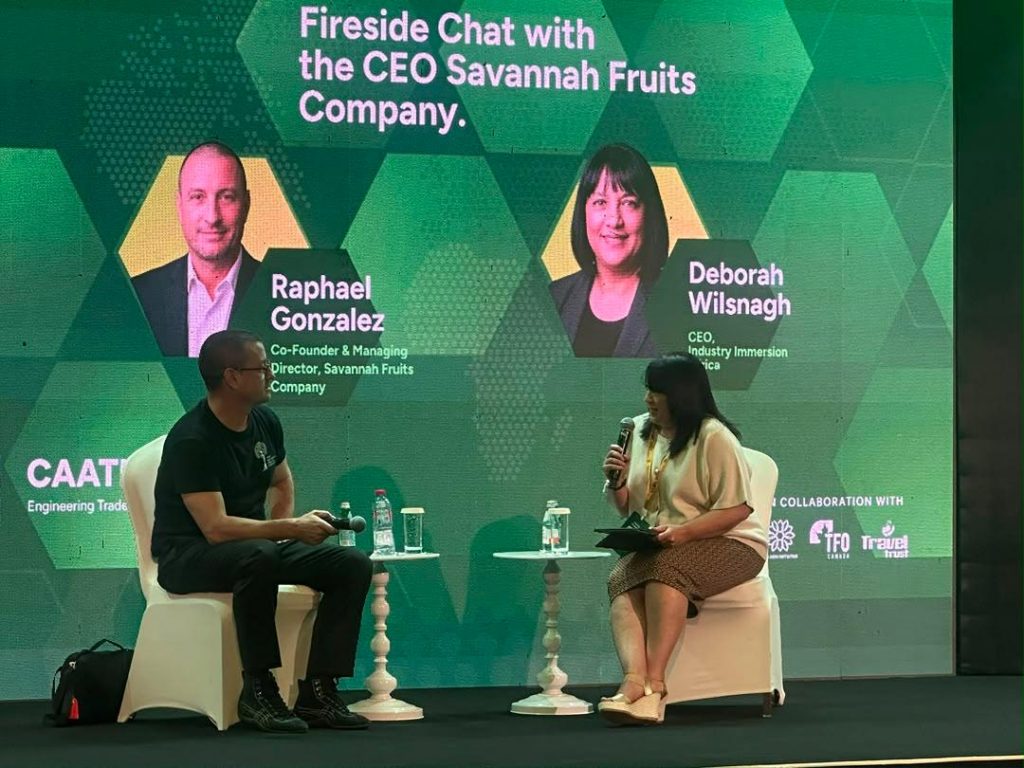
The emphasis on local value addition continued during a fireside conversation featuring Raphael Gonzalez, Co-founder and Managing Director, Savannah Fruits Company, in discussion with Deborah Wilsnagh, Chief Executive Officer, Industry Immersion Africa.
The conversation reinforced the importance of processing agricultural products closer to production communities, strengthening relationships with women producers and creating sustainable livelihoods through local manufacturing. It also demonstrated how responsible sourcing, commercial growth and community development can reinforce one another while positioning African agribusinesses more competitively in international markets.
CAATIF’s most distinctive feature was its deliberate emphasis on structured engagement.
Alongside plenary discussions, delegates participated in curated B2B matchmaking sessions designed to facilitate commercially relevant introductions between Canadian and African organisations. These interactions reinforced that relationships precede transactions and successful partnerships are rarely established through presentations alone. They emerge through trust, repeated engagement and shared commercial objectives.
Beyond the formal programme, MEDA intentionally created opportunities for entrepreneurs, investors, government representatives and development partners to continue conversations, explore collaboration and lay the groundwork for future commercial partnerships.
Throughout the Forum, discussions frequently extended beyond scheduled sessions into networking spaces where investors, entrepreneurs and development partners explored opportunities long after presentations had concluded.
As the Forum drew to a close, Derek Cameron, Vice President, Global Programs at MEDA, reflected on the journey that had brought participants together.
The idea behind CAATIF, he noted, had begun only six months earlier.
The conversations initiated in Accra will ultimately be measured not by attendance figures or conference programmes but by processing facilities established, investments mobilised, businesses expanded, and partnerships sustained over the coming years.
The Forum closed with a shared recognition that building international trade corridors requires persistence. Yet the foundations laid during these two days suggest that Canada and Africa are entering a new phase of agricultural cooperation, one defined less by aspiration and more by implementation.
CAATIF 2026 demonstrated that the future of Canada–Africa agricultural trade will not be shaped by any single government, investor or business. It will be built through collaboration, patient capital, local manufacturing, stronger institutions, empowered entrepreneurs and partnerships that recognise value is created not simply by moving products across borders, but by building ecosystems capable of sustaining prosperity.
If this inaugural Forum achieved anything, it was to replace possibility with momentum.
The conversations have begun. The partnerships are forming. The corridor is taking shape.
The real work now begins.