Across Africa, thousands of agribusinesses aspire to reach international markets, yet only a fraction successfully make the transition from local production to global trade. Bridging that gap is the work of Rahmat Eyinfunjowo, an agri-food systems development professional and Head of Technical Assistance at Farmties.
Over the past decade, her career has spanned business development, sustainability, market systems, value-chain development, and entrepreneurship support across African food systems. Today, she sits at the intersection of production, finance, technical assistance, and trade, helping agribusinesses navigate the complex journey from opportunity to export readiness.
In this AgroCentric interview, Rahmat unpacks the findings of the recent Farmties Agribusiness Export Opportunity Report, which surveyed 533 agribusinesses across more than 20 African countries. She explains why so many businesses remain stuck despite strong products, why access to finance is often misunderstood, and what Africa must do to build globally competitive agribusinesses.
Could you describe yourself and the work that you do?
My name is Rahmat Eyinfunjowo. I am an agri-food systems development professional with a focus on Sub-Saharan Africa. I graduated as the top student in Soil Science and Land Resources Management at the Faculty of Agriculture, Obafemi Awolowo University (OAU), Ile-Ife, and later received training at institutions such as the Lagos Business School and iCRA, Netherlands. My expertise centres on inclusive business development, sustainability, value chain development, field research, and market systems.
How did that foundational experience evolve into a lifelong professional journey in agriculture?
Growing up, my mom had a small garden where she planted everything from vegetables to root crops, and those fresh harvests were the food I grew up on. Even with unmechanized farming, people would come to our door asking to buy our potatoes. Because of that, I had a positive disposition toward agriculture.
However, when I got to the university, I saw that so many students in my faculty were self-tagged “injured engineers” or “injured doctors”, science students who only ended up in agriculture because they missed the cut-off marks for their preferred courses. As far as many of my classmates were concerned, agriculture was synonymous with poverty and drudgery, and they’d rather stay far away. It really provoked me to question why agriculture was treated as a last choice for young people. This sparked my journey from studying agriculture to actively practising it.
After graduating around 2015, I looked past the sector’s heavy fragmentation and lack of mechanisation and saw a staggering $1 trillion market opportunity. I realised this was a massive opening for young people to change the narrative.
Your experience spans multiple disciplines. What common thread connects these chapters of your career, and what keeps you motivated?
I wouldn’t call them different chapters; they are actually heavily interlinked. The common thread is food security and business development. Agriculture is too often misconstrued as a social charity sector or a rural activity for older generations, causing people to ignore its true economic power.
My motivation comes down to results. Yes, there are immense challenges, such as input issues that cause maize farmers to harvest less than 1 ton per acre instead of 2.5 tons. But when you build capacity and connect farmers to authentic markets, their income rises. They can send their children to school and access healthcare. That local chain of benefits keeps me going.
What is the most common misunderstanding stakeholders share regarding agricultural business in Africa?
If I had to distil it to one thing, it’s this: Each group fundamentally misunderstands where the real constraint to growth lies:
Many promising agribusinesses fail to reach their full potential or remain stuck despite having great products. Why is that?
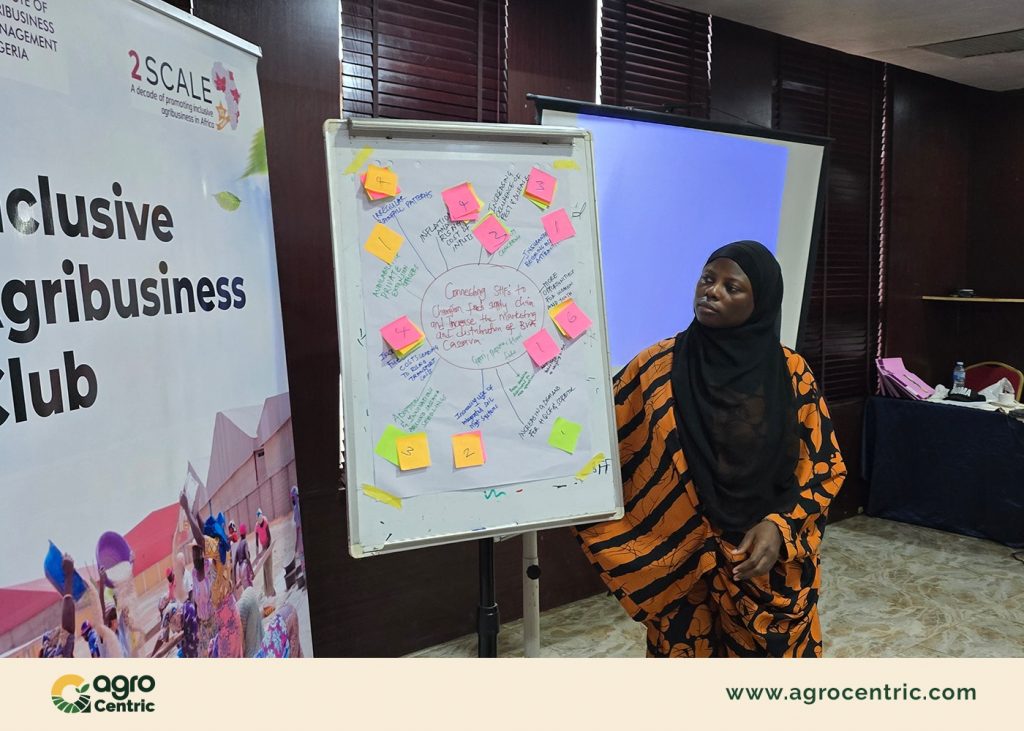
They typically build to remain small. Because agriculture is historically viewed as subsistence-based, many entrepreneurs focus entirely on making ends meet rather than scaling for global markets. I once met a spice processor who produced the same volumes for over five years. That isn’t growth; that’s playing it safe. To scale, they must look beyond their local microcosms and target cross-continental or intra-African trade.
Beyond the statistics in the Farmties report, why do so many African agribusinesses struggle to transition to international export markets?
This report was a labour of love for us at Farmties. Our survey of 533 agribusinesses across more than 20 African nations revealed a stark gap: 72% want to export, but only about 20% actually do. Exporting requires consistent volumes, standardised quality, certifications, traceability, reliable logistics, and upfront financing. Most ecosystems fail to support these, leaving businesses to face fragmented buyer access and mismatched financing cycles.
The underestimation usually happens during the transition from opportunity to execution. A business secures a purchase order but then realises it lacks the liquidity or international certifications to fulfil it. In fact, one in four exporters fails due to a lack of trade finance alone.
What are the invisible, less obvious barriers agribusinesses face?
The invisible barriers are systemic. There is a severe credit timing mismatch; SMEs need trade funding within days, but traditional banks take weeks. There are also international trust deficits, execution risks like minor documentation errors that collapse entire shipments, hidden port costs, and sudden policy shifts.
How do export challenges differ between a small emerging agribusiness and a more established company?
The challenges differ drastically by scale:
The key difference is: Smaller firms struggle to enter, larger firms struggle to compete and scale globally.
Can you share some inspiring success stories of businesses overcoming these hurdles?
The most successful exporters keep a low profile. At Farmties, we’ve seen incredible examples of bootstrapping. Mr Aduragbemi Victor of Advicfarms built a large-scale Nigerian operation exporting live and oven-dried snails to the UK market, and now trains others. In the DRC, a cocoa exporter built a 6,000-metric-ton business by investing early in backward integration and farmer certifications to ensure constant export readiness. What I have learned is that success comes from continuous pivoting and vision, not perfect conditions.
Why do viable businesses struggle to secure credit, and how would you redesign the financing ecosystem from scratch?
It’s a structural mismatch. Expanding SMEs require small, flexible trade capital between $10,000 and $50,000 disbursed within weeks. Traditional banks only offer massive, slow, and heavily collateralised loans that over 50% of agribusinesses cannot access.
If I could redesign it, the financing ecosystem would align with actual trade flows. It would feature robust purchase order and receivables financing, relying on collateral-light, cash-flow-based lending. Combined with blended finance to de-risk capital, rapid disbursement, and integrated technical assistance, this would completely unlock the trade cycle.
What does effective technical assistance (TA) look like, and how does it drive meaningful inclusion for women and youth?
True technical assistance (TA) must move away from theoretical workshops and be embedded directly within business operations. As the Head of TA at Farmties, this is where I come in, bringing innovation in our TA model that can actually unlock growth at scale. This means hands-on transaction support: providing market intelligence, connecting businesses with verified buyers, structuring financial records for investors, and facilitating international certifications. It must be a functional bridge to execution, not a classroom lecture. Summarily, effective TA is hands-on and practical, bundled with financing, tailored to the business stage, and focused on tangible outcomes like export volumes, revenues, and jobs.
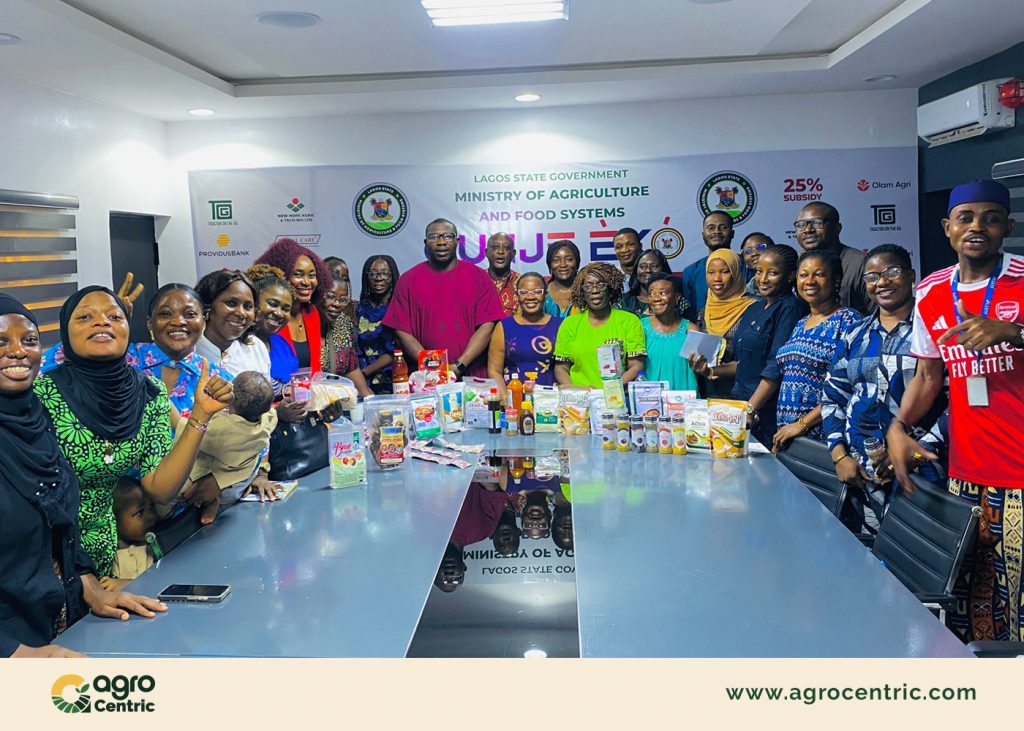
This tailored model is vital for inclusion because they move businesses from readiness to actual transactions. Our report showed that 42% of surveyed agribusinesses were women-owned, yet they remain underleveraged due to structural barriers like limited access to finance and assets and lower visibility in formal markets. Meaningful inclusion isn’t about counting participant headcounts in a workshop; it is about ownership, leadership, and value capture. True inclusion means ensuring women and youth are leading the solutions and capturing the economic value along the chain, not just participating in manual labour. This is where programs like the Farmties Export Clinic, which we held in February this year, come in. I led the design and implementation of the Export Clinic in collaboration with the Lagos State Employment Trust Fund (LSETF) and Lagos State Ministry of Agriculture, and we specifically integrated these structures into the two-day program and post-program support.
How can we make agriculture an attractive career path for the younger generation?
Young people are attracted to profitability and technology. We must reposition agriculture as a digitally enabled, export-oriented industry with room for branding, visibility, innovation, and value addition.
I say this every time: Agriculture is one of the few fields where you can do good and do well. Good, as in social and economic development. Well, as in to thrive professionally. We only need to amplify modern success stories. Young people today must understand that there is space in agriculture for everyone to thrive – regardless of your discipline or interests. My own brother, a communications specialist, chose to focus his career within agriculture by working for one of the world’s largest mechanisation providers. When we demonstrate that agriculture is a globally connected powerhouse rather than a locally isolated chore, youth will see themselves as global changemakers.
Organisations frequently use pitiful images of exhausted farmers to secure donor funds, yet complain that youth are uninterested in agriculture. Do you think this discouraging imagery is intentional?
It stems from treating agriculture as a charity sector rather than a commercial powerhouse. To secure donor funding, organisations lean into the “pity narrative”. But by focusing strictly on poverty, we ignore mechanisation, agritech, and export margins, which drive young people away.
Farmers are business owners. We must celebrate their economic contributions. That is my challenge to the AgroCentric team and every agrimedia platform out there: change the narrative. Highlight the real structural constraints on the ground, but boldly showcase the lucrative, modern opportunities that exist.
What gives you the absolute greatest optimism about Africa’s current food system?
We are seeing a profound structural shift rather than just incremental progress. Let’s take a look at these four massive milestones over the last decade:
We are no longer asking whether agriculture can drive growth; we are figuring out how fast we can scale it.
Which specific subsectors or market opportunities are you most excited about right now?
I am exceptionally excited about four key areas: Processed Foods and Spices: Moving away from raw exports like ginger to local value addition, so we can actively compete with Asian markets. Climate-Smart Ag & Cold-Chains: The growth of vertical farming, greenhouse produce, and aquaponics for fresh produce that is preserved via advanced cold-chain technology. Functional & Nutrition Foods: Producing nutrient-dense items like local peanut or cashew protein bars to curb high import rates of specialised nutritional foods for conflict and climate-stressed zones. Traceable, Certified Commodities: Locally manufacturing and exporting products like chocolates made from verified fair-trade, child-labour-free, and deforestation-free zones to capture premium global margins.
What is your proudest professional moment so far?
In 2018/19, while at Sahel Consulting, I was deployed as the sole on-site consultant to IITA to launch Nigeria’s pioneer commercial cassava seed enterprise called GoSeed Cassava, funded by the Gates Foundation. It was intense work building a business plan, hiring an operations team, and mainstreaming a new seed system.
The proudest moment was when the Director, Frederick Schreurs, praised my business execution and asked what top business school I had attended. At the time, I hadn’t even done my M.Sc. Yet! It proved that diligence, consistency, and combining soft skills with technical knowledge pay off. I became the resident cassava expert, and the model proved the viability of investing in seed systems in Nigeria.
Outside of your corporate work, what would people be surprised to learn about you?
I run a non-profit called Early Careers Africa and host a podcast called Early Career Conversations. Knowing how tough job hunting can be, I wanted to build a community that provides young people with mentorship, referrals to job opportunities, access to resources and employment insights, and interview prep. I connect them with mentors who are just 5 to 10 years ahead of them, so the success stories feel relatable and fresh. When organisations reach out to me with project roles I can’t take on, I pass those opportunities directly to our community members.
To close our conversation, what is the single biggest takeaway you want our readers to have when they read this interview and the Farmties Agribusiness Export Opportunity Report?
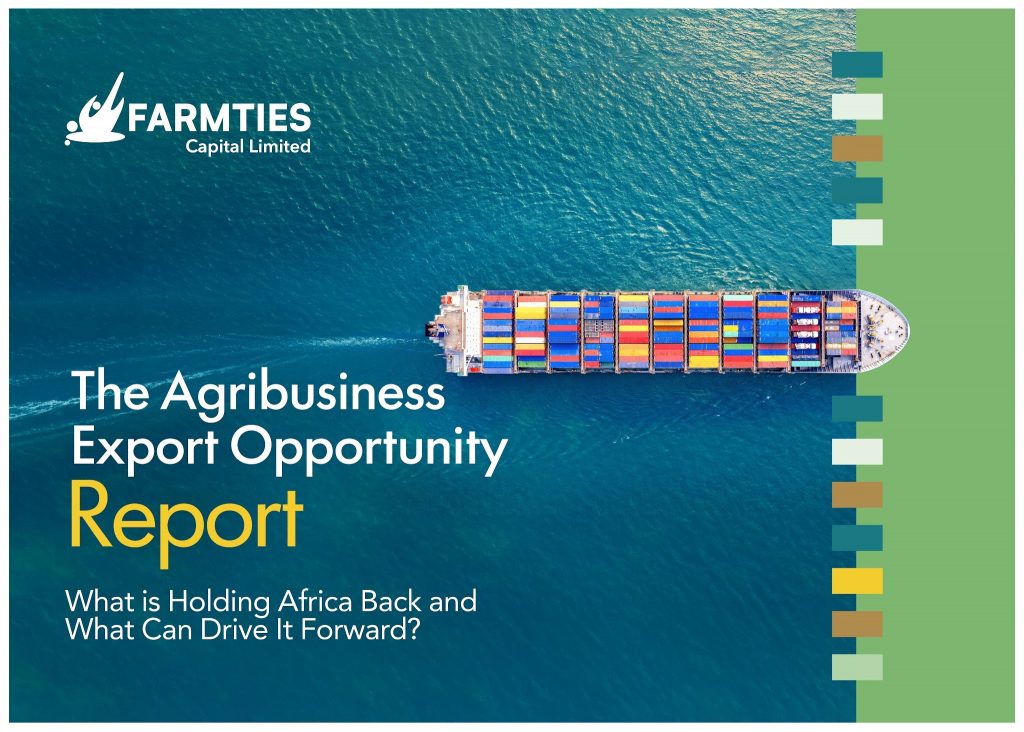
I strongly encourage everyone to download and thoroughly read the full 50-page report, which is packed with verified, practical facts and data gathered directly from actors in the field. You may also follow our work at Farmties.com and Farmties Capital across our social media pages.
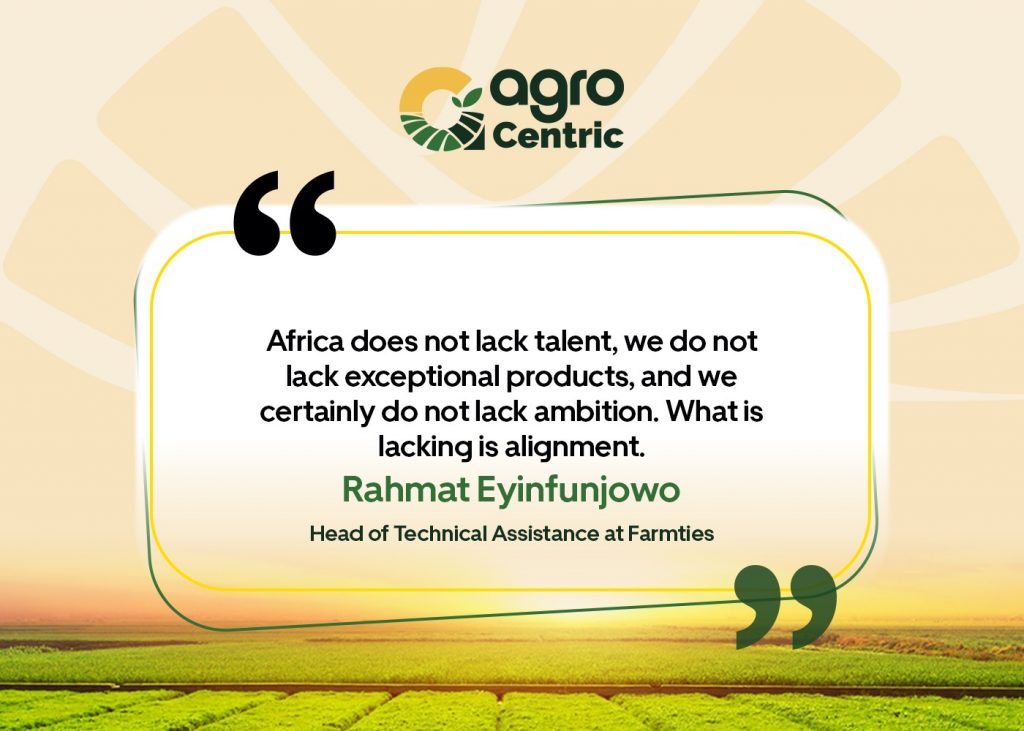
If there is one final message I want to leave with the audience, it is this: Africa does not lack talent, we do not lack exceptional products, and we certainly do not lack ambition. We are an energetic, youth-driven population with boundless potential in trade, exports, and technology.
What we lack is alignment, alignment between capital and business needs, capabilities and market requirements, and systems and execution. The moment we fix these alignment issues, African agribusinesses will do far more than just participate in global trade. They will actively compete, take over, and lead. Global markets simply need to be ready for African businesses to take centre stage.
Thank you, Rahmat. It’s been an eye-opening conversation.
Thank you, AgroCentric. I’m grateful for the opportunity to share about my journey.
Were you inspired by Rahmat Eyinfunjowo’s journey? Do you want to partner or learn more about Farmties Capital Limited? Connect with Farmties Capital Limited and Rahmat Eyinfunjowo on LinkedIn.