Across Nigeria, agriculture is both essential and widely misunderstood. Despite its critical role in food security, employment, and economic growth, many young people still perceive the sector as outdated, difficult, and unappealing. This disconnect between perception and reality has continued to widen the gap between youth participation and the growing need for innovation within the agricultural space.
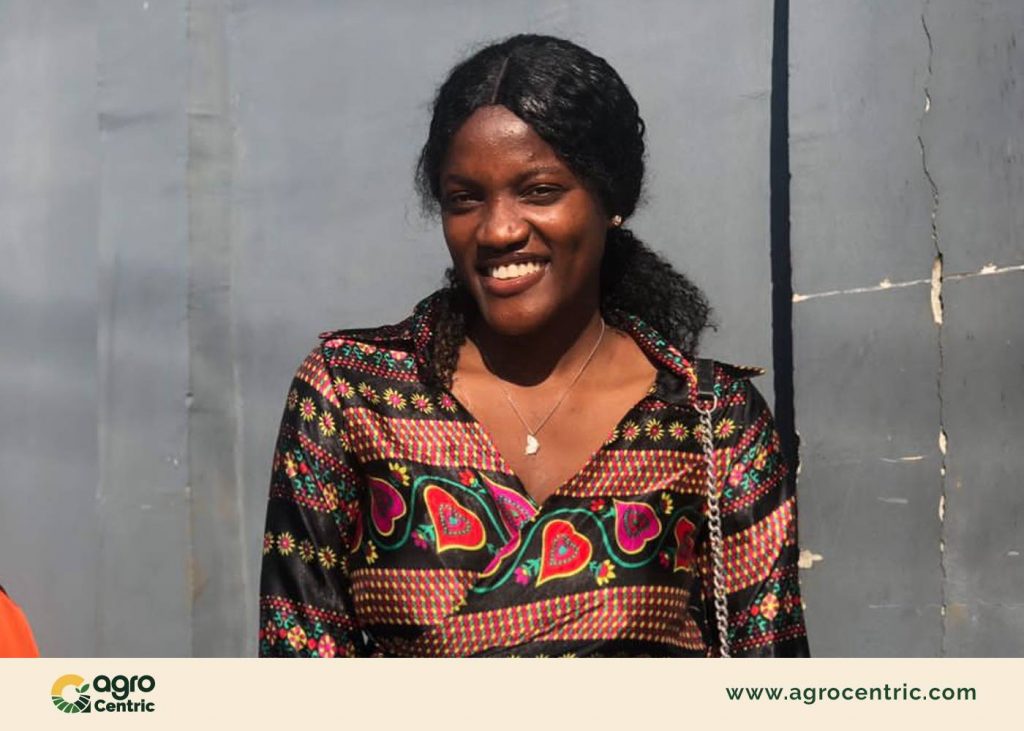
That reality has contributed to the rise of a new generation of young advocates and changemakers working to reshape how agriculture is viewed and approached. Among them is Jennifer Agbaye, a final-year Plant Biotechnology student at the University of Delta, who is using advocacy, exposure, and practical engagement to encourage more young people to see agriculture beyond traditional stereotypes.
Through her initiative, Prilea Global, Jennifer is actively working to reposition agriculture as a space for innovation, opportunity, empowerment, and modern enterprise. What began as a personal shift in perspective after an industrial training experience at a hydroponics farm has now evolved into a growing movement focused on helping students connect with real-world agricultural opportunities.
Speaking with us, Jennifer discusses how a single industrial training experience changed her worldview, the limitations within current academic systems, and the practical steps she is taking to bridge the gap between classroom learning and hands-on agricultural exposure. She also shares her vision of building a new generation of agriculture-focused young people across Nigeria through awareness, mentorship, and access to modern agricultural practices.
Can we meet you?
My name is Agbaye Jennifer, and I am a final-year Plant Biotechnology student at the University of Delta. I am originally from Delta State, and I currently live and study at the Agbor campus of the University of Delta. I have a growing passion for agriculture, and I am also currently building an initiative called Priela Global.
I gained admission into the University of Delta in 2023. Before then, I had secured admission to study Nursing at Pan-African College of Entrepreneurship and Professional Studies (PACEAPS), but I chose not to continue with it because I realised nursing was not for me. At that point, I honestly did not know exactly what I wanted to do. In fact, I never imagined I would end up in agriculture because I used to see it as a poor man’s job.
All I knew was that I wanted something different. When I resumed at the University of Delta, I started selling shawarma from my very first day in 100 level. I ran the business for about three years before recently stopping. Alongside that, I also worked with a tech company as a social media manager and community builder.
At the time, I was still very confused and simply moving through life without a clear sense of direction. However, everything changed during my industrial training experience. That was where I discovered purpose.
Did you choose Plant Biotechnology, or was it assigned to you?
I originally applied to study Microbiology, but I did not check my admission portal on time. By the time I eventually did, my course had already been changed to Biotechnology. From the available options under Biotechnology, I decided to go with the Plant Biotechnology track.
You mentioned you used to think agriculture was a “poor man’s job.” What changed your mind?
Growing up, I honestly saw agriculture as a dirty and outdated job meant for people with no other options. I never imagined myself going into farming or anything related to it. That perception changed during my Industrial Training (IT) at an agricultural firm called Agroville in Agbor. Interestingly, in my 200-level, one of my lecturers had earlier suggested that I do my IT at a hydroponics farm, but I refused because I did not want to work on a farm.
When it was time for my second IT, most of the available placements were already filled, so Agroville was the only option left. I decided to take it, and that experience completely changed my mindset. For the first time, I saw agriculture from a totally different perspective. I worked on a hydroponics farm where crops were grown without soil, using only water and nutrient systems. Seeing peppers grow that way was mind-blowing to me. I had never imagined that agriculture could be so innovative, modern, and technology-driven.
What inspired me even more was the owner of the farm. He studied Computer Science, yet he had built one of the biggest hydroponic farms in my area. He told me something that stayed with me: if I truly put my mind to something, there was nothing I could not achieve, regardless of my background or field of study.
That conversation and experience changed everything for me. I started researching hydroponics and discovered how agriculture could help solve real problems such as land scarcity, urban food production, and food security. That was the moment I realised agriculture is not just about farming in the traditional sense; it is innovative, impactful, and essential for the future.
How did this lead you to start your initiative, Prilea Global?
I started Prilea Global because I once had a negative perception about agriculture that many young people have today. I used to see it as a dirty and “messed-up” job, and I could not understand why anyone would choose to study or work in the agricultural sector.
However, after my Industrial Training experience and the conversations I had with the farm owner, my perspective completely changed. I began to see the opportunities, innovation, and impact agriculture holds for the future. That was when I realised the world needs more farmers, especially young people.
One thing that stood out to me was that many farmers are already ageing, with the average farmer being around 55 years old and above. If younger generations do not step into agriculture, we could face a serious food crisis in the future.
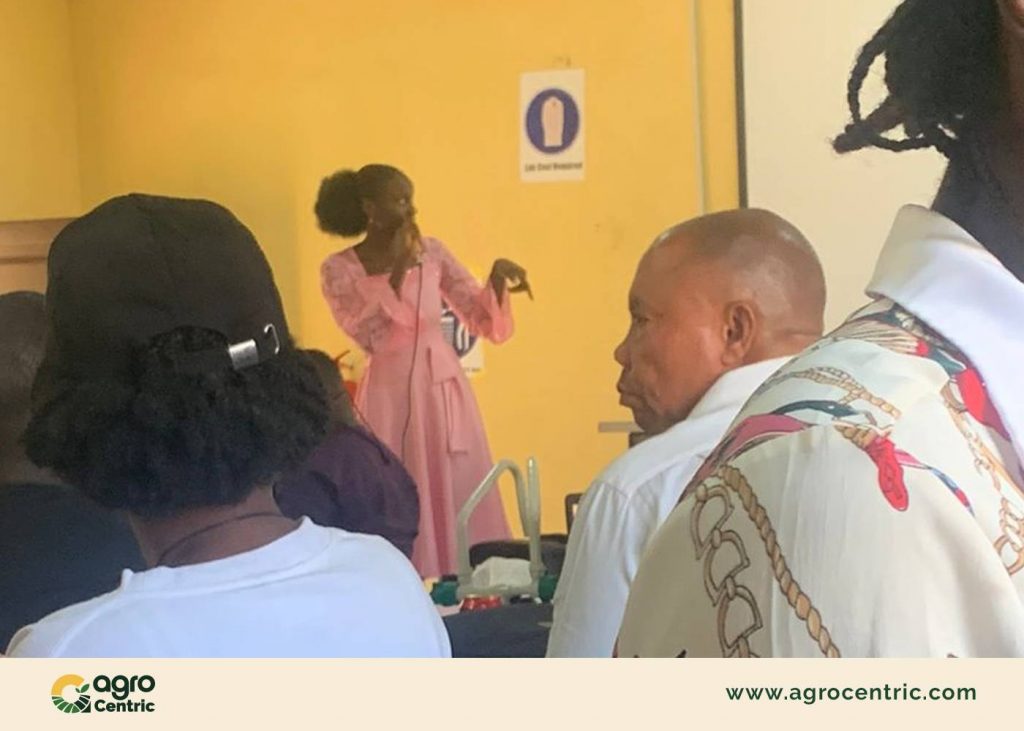
That realisation inspired me to start Prilea in June 2025. Through Prilea Global, I visit schools and speak to students, particularly those studying agriculture, to help them see the possibilities within the sector beyond the traditional stereotypes.
Prilea was created to change mindsets and encourage more young people to embrace agriculture as a field of innovation, sustainability, and opportunity. My vision is to contribute to global food security and support the broader sustainable development goals by helping raise a new generation of farmers who can meet future food demands.
How did you come up with the name, and what impact have you made so far?
The name Prilea came to me quite naturally. It stands for Purpose, Resilience, Innovation, Leadership, Empowerment, and Agriculture. The name reflects the core message of the initiative, which is focused on helping young people see agriculture as a purposeful, innovative, and viable career path, not something to look down on.
So far, Prilea Global has begun creating real impact at the student level. I have spoken at my university and work with a team of five volunteers to run sensitisation sessions, especially within the Faculty of Agriculture. In one of our sessions, I discovered that only a few students actually chose the course willingly, while many were placed there by admission and were already planning to write another JAMB.
Through our engagements, we’ve been able to shift perspectives and encourage practical action. Some students have started small ventures, while others have taken up internships at the hydroponics farm where I did my Industrial Training. One of my volunteers, who serves as the Faculty Coordinator for Agriculture at the University of Delta, runs a standard farm in Agbor where students are trained practically. While he focuses on hands-on farm work, I handle the speaking sessions and mindset transformation aspect.
I have another engagement coming up at Dennis University, which will allow us to extend this work further. I’m also working toward building a structured community to track progress and support participants better.
Can you give us a success story?
One standout story is that of a student named Victory. When I first spoke at the faculty, he was the only one who showed genuine interest in what I was sharing. I encouraged the students to explore grant opportunities in agriculture and guided them on how to apply.
He took that seriously, completed his application, and eventually received a Tony Elumelu Foundation grant of about ₦5–7 million. With that support, he has now started his own farm.
Another success story is a female student who launched a beans flour processing and packaging business. Her idea was to make it easier for students who want to prepare meals like moi-moi but struggle with the process of sourcing and grinding beans.
Do you think schools and universities are doing enough to connect agricultural education to real-life opportunities?
No, I don’t think they are doing enough. Most schools are still heavily focused on theory and exam performance, rather than real-life application or practical experience. Even in agriculture, the curriculum in many institutions is outdated and does not reflect current industry trends. As a result, students often graduate without the practical skills they need to function effectively in the field. There is very little connection between what is taught in classrooms and what happens in real agricultural practice.
Are you working to address this gap?
Yes, my team and I are working to address it through an initiative we call “Agriculture Beyond the Classroom”. The idea of this is to reduce the existing gap between theory and practice by giving students earlier and more meaningful exposure to real farm experiences, as well as extending the duration of industrial training.
Right now, industrial training in my school is about three months, which is not enough for students to truly gain practical competence. During my IT, I had to visit the Hydroponic farm on weekends because there was still more for me to learn.
We have already presented our proposal for the “Agriculture Beyond the Classroom” initiative to the Heads of Department in the faculty of Agriculture and are currently waiting for feedback.
What is your long-term vision for Prilea Global?
In the next three years, my goal is to empower at least 6,000 young people, not just those I speak to, but those who go on to actively start something within the agricultural space. I also want to establish Prilea Clubs across universities, to engage students right from the moment they gain admission and help them see agriculture as a viable, modern career path. Beyond campuses, I plan to expand into rural communities by promoting modern agricultural techniques such as biotechnology, showing that agriculture is not limited to traditional practices.
To support this scale, I have also applied to become a Delta State Youth Ambassador. If successful, it will provide a platform to connect with key stakeholders and help extend Prilea’s impact across cities like Warri and Asaba, and eventually across broader regions. However, regardless of the outcome, the plan remains the same. If government-level response is slow, we will continue working directly with universities across Delta State, and eventually extend the initiative into secondary schools by establishing agriculture-focused clubs.
Is there enough access to funds for young people?
Yes, I believe opportunities and funding exist. The bigger issue is not the absence of funds, but access to information and how young people engage with it. Many young people do not take the time to properly research available opportunities. Instead, there is often an expectation that opportunities will come directly to them, which is rarely the case.
In reality, there are several grants, training programmes, and government-led initiatives available. For example, I’ve seen programmes like a Lagos State government collaboration with IITA designed to train and support millions of young people. However, these opportunities are often underutilised because people do not search effectively or persist long enough. When results are not immediate, many give up too quickly.
So, in my view, there is less of a funding problem and more of an information and awareness gap.
What would you tell someone interested in agriculture but unsure?
Agriculture is very broad, and the key is to find the part that aligns with your interests. If I had been exposed only to a traditional farm, I probably would have hated it too. But when I saw a modern system like hydroponics, everything changed for me.
I always encourage people to look beyond the common perception of agriculture, which often has misconceptions. There are modern and innovative aspects of the field, such as biotechnology, hydroponics, and agricultural research, that can completely change how you see it. When you approach agriculture through a ‘tech lens,’ you begin to realise just how much potential it truly has.
And honestly, even if passion is not there yet, there is still value in starting. There is money in agriculture, and sometimes results come before passion. Once you begin and start seeing progress, interest naturally follows. So my advice is simple: start where you are, explore the modern side of agriculture, and let experience shape your passion.
What do you wish policymakers understood?
Youth involvement has the power to completely transform agriculture. It is not just about filling labour gaps; it can reduce unemployment, drive innovation, and strengthen food security at scale. Young people bring energy, adaptability, and new thinking that the sector urgently needs.
However, for this to happen effectively, the foundation has to be addressed. The curriculum needs to be updated to reflect modern agricultural practices, and there must be stronger investment in research, practical training, and innovation-driven learning.
If these structures are in place, agriculture becomes far more attractive and impactful for young people, and the sector as a whole benefits significantly.
Jennifer Agbaye’s journey highlights a deeper truth about agriculture in Nigeria: the challenge is not just access, it is perception, exposure, and structure. By bridging these gaps, she is not only changing how young people see agriculture but also creating pathways for them to act on it.
Her work with Prilea is still in its early stages, but the ambition is to build a generation that sees agriculture as a space for innovation, income, and impact. To learn more about Jennifer Agbaye and follow her work with Prilea, connect with her on LinkedIn and stay updated on her journey.