Exporting agricultural produce from Africa is rarely just about quality. It is about standards, data, trust, and timing. Many farmers grow crops that meet international demand, yet struggle to prove consistency or navigate the complex requirements of global markets.
Babatunde Olarewaju is working to close that gap. As the founder of FutuX, he is building data infrastructure that helps farmers, aggregators, and exporters make informed decisions, reduce risk, and scale exports more sustainably. The platform focuses on traceability, market intelligence, and visibility across the export value chain.
In this conversation with AgroCentric, Babatunde reflects on the realities of agricultural exports, the importance of data over volume, and how African producers can compete globally without compromising control over their supply chains.
Could you please introduce yourself and briefly describe your early experiences in agriculture?
My name is Babatunde Olarewaju Emmanuel. I studied Agricultural Extension and Rural Sociology at Obafemi Awolowo University, Ile-Ife. Honestly, I didn’t choose the course intentionally; it was offered to me because I didn’t meet the cutoff for medicine, so agriculture was an alternative.
After my first year, I planned to change courses, but I fell in love with the field during a field visit to a village called Agbagboro within OAU. I felt deeply connected to the people, their way of life, and their relationship with nature. I realised I wanted to do something long-term with farmers to support them, not something temporary.
That experience changed everything. I began to take the course seriously, studied the prospects of agricultural extension, and gained an understanding of its role. It became the foundation of who I am today.
What motivated you to start FutuX Agri-consult?
After completing my postgraduate studies, I worked with several organisations, but I soon found myself feeling unfulfilled. My true passion lies in engaging with farmers, listening to their challenges, and collaborating with them to find solutions, an experience I was missing in my previous roles.
Realising I needed to create an environment that aligned with my values, I founded FutuX Agri-consult in 2017. I envisioned a flexible workplace that would allow me to work directly with farmers, rather than in organisations disconnected from their needs. Around this time, my friend Ibrahim Manifat conducted research indicating that farmers were actually willing to pay for targeted extension services, which further inspired my decision to start a private extension organisation.
Many agri-businesses face challenges in establishing effective structures. How did FutuX approach this differently?
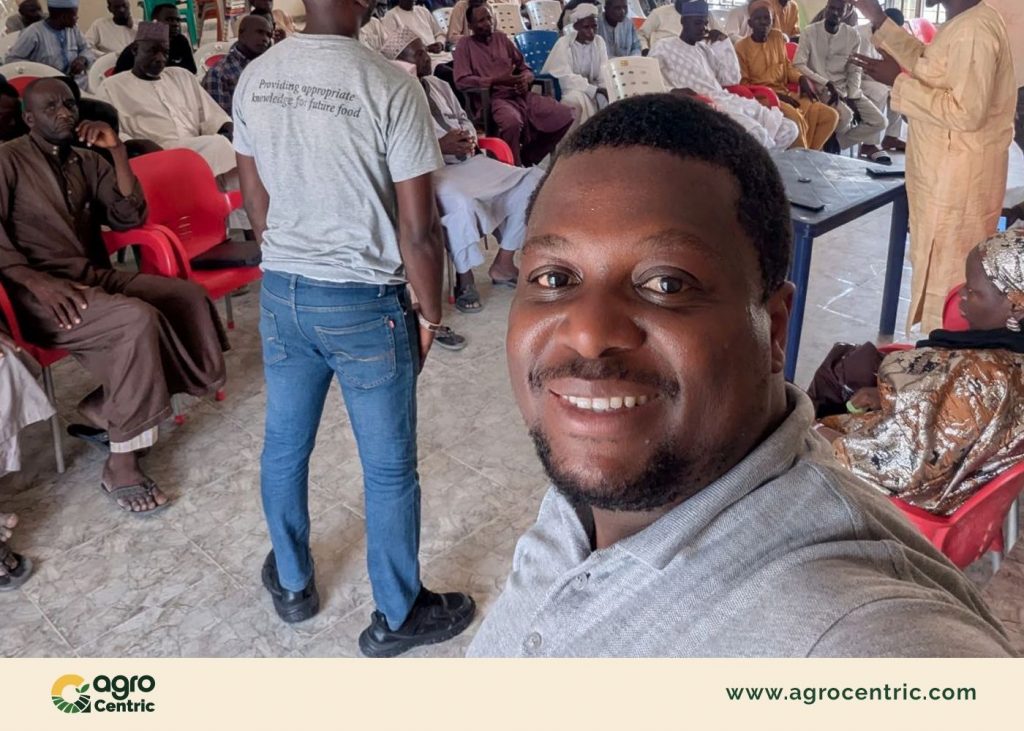
From the very beginning, we designed a comprehensive written 5–10 year structure for our organisation that included internal management, expansion, and revenue projections, even before we had any visible accomplishments. We created a structure for targets, even when we had nothing tangible to show at the time. As our organisation grew, we made necessary adjustments. For example, in 2020, we restructured to align with new realities.
Our external structure focuses on five key target groups: exporters, insurance companies, medium- to large-sized agri-businesses, NGOs (non-governmental organisations), and INGOs (international non-governmental organisations), as well as government policy development. We approach our strategy with care; if a company requests a service, we ask ourselves if we have the internal capacity to meet that demand. If we lack the capacity, we either reorganise or decline the opportunity.
This disciplined approach has allowed us to avoid inefficiencies and maintain high-quality service.
What measurable impact have you made across the value chain so far?
Over the years, we have worked across 28 Nigerian states, reaching over 25,000 farmers through training, certification, and market access initiatives. We’ve supported the export of over 5,000 metric tons of hibiscus and ginger, primarily to the European Union. We currently manage over 3,500 hectares of certified land in Kano and Jigawa, with plans to expand to 10,000 hectares. We have also expanded our presence to Togo and established a joint partnership in Ethiopia.
You mentioned supporting the export of over 5,000 metric tons of Hibiscus and Ginger. How is that structured?
We maintain a ratio of one extension officer to every 200–250 farmers, supported by assistants as needed. For certification programs, like the 3,500 hectares we currently manage in Kano and Jigawa, we have a specialised team that ensures farmers meet EU sustainable sourcing standards. This structure repeats across projects.
How would you assess agricultural extension services in Nigeria and Africa?
Public-sector extension is largely not working. The private extension is still in development, but it shows promise. The future of extension is data-driven platforms that bridge information gaps. We don’t yet have a strong system, but we are moving in that direction. Public-driven extension is essentially broken. Private extension is the “new frontier,” evolving toward data compilation and creation.
How can Public-Private Partnerships work better in agriculture?
The government should create enabling environments, not run businesses. PPPs work best when roles are clear and bureaucracy is reduced.
How are you integrating technology into your extension model?
We developed an app called FARMDROITE (formerly known as Farm Grid) for our extension officers to collect verifiable production data. The app tracks their location using GPS coordinates to ensure they are genuinely visiting the farmers. It monitors visits, collects production data, and records GPS coordinates.
Additionally, we utilise historical data and insights from the Nigerian Meteorological Agency (NiMET) to create early warning systems, which we communicate via text message. Since small farmers often lack access to smartphones, we use SMS to provide market price information, allowing them to connect with buyers.
This system enables verification, early warning notifications, and targeted SMS alerts about weather and market prices. Farmers typically do not pay for these services; instead, the market covers the costs on their behalf.
Could you share a success story where your consultancy transformed a business?
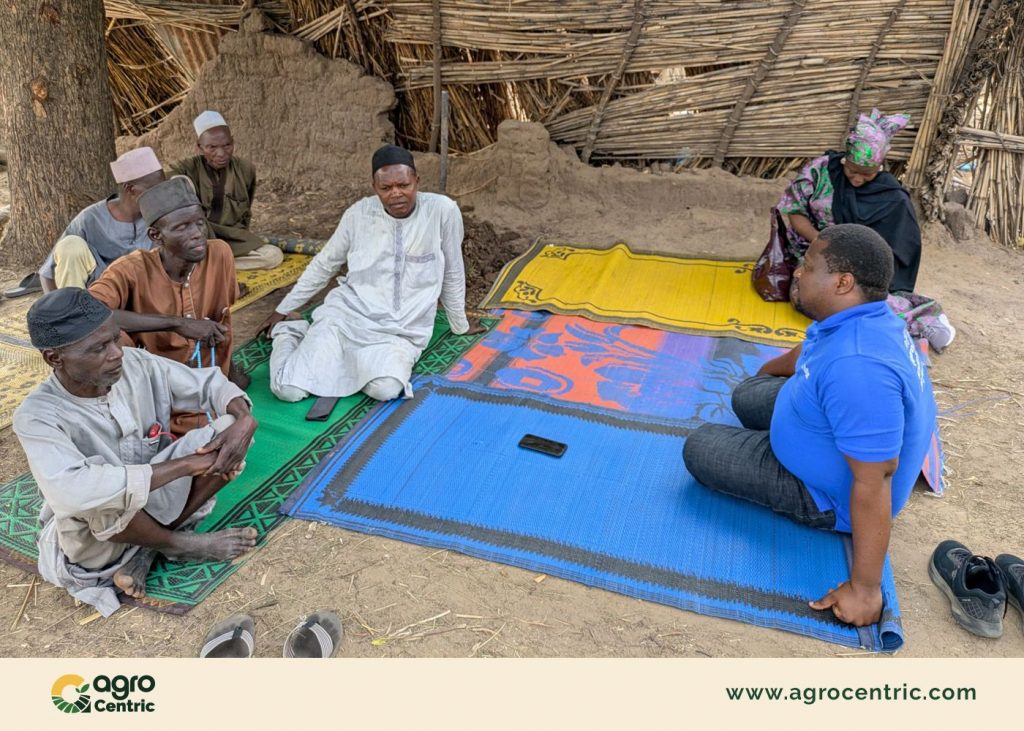
In 2018, we worked with a family-owned export company that had been unable to export for four years due to residue and farmer management issues. We started a certification program with 234 of their farmers. Within six months, they achieved certification for 199 metric tonnes. By 2019, they had resumed exporting and were able to export to the EU for the first time in four years. They’ve now expanded to over 1,000 metric tonnes and multiple products.
We had a similar success with another exporter, which was struggling with price crashes in the Mexican market. We helped them diversify into Europe. They exported to Europe for the first time in 2024. They started with 167 farmers, got certified, and have now increased to 1,300 farmers and 1,500 hectares under certification.
What do you think is the biggest issue hindering agri-business development in Nigeria?
The core problem is a lack of policy accountability. When a policy fails, everyone, including the farmers and consultants, bears the brunt, except for the government. For instance, a policy might ban the export of raw shea nuts to encourage local processing and production. If local companies don’t have the capacity to buy all those nuts, the farmers lose money.
Accountability would mean having a system where, if a policy fails, the government steps in as an intermediary to take the product off the market at a fair price. If officials were held accountable for policy failure, everyone would take development more seriously.
What mindset shift do young agripreneurs need to succeed?
FutuX is youth-led. Over 90% of our team is under 40. We believe young people must drive sustainable agriculture. Young agripreneurs must learn to serve. Every successful person has served someone. I am the product of older people investing in me, opening doors I couldn’t open myself. You must serve before you are served. There is a hierarchy to greatness. I am a product of older mentors who invested in me. They have the networks we don’t have. Sometimes, just having an elder mention your name in a room can achieve in 10 days what would have taken you 10 years to accomplish.
Manage your ego. Learn the “cross-generational patterns.” Avoid using insulting language, such as calling their methods “archaic,” to their face. Find a way to create a win-win. Give them your time, show up for them, and they will open doors for you.
What is the long-term vision for FutuX?
FutuX will become the premier data-mining organisation for African agriculture. We aim to be the one-stop shop for all the information stakeholders need to make informed decisions on this continent. The future of farming isn’t just in the soil; it’s in the data that powers the AI, drones, and informed decisions.
What have been the most significant operational challenges?
Talent is our biggest challenge. Certification expertise isn’t well taught in Nigerian universities, so we invest heavily in training. Security is another concern; we sometimes recruit local teams in high-risk areas to protect our staff and personnel.
What message do you have for agricultural stakeholders?
This sector is ripe for development. Let us join hands to genuinely contribute as a team, in unity, to achieve the transformation we all long for.
Thank you for this insightful conversation. As Babatunde rightly notes, the agricultural sector is ripe for a development led by a team acting in oneness. Discover the man behind the data and the company driving African exports; learn more about Babatunde and FutuX Agri-consult Limited by following their journey on LinkedIn.