Oluyemi’s story is a “pragmatic rebellion” against the traditional Nigerian academic path. He deliberately chose a state technical college over prestigious private schools because he recognised that his visual-learning style and desire for “handwork” were more valuable than theory. The narrative highlights how a grassroots, technical education in Lagos provided the foundation at 16 years old to build IoT solutions recognised on a global stage.
At a young age, he already caught the attention of the World Economic Forum. Oluyemi made a bold, self-directed switch to a technical school to satisfy his hunger for engineering, which brought him global recognition at such a young age.
Could you please introduce yourself and tell us a bit about Oluyemi?
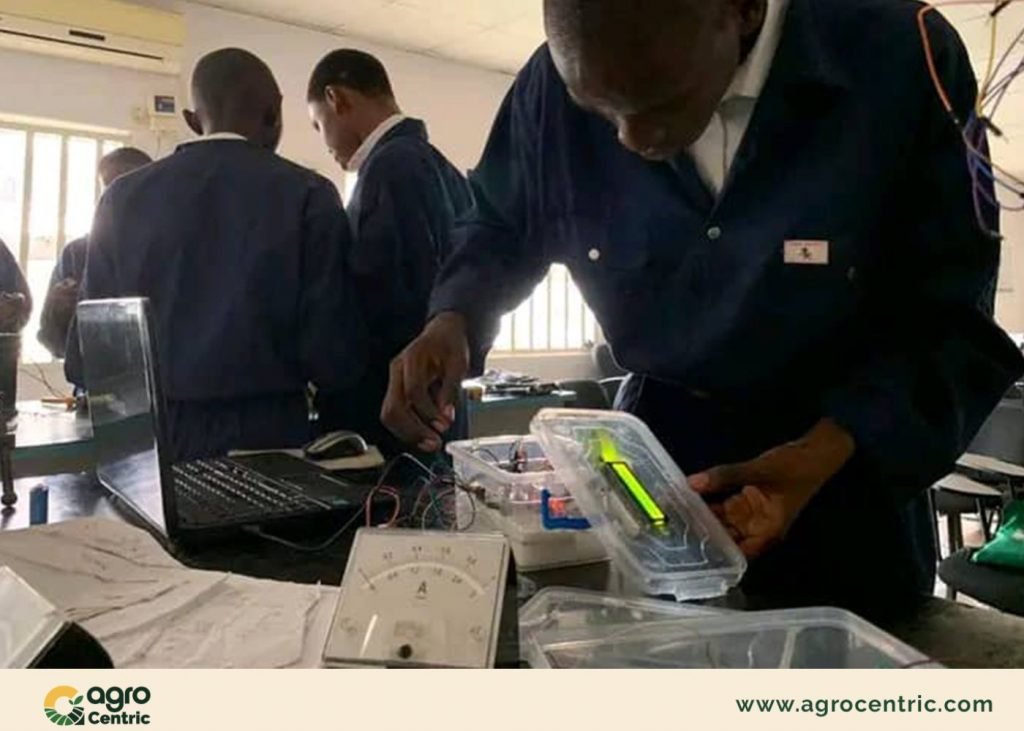
I am Oluyemi Sopade, and I am deeply passionate about using technology to solve real-life problems. I am 19 years old and have already built several products. One of my proudest achievements was winning a competition for a project that tackles food shortages in Nigeria, which the World Economic Forum eventually recognised. I recently graduated from Government Technical College, Ikotun in Lagos, a school that focuses on teaching practical “handwork” alongside academics.
You mentioned switching to a technical college. What was the name of the course, and why did you make that switch?
I studied Electrical Installation and Craft Practice. I decided to switch after JSS3 because I felt the traditional school system was too focused on theory, without hands-on experience. I am a pragmatic person and a visual learner, not an auditory one. I need to practice what I am learning to truly understand it.
Making that switch isn’t always easy. How did you convince your parents to let you go to a technical school?
Honestly, it was orchestrated by God. I live on the Island, but the school is in Ikotun. I spend four hours travelling every day. My mum offered me a spot at a private school, but I told her I would rather suffer the journey to get the experience I wanted. Technical schools sometimes have a reputation for being less strict or having “hooligans,” but I had the determination to see it through and come out well. Knowing what I wanted and trusting God for instructions kept my journey clear.
What sparked your interest in agriculture and climate-smart innovation, given your background in engineering?
It all began with the 2023 Kids Innovation Challenge. I’m always on the lookout for new opportunities and researching what’s available. Someone sent me a link to the Hackathon, which required participants to choose a sector from a list of topics: education, healthcare, and agriculture. I formed a team of five at my technical school, and after conducting some research, we realised that agriculture was the most relatable option. We could see the challenges firsthand, including poor road conditions, food shortages, and a lack of technology. As engineers, we were eager to explore what innovations we could bring to the agricultural sector.
Tell us about your “Smart Composting System.” How does it actually work?
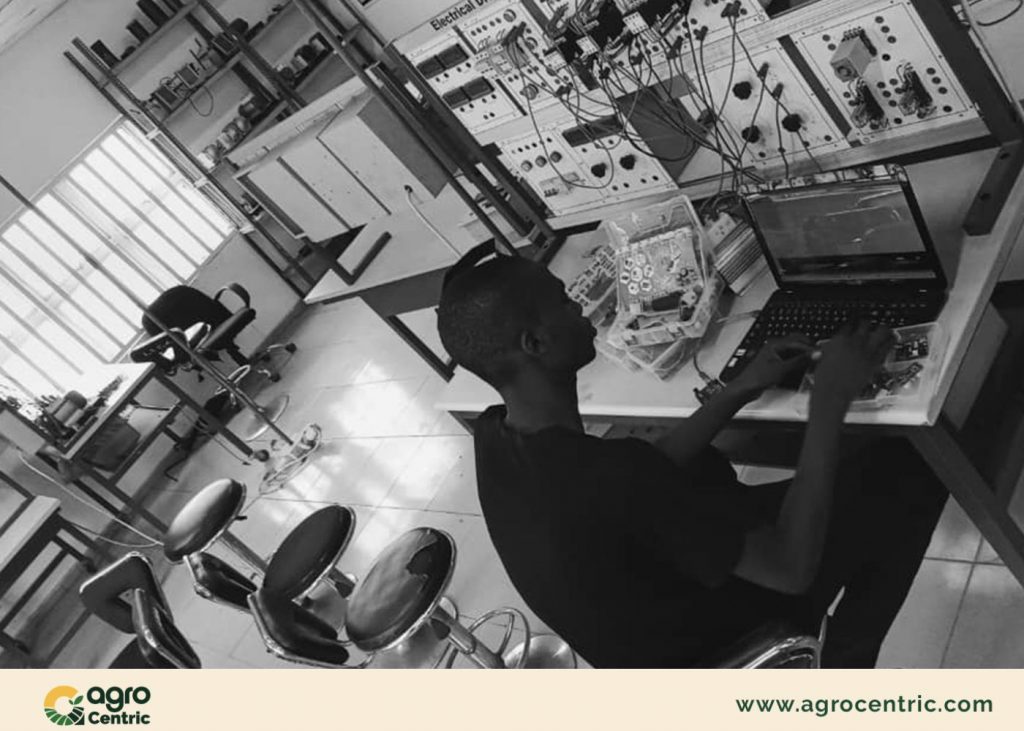
The core idea is “from waste to wealth”. We built a machine that grinds food waste into small particles, allowing it to be digested and mixed properly. We use a microcontroller, the “brain” of the system, to automate everything. We have temperature sensors to ensure the microorganisms stay alive; if the compost gets too hot, the system automatically adds water to maintain the optimal temperature. We also use soil moisture sensors to check the content. It’s an IoT (Internet of Things) backed system, meaning a farmer can monitor the entire process on their phone from anywhere in the world.
What makes your solution unique compared to other inventions, and did you get a chance to test it with real farmers?
We compared our compost to NPK 15:15:15 inorganic fertiliser and found ours was much more cost-efficient. Due to automation, it’s also very seamless. We were able to test it within our school and achieved great results, although we haven’t implemented it in full production on a large farm yet. At the time, I was only 16 and still learning, so there was some trial and error with the coding and structure
Do you think it is essential to involve young people in agriculture?
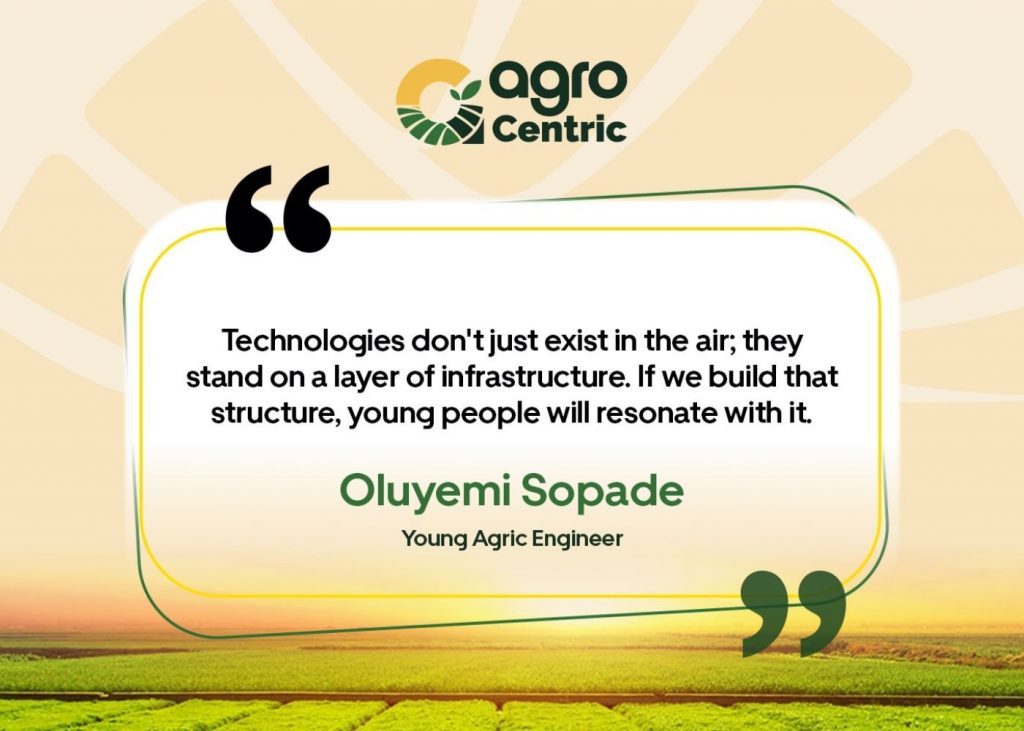
Agriculture is what can save Nigeria, but we often focus on things that aren’t as important. We have the expertise and the skill in Nigeria, but many people are leaving. Innovation is built on infrastructure, and currently, the infrastructure for agriculture is relatively weak compared to that of Fintech. Technologies don’t just exist in the air; they stand on a layer of infrastructure. If we build that structure, young people will resonate with it.
Winning the Hackathon gained you visibility, but you mentioned you aren’t participating in more right now. Why is that?
I want to be honest with myself. I realised I need to work on my public speaking skills and my understanding of finance and business, including concepts such as business models and legal patent laws, to secure intellectual property. I don’t want those competitions to become a distraction.
What is next for you?
I plan to attend the Federal University of Technology, Akure (FUTA) next year to study Engineering. Their course outline for embedded systems suits exactly what I want to do. Over the next few years, I want to focus on strategic networking. As they say, “your network is your net worth.
What advice would you give to other young Africans who feel discouraged about entering the agricultural technology (Agric-Tech) space?
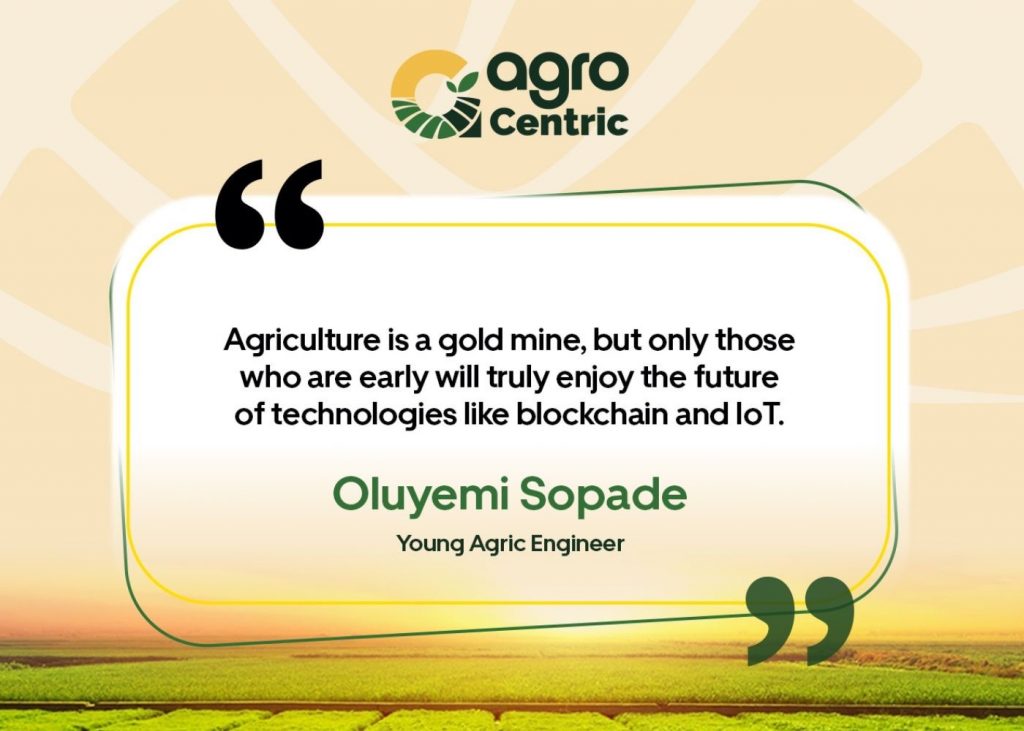
Be visionary and stay determined. If you don’t know where you are going, everywhere will look like your goal. Agriculture is a gold mine, but only those who are early will truly enjoy the future of technologies like blockchain and IoT in this space. Don’t lose track of your focus just because of normal trends.
The future of Nigerian food security lies in the hands of pragmatic thinkers like Oluyemi. His story is a call to action for the government, the youth, and the private sector to invest in the infrastructure that makes innovation possible