Africa’s agricultural sector is rich in promise, yet countless young people remain hesitant to explore the industry. Although they are the future of the continent’s food security, the sector struggles to attract them, crippled by a perception of high risk, a lack of the skills and know-how needed to turn farms into profitable enterprises and difficult access to youth-friendly financial services. Families pass down farms, but not always the knowledge or confidence needed to make those farms thrive in a changing world.
Victor Mugo’s journey defies this pattern. A young man who once feared the farm now stands at the centre of global youth inclusion in agriculture. His transition from avoiding farm work as a child to shaping youth policy and innovation across multiple continents shows that transformation often begins not on the field, but in how we understand risk, opportunity, and our place within the food system.
Rather than focusing solely on technology or tools, Victor’s story highlights something more foundational: the power of mindset, the importance of community-wide inclusion, and the need to view agriculture as both an enterprise and an identity. His path reveals why the future of African agriculture may depend less on introducing young people to farming and more on redesigning the systems that welcome them in.
Please introduce yourself. Who is Victor Mugo?
In a nutshell, I am a Global Programs Manager passionate about designing and supporting initiatives that empower young people, especially in the agrifood and development sectors. For almost a decade, my work has focused on helping organisations strengthen their youth engagement strategies and create genuine opportunities for young people to lead and thrive.
Tell us about your educational background and how you transitioned into the agricultural sector.
Growing up, my parents had a small farm. Whenever I did something wrong or when extra help was needed, I was sent to the farm. I hated it so much that I made it my mission to study hard, move away, and build a future far from farming.
That’s why I studied actuarial science, which I thought would lead me into investment banking, anything far from agriculture. However, after graduation, an internship opportunity at AGRA changed my perspective. I saw how broad and impactful the agri-food sector is and realised there were opportunities for me to apply my skills. I have never formally studied agriculture, but once I entered the industry, I found a home and decided to make the most of it.
How has your background in Actuarial Science and Development Finance influenced your approach to agricultural development and youth engagement?
It’s related, I promise. One word that best summarises Actuarial Science is risk. In essence, it applies mathematical, statistical, and financial techniques to assess, quantify, and manage risk. While these skills are common in insurance or pensions, agriculture also faces many real and perceived risks, including climate variability, market fluctuations, pests, diseases, and credit challenges.
My analytical background allows me to examine how the sector can be de-risked. I later studied Development Finance, where I focused on de-risking agricultural finance and exploring blended finance to mobilise capital for smallholder farmers and AgriSMEs. Although my education may seem unrelated, it has actually been relevant to how I view and manage risks within the agricultural sector.
Your career spans AGRA, the Climate-Smart Agriculture Youth Network, Nourishing Africa, FAO, and One Acre Fund. How would you describe this journey?
It’s been a journey of evolution, of learning, unlearning, and relearning, and certainly a journey of resilience. At AGRA, I began as an intern in the legal department. Then I transitioned to the Africa Food Systems Forum (formerly AGRF), where I supported the organisation of this premier convening for African agriculture and food systems stakeholders.
I afterwards joined the Climate Smart Agriculture Youth Network, an opportunity which helped me understand the practical aspects of youth engagement in agriculture. I could relate to young people who felt agriculture wasn’t “attractive,”. This role taught me how to engage young people practically, creating programs, raising awareness, and advocating for a transformation from a “solitary struggle to survive” into an excellent opportunity for income generation and food security.
At Nourishing Africa (now the Africa Food Changemakers Hub), I learned the centrality of entrepreneurship in agri-food systems. Farming must be viewed as a business with processes, efficiencies, and opportunities across the value chain. Here, I particularly appreciated how we supported young African agri-food entrepreneurs in accessing funding, training, market linkages, and a vibrant community of support to accelerate their investor readiness and growth.
At the FAO Office of Youth and Women, I have the privilege to lead the localisation and expansion of its global youth agrifood strategy into actionable country-level programming across more than 30 countries. This body of work focused on collaborating with relevant government departments, FAO Decentralised Offices, youth organisations, and other development partners to establish national youth agrifood platforms that continue to serve as influential convening spaces, empowering young people to catalyse locally led agrifood systems transformation.
At One Acre Fund, I led the organisation’s youth engagement efforts, setting a bold vision of how the organisation serves young farmers and rural entrepreneurs across its ten countries of operation.
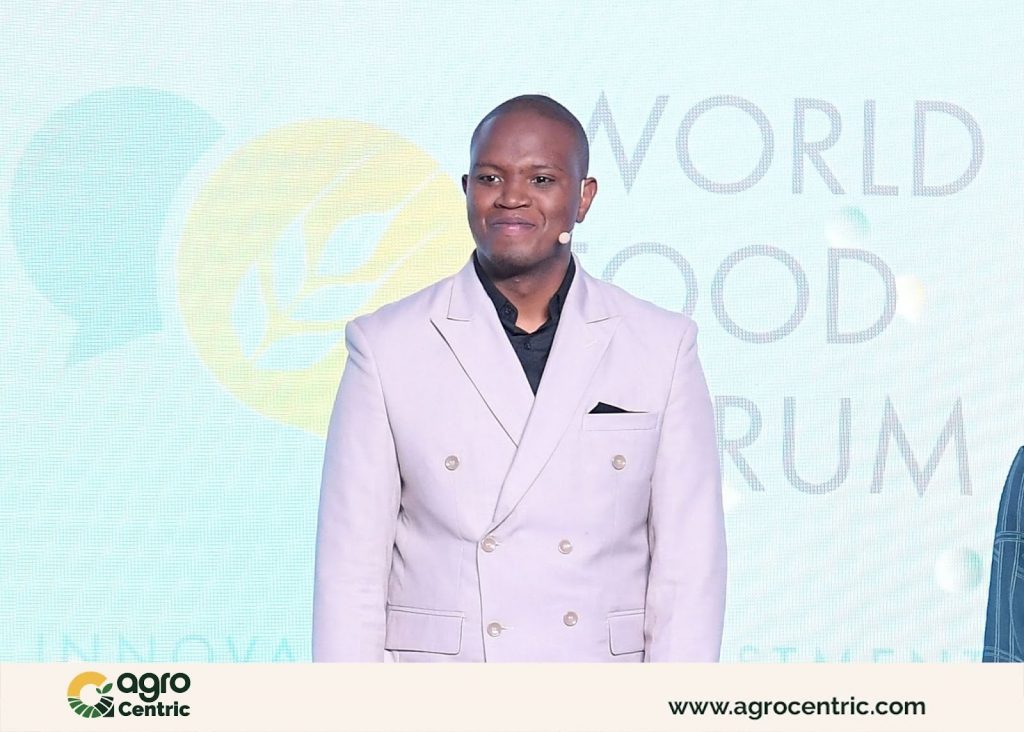
In your experience, what are the biggest misconceptions or perceptions that reduce youth engagement in agriculture, and how do you try to change that narrative?
There are misconceptions among young people and other stakeholders about them.
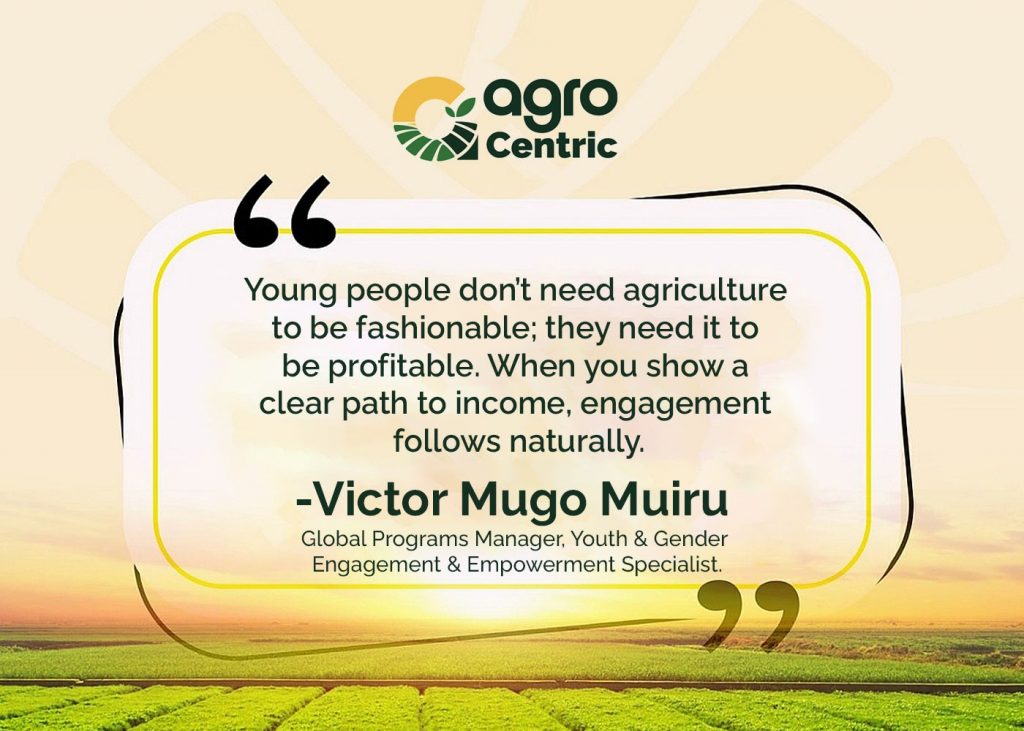
For stakeholders, I’ve noticed they always want to make agriculture vibrant and “fashionable” for young people. But what young people truly want is something that provides livelihood opportunities. They don’t want something fashionable unless it creates a viable chance for them to make a living.
The solution is to make it as practical as possible and show them a pathway to profit.
The biggest misconception among young people is that farming is a solitary struggle to survive, much like generations before them experienced. We need to market agriculture as a business, an opportunity for entrepreneurship, because once you treat your farm as a business, there is a great opportunity to make a living for yourself.
In practical terms, how do you measure the real impact of youth engagement on food security and rural livelihoods?
While there are many metrics, the most central one is the pathway to creating profit out of their engagement. So many programs focus on awareness and knowledge, but what is lacking is the link to a clear path for young people to realise profit. Once you turn farming into a business and entrepreneurship, young people will naturally want to get into the sector; it won’t be a struggle for them.
Do you have a story that demonstrates the real impact of your work or the programs you’ve been involved in?
Absolutely. At One Acre Fund, we work with young farmers who are hands-on in the field. There is the story of Adeline from Kayonza district in Rwanda. One Acre Fund provided her with an ecosystem of support, including access to information on climate, credit, inputs, and markets. Adeline was previously farming at a subsistence level on a small plot of land. With the support, she has been able to expand her farm and now grows three times as much as she did before. She harvests 1.5 metric tons of potatoes, one ton of cassava, and 1.5 metric tons of maize annually. She has grown from subsistence farming to becoming a local agricultural leader, teaching others how to farm profitably. She is an excellent example of how farming can be a pathway to prosperity for her family and community.
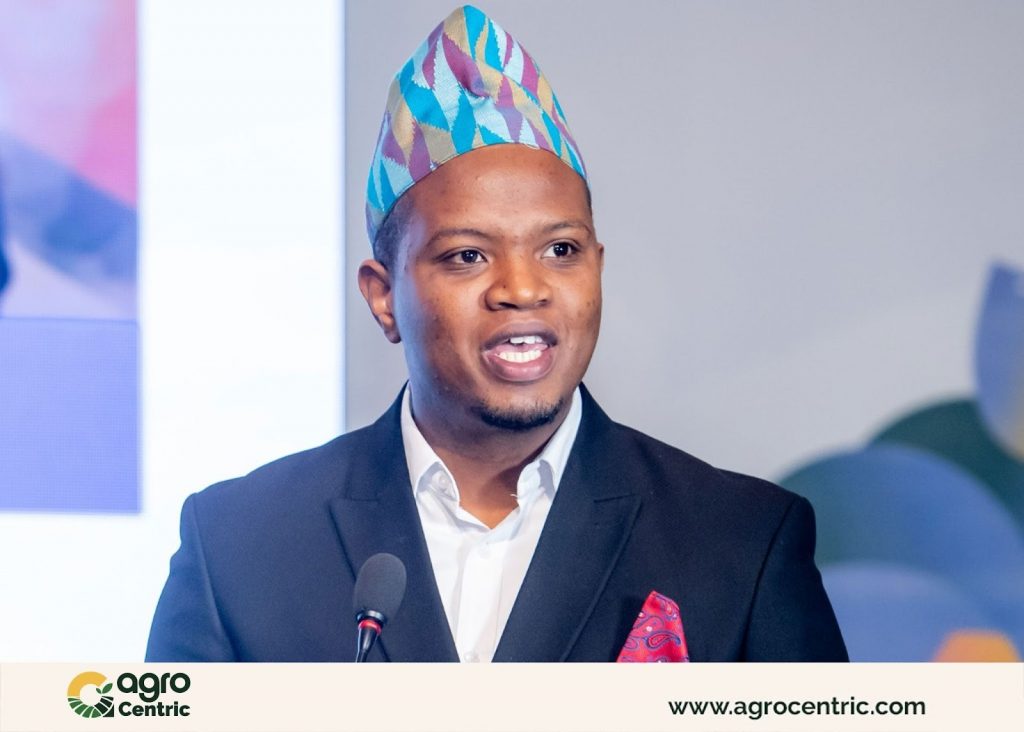
What policy reforms do you think are urgently needed to create a more enabling environment for youth-led agri-businesses in Africa?
Finance Policies, because it is challenging for young people to obtain youth-friendly credit, meaning credit at the correct rate and amount. Young people get very small or costly loans.
There is a real and perceived risk because young people often lack substantial savings or assets to provide as collateral, thereby classifying them as a high-risk credit segment.
We need to examine how we can mitigate financial risk. This involves combining concessional finance (like grants) with investor-readiness programs to make young people bank-worthy and credit-worthy for financial institutions. We need to double down on economic incentives and open up access to finance.
Additionally, establishing stable and structured markets can be very challenging for young individuals once they enter a value chain. We need programs that enable access to markets. Our markets are often intertwined and global, sometimes allowing for the import of cheap or substandard goods. We need to re-examine our market systems to make them more efficient and create concrete opportunities for young people to engage.
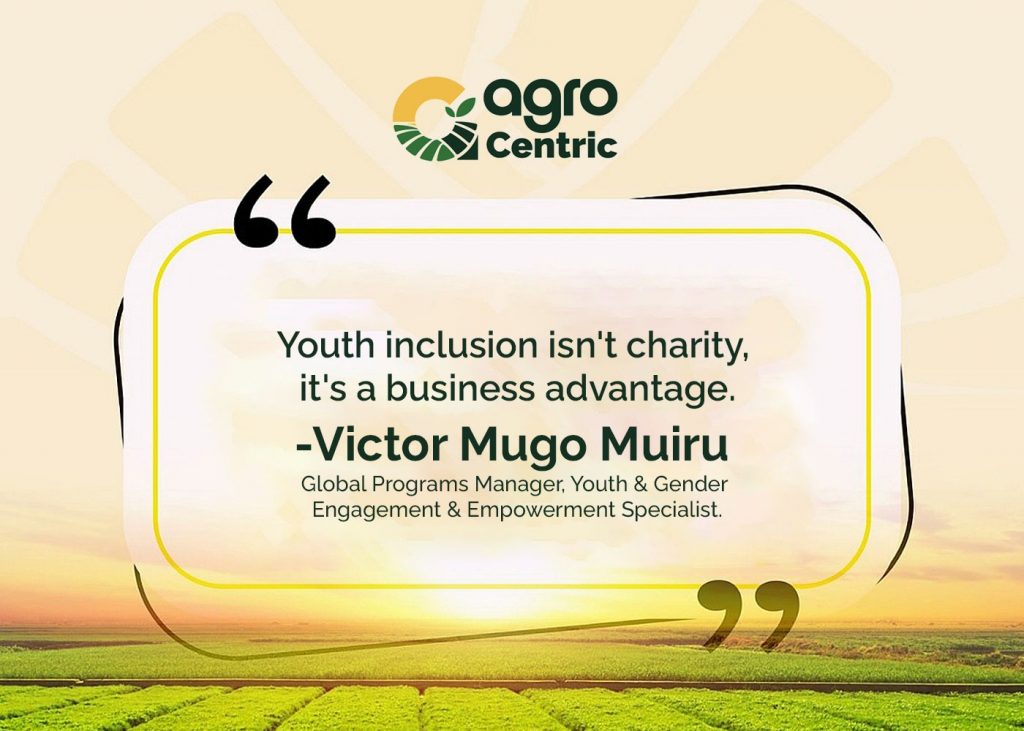
The overall need is to consider the inclusion of young people and women as a business approach, not just a charitable one. Young people are the future of agricultural markets and will be the customers and farmers of tomorrow. Any organisation that does not consider young people’s inclusion is doing a disservice to itself.
How can government, development partners, and the private sector come together to ensure more youth inclusion in the agricultural sector?
We need to move beyond tokenism, where a young person is given a voice without representation or brought to the table without decision-making opportunities.
The level of inclusion we must strive for is one where young people are brought to the table, provided with the necessary support to engage as equal partners, and the decisions emerging from these tables inform concrete outcomes. This must happen at every level, including policy-making, program ideation, and across different sectors such as climate and nutrition.
What is your vision for the future of youth engagement and innovation in African agriculture in the next five years?
I hope inclusion is seen as a business opportunity, not a favour. We must reach a point where we no longer have to struggle to encourage young people to join the agricultural sector. Instead, people will recognise the need for it and allocate the necessary resources to establish the ecosystem of support required for young people to engage as equal partners. Young people should have the resources, platforms, and ecosystem of support needed to participate meaningfully as equal partners in the sector.
For young Africans who are passionate about agriculture but unsure where to start, what one message would you give them?
The best investment one can make right now is an investment in knowledge and education. Education opens your eyes to the gaps within the sector, and every gap is a business opportunity. Once equipped with knowledge, identify real needs within the agricultural landscape and develop solutions tailored to them.
If you could describe Africa’s agricultural transformation in one phrase, what would it be and why?
I would say: Youth Inclusive because Young people bring a new narrative, they are innovative, entrepreneurial-minded, and climate-conscious, which are prerequisites for Africa’s agrifood transformation. If I could add one more, I’d say entrepreneurial-driven here are 1.3 billion people in Africa who need to eat every day; looking at this as a business opportunity opens up immense entrepreneurial potential.
Finally, how can AgroCentric readers, students, investors, and enthusiasts join you in building a more resilient and inclusive food system?
We are all involved in the agri-food sector one way or another, either as farmers, entrepreneurs, chefs, or consumers. And in our own spaces, we each have a role to play in transforming agrifood systems.
On a personal note, they should continue to read platforms like AgroCentric for knowledge, and they can follow me on LinkedIn, where I provide insights into my experiences on how we can all work together. And in our own spaces, we each have a role to play in transforming agrifood systems.
Thank you for this insightful conversation, Victor! This story reaffirms AgroCentric’s mission to show young Africans the possibilities in agriculture beyond the stereotypes.