In Ghana, processing groundnuts into paste is a manual ritual performed in almost every home. For a long time, the sector was viewed as a refuge for the uneducated, until Bernice Beliebe Shaibu-Waale stepped in to turn corporate limitations into a catalyst for self-determination. Faced with a workplace environment that penalised her for balancing a career with motherhood, Bernice walked away, took full control of her destiny, and built her own enterprise in Tamale.
After proving her business model by winning a competitive $10,000 grant through the Kosmos Innovation Centre (KIC) AgriTech Challenge (2021) and leveraging scaling support as a beneficiary of the MEDA GROW2 Program, she successfully transitioned from manual firewood roasting to running a certified, stainless-steel factory.
Could you introduce yourself and share what inspired you to launch this enterprise?
My name is Bernice Beliebe Shaibu- Waale. I am a Ghanaian from the Upper West Region, married with three children, and the co-founder of DemiPearl Company Limited alongside my husband(Theophilus Morrison). DemiPearl began back in 2012 as a graphic design venture while we were students at the University for Development Studies, simply as a means of survival.
After graduating, completing national service, and volunteering, I was recruited to set up a new branch for an insurance company in Tamale. I was five months pregnant when hired, a fact I openly shared with HR. They assigned a service personnel to assist me, and things proceeded smoothly until I returned from my three-month maternity leave.
My supervisor grew resentful, constantly reminding me that we had been recruited at the same time, yet I had taken leave while he continued to work. He warned me not to get pregnant again for five years, despite the company having no such rule. Every time I looked tired at work, he would say, “Bernice, I hope you are not pregnant, because if you are, you will have to choose between your job and the pregnancy.”
Two years later, I became pregnant. Terrified of losing my livelihood, I confided in my colleague, who by then had become a permanent staff member. He supported me, helping me leave the office in secret to attend my antenatal care appointments. By the fifth month, my stomach began protruding, and I could no longer hide it, so I informed my boss.
The breaking point came during my seventh month. One morning, while preparing for work, I slipped and fell heavily. In intense pain, I called my boss to explain that I needed to go directly to the hospital. He refused, demanding that I report to the office first to clear my desk before seeking medical attention. Wanting to protect my job, I complied and went to work.
When I arrived, he and a colleague stepped out, telling me to stay at the office and wait until they returned from a marketing errand before I could leave for the hospital. I sat there in agony until 2:00 pm. Finally, my colleague called me secretly and said, “Bernice, leave the office and go to the hospital right now. We aren’t on a marketing errand. We are just sitting with the boss’s friend, having an interaction. He is making you wait for nothing.”
Three days later, I went into emergency labour. My baby girl was born prematurely, survived for three days, and died. I stayed home grieving, expecting the company to send my welfare support, which was standard policy since we all contributed to a mutual staff fund. Nothing came.
When I returned to work, I followed up on it. My boss told me that because my deceased baby had no name and no public obituary, HR refused to disburse my welfare funds. The grief and stress were so overwhelming that a few days later, I lost the ability to breathe. I was rushed to the hospital and placed under an oxygen mask. Lying there, I realised with absolute clarity that this corporate space was not my place. I stood firm, resigned immediately, and went home.
How did that exit transition into an agro-processing business?
While employed at the insurance firm, I would purchase high-quality groundnut paste locally and supply it to colleagues in the south, always seeking their feedback. Sitting at home unemployed, I realised I could continue this to make a living. I began taking orders, buying paste from local processors, and shipping it.
Gradually, I moved from trading to producing on my own. At first, it was for survival. But then I connected with the Ghana Enterprises Agency (GEA). They transformed my mindset from just surviving to identifying and addressing societal needs through a commercial enterprise.
I continued to search for growth opportunities until I discovered the Kosmos Innovation Centre (KIC) AgriTech Challenge. We applied, were shortlisted, went through the competition, placed seventh out of eight winning teams, and secured a $10,000 grant.
What specific role did the Ghana Enterprises Agency (GEA) play in your development?
The GEA helps entrepreneurs develop. They took us through record-keeping, business planning, social media marketing, and navigating regulatory hurdles to build a sustainable business. Even today, we knock on their doors. Madam Henrietta Zaato, the Deputy Director of GEA for the Northern Region, supports us whenever we hit operational roadblocks. Through her guidance, I was awarded the “Young Entrepreneur Award” during the Northern Trade, Industry and Investment Summit 2024.
Groundnut paste production is common in Northern Ghana. What specific problem did you prioritise to make the Demipearl brand stand out?
In our region, almost every household processes groundnuts manually, but the market faces two major issues: adulteration and aflatoxin contamination. Aflatoxins are silent toxic moulds that develop in poorly stored groundnuts. They pose long-term health risks, yet local processors do not pay attention to them.
At Demipearl, eliminating aflatoxins to ensure safe consumption for nursing mothers and families is our priority. We strictly reject mould-infested raw materials, work hand-in-hand with Ghana’s Food and Drugs Authority (FDA), and run our factory using stainless steel machinery.
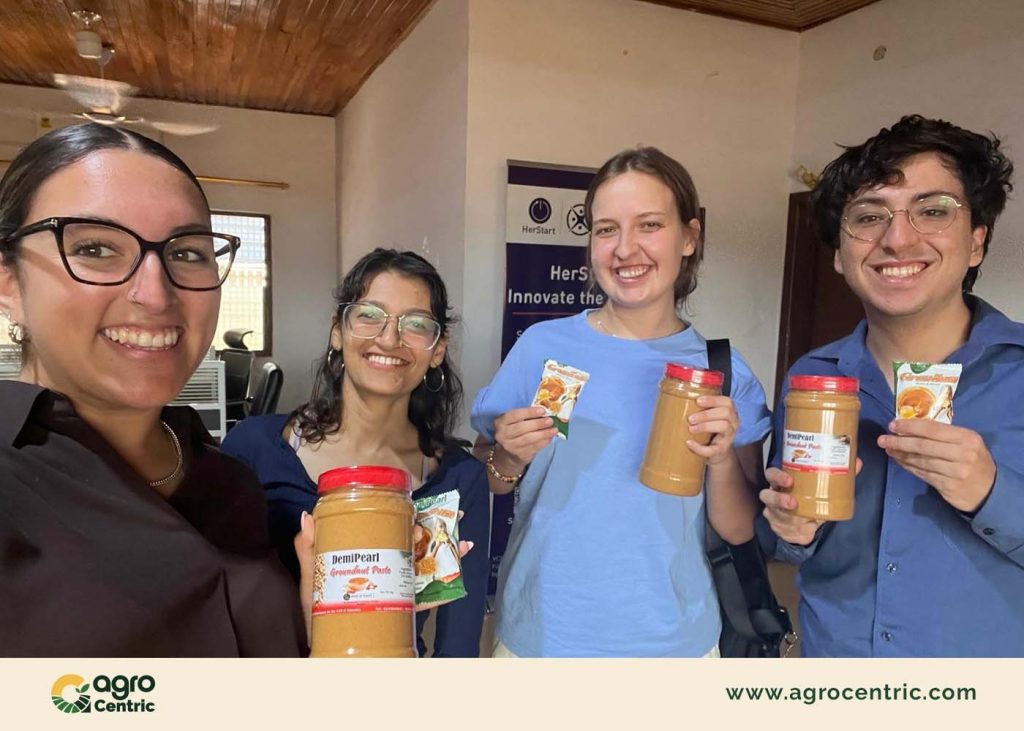
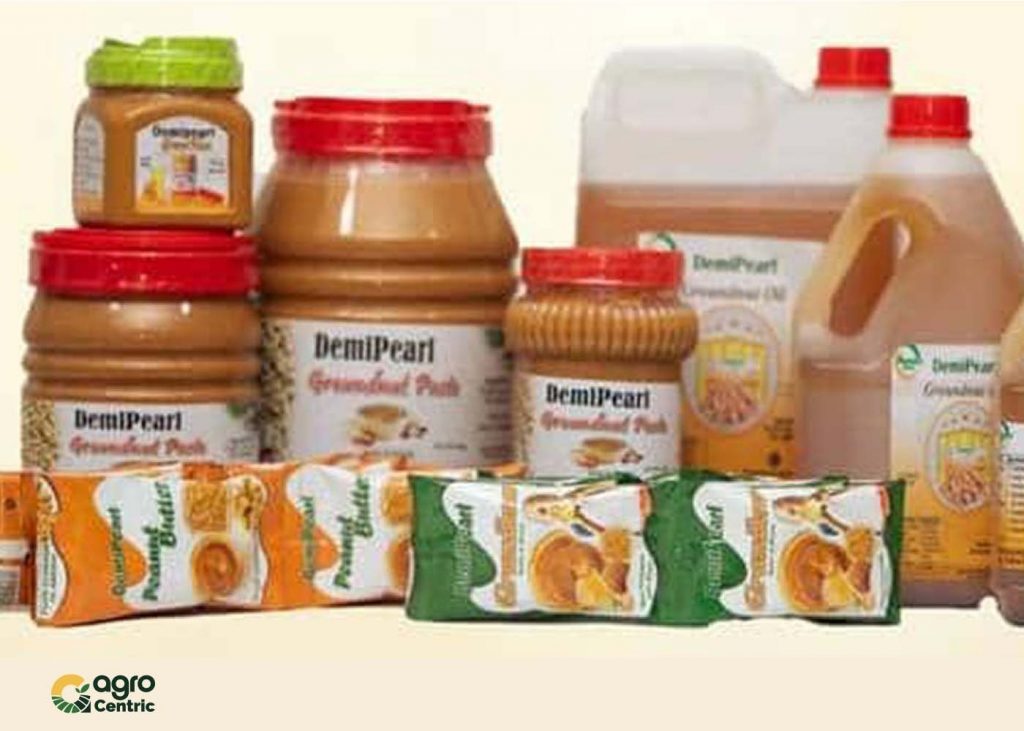
The $10,000 grant allowed us to buy three machines(200kg/hr roasting, peeling and milling machines) and establish our mini-factory. Following that setup, organisations like the UNDP, through the UNDP/ABSA/EMPRETECH challenge, Youth Challenge International, HOPin Academy, among other organisations, came on board to mentor us and build our brand. The Young African Works initiative under Mastercard provided a sorting machine through a matching grant, and the UNDP funded a packaging machine. Because of this, we can now package groundnut paste into 50g sachets, alongside Granihun, our blend of groundnut paste and honey.
Is groundnut paste the only product you offer, or have you diversified?
We have expanded significantly. Under our agro-processing wing, we focus on groundnut products. We currently offer eight distinct products: groundnut paste, crude groundnut oil, coated groundnuts, roasted snacks, granihun, and Yaji (groundnut powder is the residue after oil extraction, used for kebab grills, sauces and fried yams and also a healthy option for vegetarians).
We have also maintained our original roots; we still run a graphic design unit and an event catering division that handles decoration, pastries, and local drinks. Our vision is to be a leading brand of safe, healthy food products across Ghana and beyond.
Looking back, what were some of the biggest challenges you faced in the early days of building the business?
In the early days, finance was the very first hurdle because if you had no collateral, traditional banks would not look at you. I had to rely entirely on loans from family members when the need arose to enable me to push ahead.
The second major bottleneck was raw material consistency and supply. Initially, we bought raw groundnuts directly from individual farmers, but other commercial buyers would arrive with higher cash premiums and buy out the stocks before we could secure them. We would go to the field only to find nothing left, forcing us to pivot and partner with aggregators just to assure traceability and consistent supply. Even then, we often got bad nuts, meaning we had to do thorough sorting and struggle to explain to consumers why our premium price was slightly higher than the local market.
Thirdly, securing equipment was tough. Trying to compete with big, established brands that have excellent equipment and do frequent testing is a huge challenge for a small business coming up.
Finally, regulatory compliance caught me by surprise. I had no idea I would have to navigate the FDA, the Environmental Protection Agency (EPA), and taxes all at once. These processes are expensive and stressful; if you are not completely goal-oriented, you will give up.
What sets DemiPearl Company apart in an increasingly competitive market?
What sets us apart, first is consistency and customer relationships. We seek constant feedback from our customers and even have a dedicated WhatsApp platform for them. Most of the time, the clients don’t even have to call us; we do the calling ourselves to ensure everything goes right.
Secondly, we offer real value for money. Whenever clients point something out, we work on it quickly, improve the product immediately, and get back to them. Finally, our quality is being recognised far beyond Tamale; our Facebook pages show constant growth, which tells us we are truly winning consumer trust.
Beyond producing quality products, how do you ensure your business creates value for farmers, suppliers, women and the communities you work with?
We ensure we create value starting with the farmers. Initially, we bought directly from individual farmers, but they would often sell their stocks early to other buyers offering higher cash premiums. To solve this and ensure traceability, we partnered with aggregator companies like SMG Ghana and other FBOs, who work directly with networks of smallholder women farmers. These women do the hard farming work but struggle because transport costs make it difficult to carry products out of their villages to good markets. By working with aggregators, we pay these women upfront, meaning we grow together.
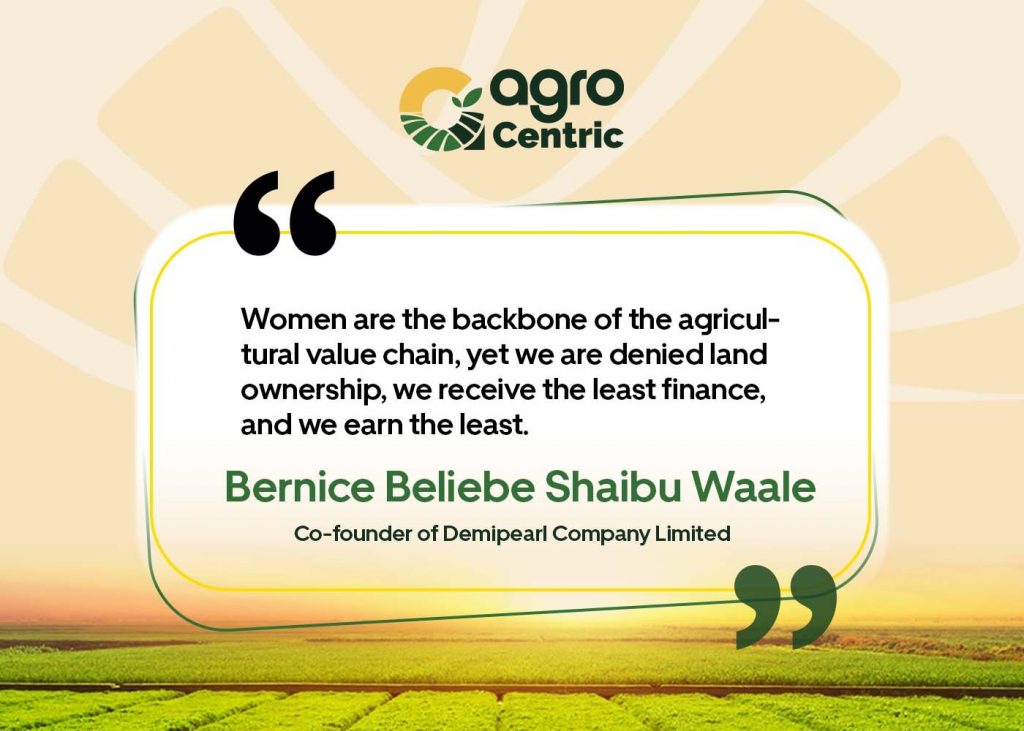
This structure allows us to give real dignity to women. Women are the backbone of the agricultural value chain, yet we are denied land ownership, we receive the least finance, and we earn the least. Because the man must always be recognised as the head and leader, many brilliant women are forced to hide their efforts behind their husbands.
We break this exclusion by ensuring our purchases directly empower these women with predictable, upfront cash flow. When you give a woman a direct livelihood, her dignity is seen, and she feels proud of her capacity. Beyond buying, we partner with FARIAD to provide free branding and packaging design to over 2,000 women processors. Currently, we are also giving skills training to 40 women, journeying with them step-by-step to ensure they establish fully sustainable businesses.
Let us talk about your journey as a beneficiary of the MEDA GROW2 Program. How did that relationship begin?
I am always searching for opportunities to grow. During a discussion with a fellow entrepreneur, I mentioned it to her, and she asked if I had connected with MEDA and gave me the contact information of their representative, Mr Eric Akurugu. I called him, pitched my business model, and two months later, a representative named Beatrice Ama Akyebi Aware conducted an on-site assessment of our operations to isolate our core challenges.
Before MEDA intervened, our transport logistics were expensive. We relied on hiring public tricycles to move groundnut products, paying no less than 70 Cedis per trip, which restricted our market distribution and exhibition presence. We also suffered from municipal water instability; when local taps randomly dried up, we lacked water storage, making it difficult to sanitise our machinery to FDA standards.
Finally, we had a batch-traceability problem. Because we printed product labels in bulk to save money, if we had leftover labels printed in January, we would reuse them on fresh badges produced in February or March to avoid waste. This meant our production and expiry dates were frequently inaccurate on paper.
MEDA addressed all. They installed a poly tank system, completely solving our factory water crisis. They provided a dedicated branded tricycle, which slashed our logistics costs and amplified our brand visibility across Tamale; people literally see our tricycle driving past and call us to buy paste. They supplied a digital stamping machine, enabling us to print accurate batch numbers, production dates, and expiry dates on every single container.
Furthermore, the MEDA program funded our upcoming television advertisement campaign on TV3 running from August to September. Through MEDA, I was nominated for the MTN/SMEGA SME Awards 2025. They also sponsored my participation at the Canada Africa Agri-Business Trade and Investment Forum (CAATIF 2026), which opened up our international export pathway. Beyond the forum, MEDA has onboarded our product catalogue on OneAfrica, a global e-commerce platform, to position us to sell across the world.
Beyond funding or technical assistance, what has been the most valuable lesson or mindset shift you’ve gained through GROW2?
The impact on my mindset has been profound. The Project Director, Mr Francis Essuman, alongside Mr Eric Akurugu, built so much confidence in me. When I first met them, they invited me to a program and asked me to pitch my business to a room of stakeholders. I had pitched before, but I had lost my confidence and felt uncomfortable with public speaking. I repeatedly told them I wasn’t ready, but they insisted and said, “Don’t worry, you can do it.” I stepped up, delivered the pitch, and the room loved the concept. That moment transformed me. I realised that because people believe in my vision, I cannot afford to fail them.
They structured real linkages for us, connecting us to professional auditors who manage our books, and partnering us with Pangea, an investment advisory firm that screens capital opportunities and guides us on which investments fit our growth cycles. MEDA taught me that there is no final destination in business growth; every time I attend their training, it exposes a whole new horizon of learning. They conditioned my mind to focus on one absolute law: the goal must be achieved.
You were one of the entrepreneurs featured in the Women in Trade Spotlight session during CAATIF. What did that experience mean to you?
At the initial stage, I was very tensed and I actually asked why they chose me. But looking back, I saw it as a very good platform to showcase my story and sell my brand out there. It was a great opportunity for me, and it is something that I do not take for granted at all.
Listening to me speak during that spotlight session actually inspired others. A woman approached me afterwards and confided that she was going through a very similar corporate and personal struggle and was on the verge of giving up. She told me that hearing how I turned my pain into a success story gave her hope and inspired her to stand on her feet and make bold decisions for a change.
What were your biggest takeaways from CAATIF 2026?
My biggest takeaway came from the session that captured dignified jobs, where I was called out to participate in a panel discussion. That session drew my attention to wanting to look beyond what I am currently doing to create even more local impact, empower more people, and support more women.
The panellists heavily emphasised the importance of not just employing people, but paying them well. It made me realise that creating truly dignified jobs is key to sustainable agribusiness growth.
Did that specific forum create immediate partnerships or customer leads for Demipearl?
Yes. I was able to partner with someone who wants to become a distributor and sell my products in her region. I also received an invitation to an upcoming exhibition by CTFM happening here in Tamale.
What inspires you to want to break into international markets?
My inspiration comes from two reasons: pride and economics. First, pride, because there are many Ghanaians abroad who are desperate for authentic, safe food from home. Yet, they pay so much for imported foreign brands when we grow the best raw materials right here. I want to meet them at that point of need.
Second, economics. Ghana loses so much money exporting raw materials. Foreign entities buy raw materials from us, add value to them, and then come back to sell them to us at much higher prices. We could easily do that value addition here, and export finished brands instead of commodities.
For a market like Canada, what specific opportunities and barriers did your research uncover?
From the research I did and the contacts I made at CAATIF 2026, I learned that Canadian citizens are very health-conscious, they have a large Ghanaian diaspora, and they are keen on eco-friendly packaging, which matches our aluminium foil sachet paste. I interacted with an entrepreneur who already exports there, and she gave me direct links on how to get ready. However, the technical barriers are very strict:
If you could deliver a direct message to policymakers, investors, and development partners today, what would it be?
My message is distinct for each group:
What are the priorities for the Demipearl company in the next 12 months?
Over the next 12 months, our focus is to take over the local market, ensuring DemiPearl becomes a household name for groundnut products across Ghana. By the next CAATIF forum, we plan to have started formal exports into Canada and the US, and to have taken over the Ghanaian market, as well as good International networks.
Do you have any final comments?
To AgroCentric, I want to say thank you. My final message is to the thousands of women out there who are suffering silently, feeling like all hope is lost: Hope is not lost, and help is out there. Keep going. It is not over. I owe this journey to the support of my family, my parents(especially my mum), my siblings, my husband, the entire MEDA growth team, my loyal customers and all the other organisations that have been part of our growth. My customers look at me and say, “Don’t stop. If you stop, what will we eat?” That single question keeps me moving on the hardest days. Special thanks also go to my spiritual father, Rev. Fr. Saaki, for his immense support, constant guidance and for being our number one fan. We love you all. Thank you
Bernice Beliebe Shaibu Waale’s journey proves that the ultimate measure of agribusiness inclusion is not just who participates on the field, but who captures the economic value of the harvest. To discover more about this enterprise, track their update on TV3 this August. To explore direct trade partnerships, connect with Bernice Beliebe Shaibu Waale and follow the official Demipearl Company Limited corporate page today.