Across Africa, agriculture is the backbone of livelihoods, yet many farmers still lack access to reliable, actionable data. As a result, critical decisions are often made based on instinct rather than the insights that the right data can provide.
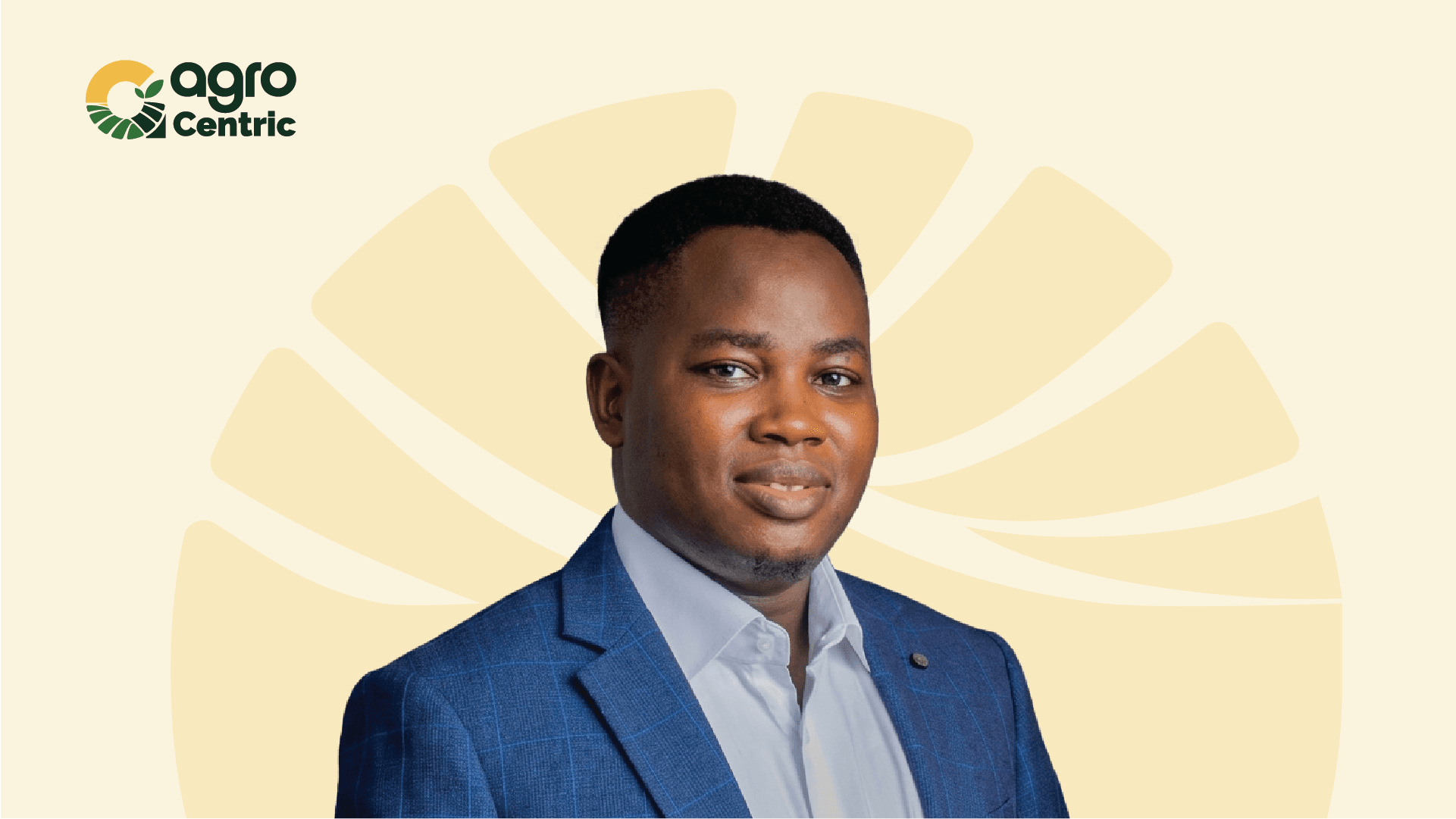
Olaoye Somide, founder of CipherSense AI, is working to change that. Drawing on years of experience at the United Nations and a Master’s degree in Artificial Intelligence, he is building technology designed specifically for African realities, creating tools that translate complex data into practical decisions for farmers and agribusinesses.
In this conversation with AgroCentric, he shares the real barriers to adoption, the lessons from building across multiple African markets, and why the future of farming may depend less on innovation itself and more on how it is delivered.
Who is Olaoye Somide? Let’s meet you.
My name is Olaoye Somide. I’m the Founder and CEO of CipherSense AI, an AI-focused company building solutions for African realities. CipherSense AI serves as the parent company for CropSense, our dedicated agricultural initiative. My journey began at the University of Nigeria, where I studied Geo-informatics and Surveying. I later earned a Master’s degree in Computer Science and Artificial Intelligence from Northumbria University in the UK, and most recently completed an MBA in Entrepreneurship and Innovation.
Professionally, I’ve worked across corporate environments and international organisations. I spent close to eight years with the United Nations before returning to Nigeria to build CipherSense AI.
Did your interest in agriculture come from your upbringing?
Not directly. I grew up in Abeokuta, in the city. But my grandparents were farmers, and I spent time with them growing up. During school holidays, I would follow my grandmother to the farm. When it was time for planting or harvest, she would travel to the village, and we’d go along to help.
I wasn’t actively farming; I never planted myself, but I was exposed to the environment early on.
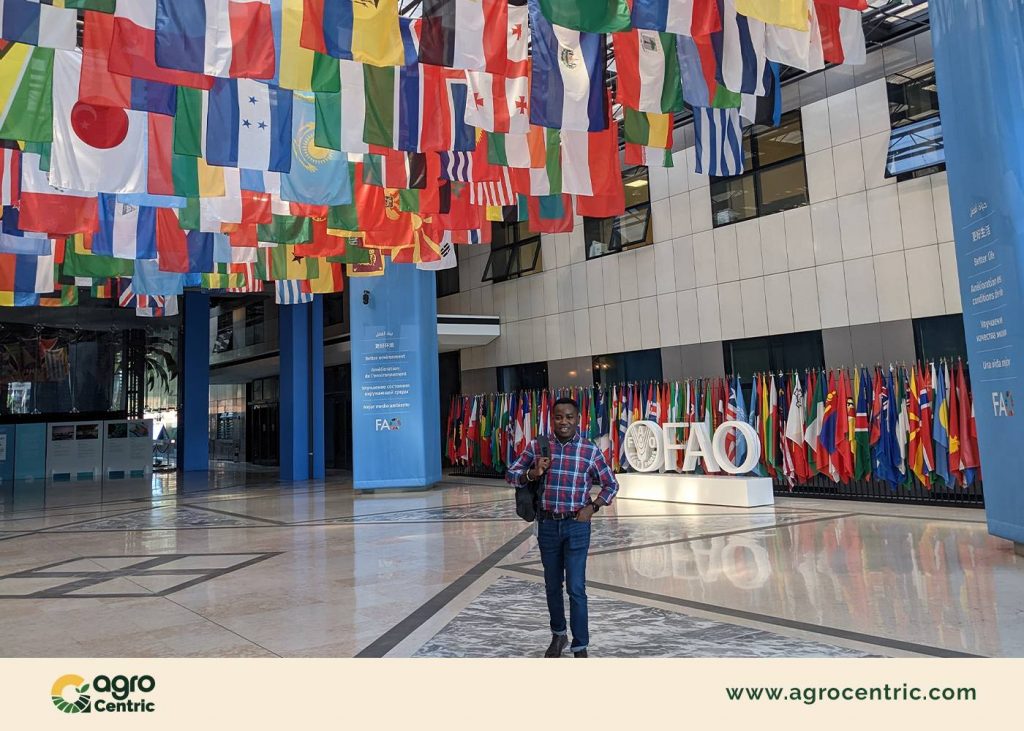
Later, while working with the United Nations, particularly the World Food Programme, I gained more structured exposure to food systems and agricultural livelihoods, which gave me firsthand experience in the fight for food security.
When did this shift from exposure to active interest happen?
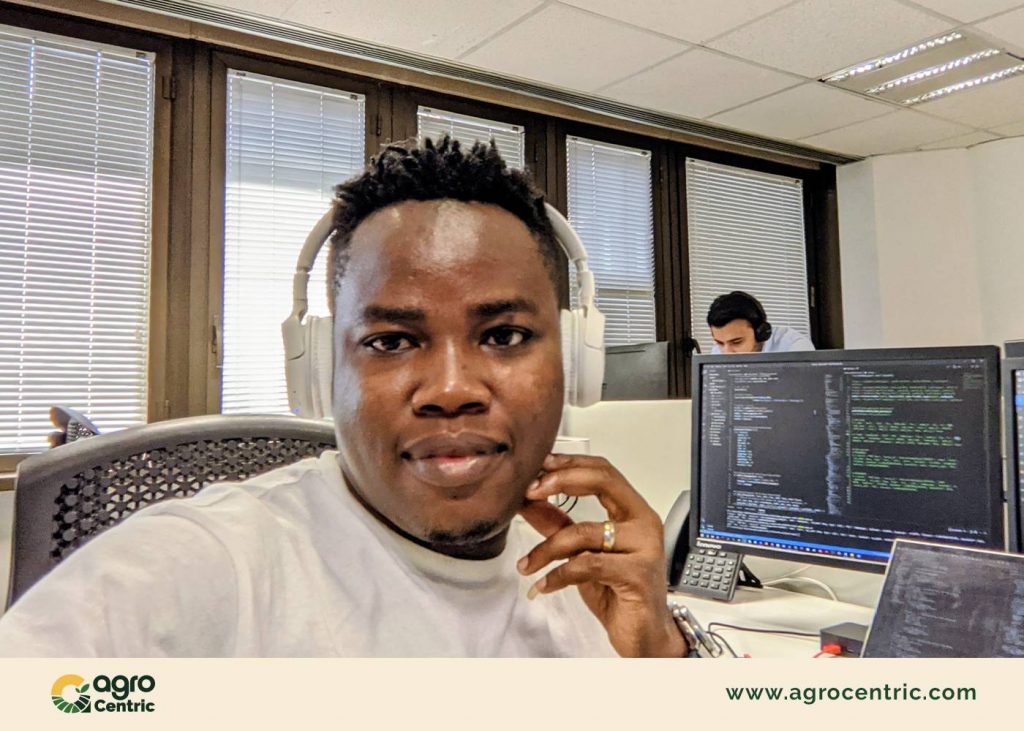
The real shift happened between 2023 and 2024 after I had returned to Nigeria. Food prices were skyrocketing due to inflation. During my MBA at Rome Business School, we examined a case study on agricultural crises in Africa. By combining those insights with my own research, I realised there was a massive gap where technology wasn’t being utilised effectively to address the food crises facing many African nations. My background in geo-spatial data and AI positioned me perfectly to address these challenges.
This revelation sparked a series of fundamental questions: Why aren’t our farmers using data? Why has precision farming remained out of reach for the average African grower?
That was the turning point; it became clear that data-driven agriculture doesn’t have to be complex. You need access to data, the ability to process it, and a way to deliver insights to farmers at scale.
Which came first, CipherSense AI or CropSense?
CipherSense AI came first, in late 2024. CropSense is our first product built under CipherSense AI to address agricultural crop challenges.
What specific issue pushed you to build CropSense?
The clarity didn’t just come from a classroom; it came from looking at what was happening on the streets of Nigeria. Between 2023 and 2024, food prices skyrocketed. I kept thinking about things as simple as tomatoes, something we used to plant casually in our backyards, suddenly becoming a luxury that many families could no longer comfortably afford.
At the same time, I was tracking global food security indexes, which showed a deeply concerning upward trend in food insecurity across Nigeria and the wider continent. It was a paradox: we have the land, but the systems are failing. I realised the missing link was that our smallholder farmers weren’t leveraging data. While precision agriculture exists globally, it hasn’t been adapted for Africa due to barriers in access and infrastructure. I saw a real opportunity to bridge this gap, not just for farmers, but for the entire ecosystem of exporters, insurers, and financial institutions. I built CropSense to turn complex data into the kind of simple, actionable insights that can actually put affordable food back on the table.
What were the early hurdles you faced when you began building CropSense?
At the beginning, a lot of my focus was on refining the idea. I spent time speaking with people in agribusiness, friends working in agricultural exports, farm managers, and others across the agricultural value chain, to really understand their pain points, especially around data, and two major challenges stood out.
The first was data availability; reliable agricultural data in Africa is still very limited, so in many cases, we had to build datasets ourselves, which naturally slowed down development.
The second challenge was distribution. We realised early on that reaching smallholder farmers directly would be difficult, not because they weren’t open to technology, but because access to digital tools and infrastructure is still limited in many rural communities.
That forced us to rethink our model, so instead of targeting farmers directly, we decided to leverage a distribution network of agribusinesses, cooperatives, extension agents, and financial institutions that already have trusted relationships with farmers. We’re able to make adoption much easier and ensure our insights actually reach the people who need them by taking advantage of these existing networks.
How exactly do you gather this data, and what did your first pilot look like?
As someone with a deep expertise in AI and data engineering projects, I have a deep technical foundation in sourcing, processing, and deploying large-scale datasets. I’m not just looking at the data from a business perspective; I understand the underlying architecture required to make it reliable and scalable.
We built data pipelines that pull information from multiple sources. One of our biggest sources is satellite imagery, which helps us monitor farmland conditions. We also integrate weather data and market intelligence to track things like crop pricing and broader market trends in real-time. We then fuse all of that data through our AI models to generate insights that are actually useful for decision-making.
Our first pilot actually came through an unexpected channel. An agronomist in rural Tanzania found us on Instagram and reached out. We gave him a demo, and he was particularly interested in our nutrient mapping, irrigation insights, and satellite-based farm analytics. He eventually onboarded and started using the platform to advise farmers in his network. That pilot was a big validation moment for us because it showed that the demand existed beyond Nigeria.
Since then, we’ve worked with agribusinesses to help them make better decisions around crop selection, input optimisation, and reducing operational costs.
Beyond Tanzania, where else have you operated?
Our goal is pan-African, and we collect data across the continent, but we’ve actively worked in six countries, including Tanzania, Malawi, Kenya, South Africa, Nigeria, and Egypt.
Are there differences in adoption across regions?
Yes, there are clear regional differences. For example, in East Africa, particularly places like Kenya and Tanzania, adoption tends to be higher. A big reason for that is early exposure to agricultural technologies through NGOs and development programmes, which helped build awareness and trust over time.
While in West Africa, especially Nigeria and Ghana, adoption is still relatively lower, and the barriers can look different. The agricultural challenges also vary by region. For example, East Africa tends to face more drought-related risks, while other regions may deal with different climate, conflicts, or infrastructure challenges.
Those differences matter because they influence how we approach each market. You can’t apply the same strategy everywhere; you have to understand the local realities and adapt accordingly.
You mentioned cooperatives and banks. Can you share a success story of how you’ve helped these organisations beyond individual farms?
On the cooperative side, we’ve worked with cocoa farmers in Ondo State to help map farm locations and distribute AI-driven insights across their network of farmers. Instead of working with individual farmers one at a time, cooperatives allow us to scale insights much faster because they already have established relationships with their members.
On the financial side, we recently launched an AgFinTech product called YieldRank (an Agricultural Credit Scoring System) to solve a major challenge banks face when lending to farmers. A lot of financial institutions are hesitant to finance farmers because many of them don’t have formal financial records or traditional credit histories. What YieldRank does is assess farmers based on alternative data points like historical yield, farm size, and production capacity rather than just their bank statements.
So, for example, if we can show that an individual farmer consistently produces 100 tons of cocoa yearly, that gives banks more confidence and helps reduce the perceived risk of lending to them. It creates a win-win situation, farmers get better access to capital, and financial institutions can make more informed lending decisions.
What kind of practical feedback are you getting from agribusinesses?
The feedback has been very positive because we’re solving a very immediate problem, cost savings. For example, one of our most valuable tools is our soil fertility mapping. Within about an hour of onboarding a farm, we can generate a fertility map that shows exactly where fertiliser is needed and where it isn’t. That helps farmers avoid over-applying inputs, and we’ve seen cases where fertiliser budgets dropped from about ₦1 million to ₦400,000, or even ₦200,000 in some cases.
We also provide up to seven-day weather forecasts that help farmers plan better and reduce losses caused by unexpected weather changes. Another big piece of feedback we got early on was that many farmers didn’t want complicated dashboards or platforms. So we simplified access by building a WhatsApp AI Agent that allows farmers to interact with our AI in local languages like Yoruba, Igbo, Hausa, Zulu, and Swahili. That has made adoption much easier because we’re meeting people on platforms they already use every day.
Currently, we work with nearly 100 agribusinesses across Africa, and the primary reason they remain with us is straightforward: we help them save money and make better decisions more quickly.
What are the policy gaps you’ve identified that the government needs to address?
Connectivity is probably the biggest issue; many farmers are in remote areas with limited or no network coverage, which makes deploying technology much more challenging than it should be. If governments can expand broadband and fibre-optic infrastructure into underserved communities, it would significantly improve adoption.
Security is another major issue; in many regions, farmers are dealing with insecurity that affects their ability to focus on productivity. Before you can talk about scaling agricultural output, farmers need to feel safe enough to operate consistently.
On a continental level, policy harmonisation also needs improvement. Initiatives like the African Continental Free Trade Area are promising, but cross-border business operations across Africa are still far too complex. It should be much easier for African businesses to scale across the continent.
What is your five-year dream for CropSense, and how can AgroCentric readers support this?
Over the next five years, our goal is to impact millions of farmers across Africa and expand into 20 to 25 African countries. We want CropSense to become the data infrastructure layer for African agriculture, the bridge where banks, NGOs, agribusinesses, exporters, and other stakeholders can access the insights they need to make better decisions and deploy capital more effectively.
At the core of that vision is helping farmers become more productive, more profitable, and more resilient. We’re also very open to partnerships because scaling something like this requires collaboration.
And since AgroCentric has a strong audience within Africa’s agricultural ecosystem, we’d love for your readers to connect us with the right partners, whether that’s agribusinesses, cooperatives, investors, financial institutions, or policymakers who believe in transforming agriculture across the continent.
Finally, if you could share one message with every smallholder farmer in Africa, what would it be?
For too long, we’ve associated being a smallholder farmer with poverty, and that mindset needs to change. Today, farmers often do the hardest work in the value chain, yet they earn the least. A large share of the profits typically goes to off-takers, exporters, and logistics providers, while the farmers themselves are left with very little. That imbalance has to be addressed.
I also want to see more young Africans enter agriculture, but that only happens when farming becomes more attractive, profitable, and scalable.
Technology can play a huge role in making that possible. Farming shouldn’t be seen as a last resort; it should be viewed as a serious business opportunity for the next generation of African entrepreneurs. And ultimately, farmers deserve to earn more from the value they create.
The future of agriculture in Africa will not be defined by technology alone, but by how effectively it reaches the people who need it most. Through CropSense AI, Olaoye Somide is building more than a product; he’s contributing to a system where farmers, agribusinesses, and institutions can make informed decisions at scale.
To learn more about Olaoye Somide’s work and follow the journey of CropSense AI, connect with him on LinkedIn and explore how data-driven solutions are shaping the future of agriculture in Africa.