Despite decades of oil dependence, agriculture remains a central pillar of Nigeria’s economy. It sustains rural livelihoods, anchors non-oil economic activity, and contributes significantly to national output.
In 2024, agriculture accounted for nearly 24 per cent of Nigeria’s Gross Domestic Product (GDP), making it the most significant contributor outside oil. It is also a major source of employment, engaging roughly one-third of the country’s workforce in farming and agri-food value chains (World Bank, 2024).
Within this vast agricultural landscape, high-value export crops play an increasingly critical role. While they occupy relatively small land areas compared to staples such as maize or cocoa, these commodities generate higher returns per hectare, support foreign exchange earnings, and feed into agro-processing industries.
Among these, ginger has long been one of Nigeria’s most distinctive and valuable export crops, prized globally for its sharp aroma, pungency, and high oleoresin content.
For smallholder farmers in Nigeria’s Middle Belt, particularly in southern Kaduna, ginger has not just been a crop but a source of identity and economic stability. Its history in the country dates back to the early 20th century, when the spice was discovered and gradually integrated into non-oil export markets.
By the mid-20th century, Nigerian ginger had secured a place in international warehouses and kitchens across Europe, the Middle East, and North America, where buyers recognised its quality and were willing to pay premium prices.
Yet within a few decades, what was once a symbol of agricultural opportunity began to unravel. The Nigerian ginger story is both a cautionary tale and a blueprint for recovery.
It illustrates how biological risks, weak seed systems, and fragile market structures can topple a high-value crop, and what it will take to rebuild a sustainable, profitable industry.
For years, Nigerian ginger occupied a distinct place in the global spice trade. It was not the largest in volume, but it stood out for quality. Buyers recognised it for its sharp aroma, high oleoresin content, and strong pungency, qualities that made it valuable for food processing, pharmaceuticals, and essential oil extraction.
From warehouses in Kaduna to export destinations across Europe, the Middle East, and North America, Nigerian ginger built a reputation that translated into premium pricing and stable demand.
Yet within a few years, that reputation began to erode. Production collapsed in key growing regions, exports declined, and farmers abandoned fields that once sustained entire communities.
What happened to Nigeria’s ginger industry is not a mystery rooted in speculation or conspiracy. It is a case study in how biological risk, weak seed systems, and fragile market structures can unravel an agricultural value chain, and what it will take to rebuild it.
For years, Nigerian ginger occupied a distinct place in the global spice trade. Unlike higher-volume producers in Asia, Nigeria’s ginger was about quality rather than quantity. Buyers valued it for its aroma, pungency, and oleoresin content, the natural oil and resin that gives ginger its sharp flavour.
This made it highly sought after for food processing, pharmaceuticals, and essential oil extraction.
By the early 2010s, ginger had emerged as one of Nigeria’s most crucial spice exports. It generated approximately $48.42 million in export revenue, capturing 7.33% of the global market. Southern Kaduna, with its well-drained soils, moderate rainfall, and favourable temperatures, became the country’s production hub.
Two main ginger varieties dominated the landscape:
These varieties defined Nigeria’s global reputation, helping smallholder farmers secure a steady income while sustaining local supply chains.
However, the system underpinning this success was fragile. Production expansion was market-driven rather than structurally supported. Farmers responded to global demand without corresponding investment in inputs, infrastructure, or agronomic guidance.
Nigeria’s ginger boom exposed the vulnerabilities of informal agricultural systems:
These weaknesses remained invisible during the boom years. Once disease pressure increased, however, the system had no buffer.
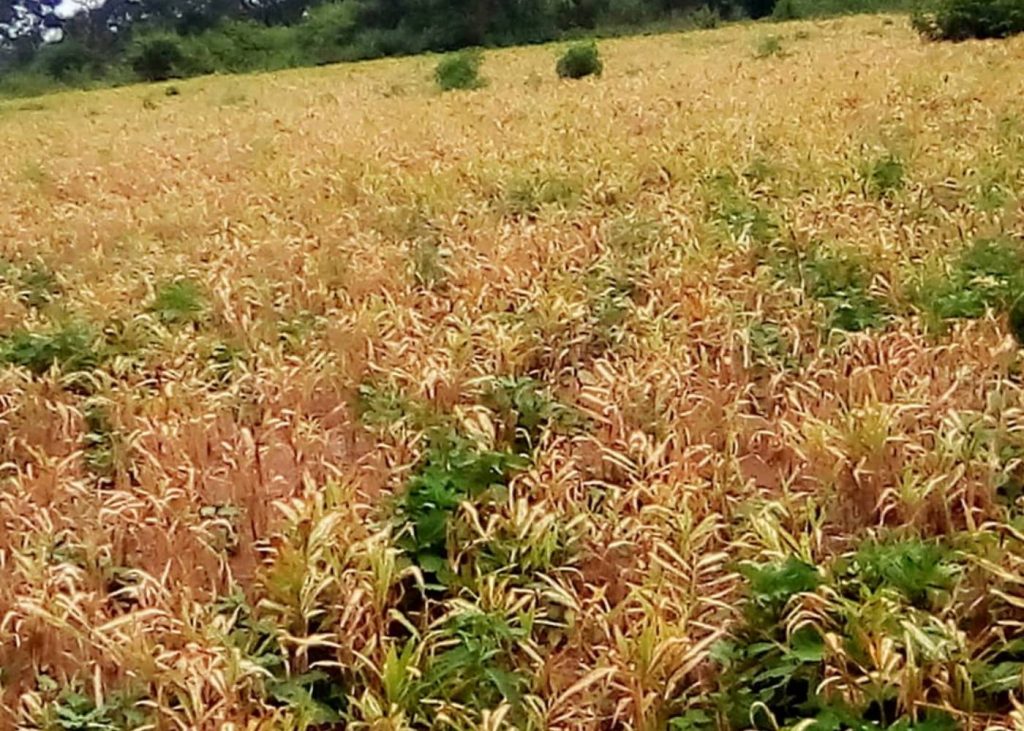
Between 2016 and 2017, farmers in Kaduna State reported widespread crop failures. Symptoms included yellowing leaves, rotting rhizomes, and stunted growth. Entire fields were lost in some cases.
Because infected rhizomes were unknowingly reused as planting material, the disease spread rapidly. Within a few seasons, ginger blight devastated production across major growing belts.
The consequences were severe:
This was not merely a biological failure; it was systemic. A combination of informal seed systems, inadequate extension support, and weak disease surveillance amplified the impact.
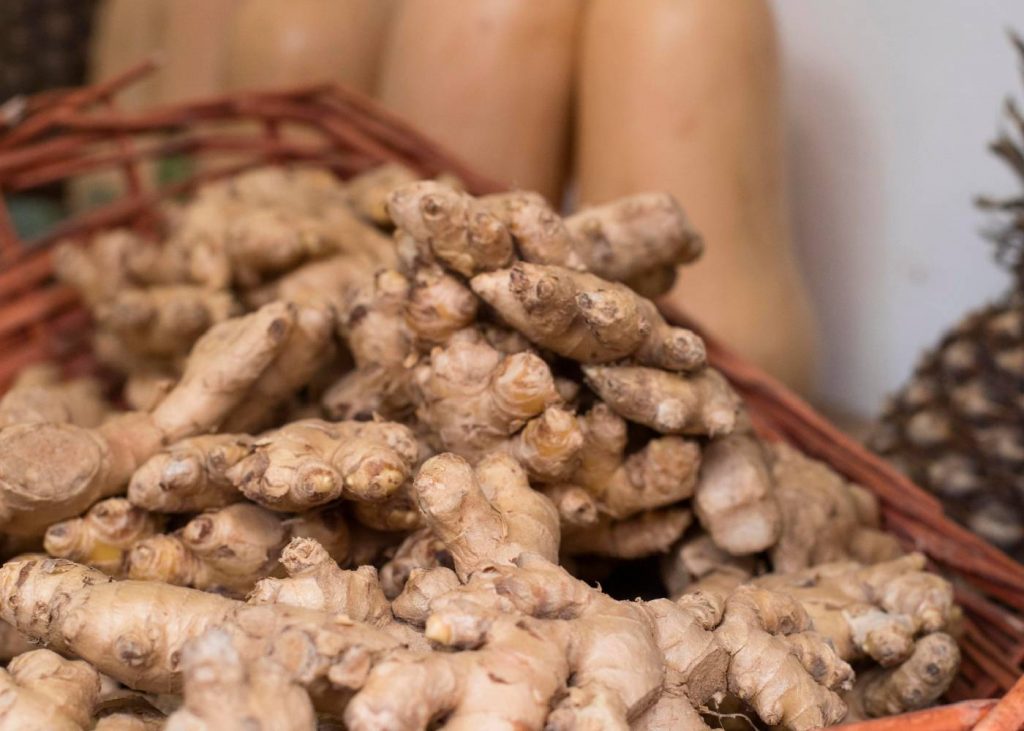
As production declined, local ginger scarcity drove prices higher, but higher prices offered little relief to farmers with no harvest. Exporters faced even greater challenges: inconsistent supply, declining quality, and uncertainty made it difficult to fulfil contracts.
Global buyers turned to alternative suppliers. Countries like Ethiopia and China expanded their presence in markets once dominated by Nigerian ginger. In commodity trade, reliability matters as much as quality, and Nigeria lost both in a short span of time.
With Nigerian ginger scarce, imports, mainly from Asia, flooded local markets. These rhizomes were visually appealing: larger, smoother, and uniform. Yet many consumers noticed a difference in flavour and aroma.
Speculation arose that Nigerian ginger had been genetically modified or that new seeds had altered its quality. There is no scientific evidence to support these claims. Instead, quality decline stemmed from:
The decline in aroma was biological, not genetic.
Beyond statistics, the ginger crisis had profound social and economic effects. For many households in southern Kaduna, ginger was more than a crop; it was a primary source of income.
The collapse resulted in:
The crisis highlighted the fragility of rural livelihoods when agricultural systems fail.
Government agencies, research institutions, and development partners intervened with:
These diagnostic initiatives often involved surveying infected fields, testing diseased rhizomes, and attempting to isolate causal pathogens such as fungal blight and tuber rot. The goal was to equip farmers with information on symptoms and disease progression so they could take action.
For example, through government-led initiatives like the Ginger Recovery Advancement and Transformation for Economic Empowerment (GRATE) fund, agricultural inputs were provided to several thousand smallholder farmers in southern Kaduna.
While helpful, these efforts did not address root causes. The absence of a robust, nationwide seed system meant disease management had limited impact. The lesson is clear: short-term interventions without systemic reform cannot sustain recovery.
Recovery will require coordinated action across the value chain, which includes:
Recovery will not be immediate; ginger production cycles and seed regeneration take time, but slow, deliberate recovery is preferable to repeating past mistakes.
The ginger crisis offers lessons for other vegetatively propagated crops like cassava, yam, and plantain:
Nigeria’s agricultural policies must prioritise resilience, systems, and sustainability, not just market-driven expansion.
Beyond policies, markets, and production data, the ginger crisis is best understood through farmers’ experiences. In our conversation with Samaila, a ginger farmer in southern Kaduna, he shares:
Nigeria’s ginger industry is not beyond recovery. The crop remains suited to local agroecological conditions, and global demand for spices continues to grow. By addressing systemic weaknesses, the sector can rise again and reclaim its position as a global leader in high-quality spice production.