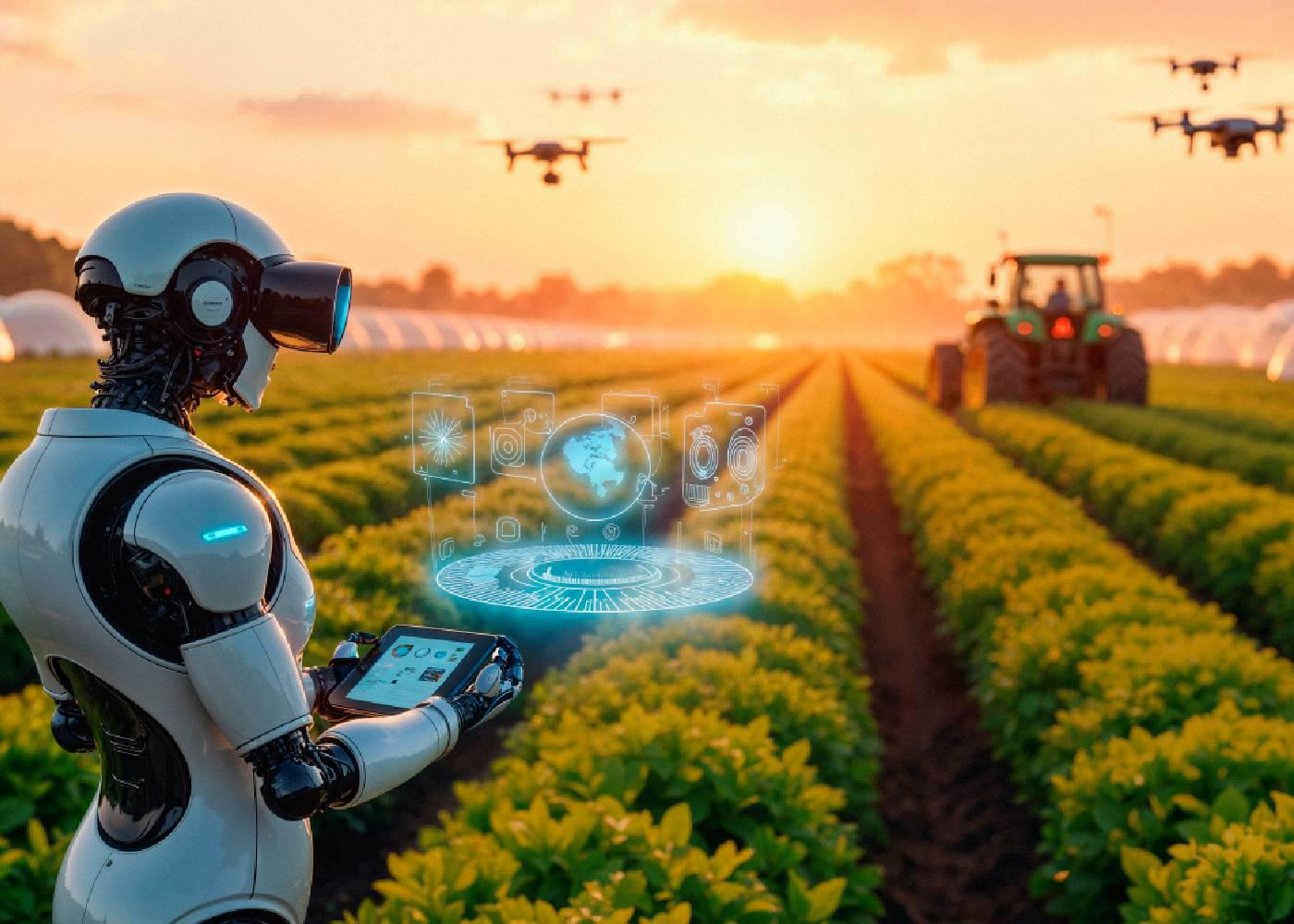
As of 2025, Africa’s agricultural sector is at a turning point that can drive economic transformation amidst rapid population growth, urbanisation, and climate challenges.
The African Development Bank (AfDB) has projected that Africa’s food and agribusiness sector will reach $1 trillion by 2030. This is because the Agriculture sector has been more effective in reducing poverty compared to growth in other sectors.
Market trends in Agriculture show an increasing focus on sustainable practices, agritech innovation, and value-chain integration, all of which contribute to job creation, poverty reduction, and the development of resilient food systems in the face of global supply chain disruptions.
Africa thus presents an attractive frontier for investors seeking returns and positive socio-economic impact.
What are Smart agricultural investments?
Smart agricultural investments are targeted, innovative, and sustainable investments in the agricultural sector. They employ advanced technologies, climate-resilient practices, and efficient value chains to enhance productivity, food security, and economic growth.
These investments include the use of innovations such as digital farming tools, precision agriculture, climate-smart techniques like drought-resistant seeds and sustainable irrigation, biotechnology for improved crop varieties, and inclusive financial services that enable farmers to access credit and inputs more effectively.
In Africa, smart agricultural investments are significant for transforming traditional subsistence farming into modern, technology-driven, and investment-friendly agri-food systems. Smart agricultural investments improve agricultural yields, profitability, and address challenges of climate change, food insecurity, and market access barriers.
7 Smart Agricultural Investments in Africa for 2026
Agricultural investments in Africa present smart and profitable opportunities, including:
1. Climate-Smart and Sustainable Farming
Climate-smart agriculture is crucial for Africa due to the unpredictable weather patterns and recurring droughts that threaten crop yields. Investments in climate-smart agriculture focus on sustainable practices, such as conservation tillage, drought-resistant crop varieties, and integrated pest management, which reduce environmental impact while improving productivity. H.E. Prof. Muhammadou M. O. Kah, AATF Board Trustee, at a high-level roundtable convened by the African Agricultural Technology Foundation (AATF), emphasises that “Investing in advanced, climate-smart agricultural techniques and technologies offers a high-impact opportunity to drive Africa’s food security and growth. Such investments not only help farmers adapt to a rapidly changing climate but also build resilience against recurring famines. These changes can trigger and create both social and economic returns for investors.”
2. Agritech and Digital Farming Solutions
Africa’s agritech sector is booming, with digital farming solutions and technology like AI-driven crop diagnostics, mobile-based financial services, and drone-enabled monitoring helping increase farm incomes by 45% and productivity by 35%. Investments in agritech startups surged 65% in 2023, fueling this transformation. Examples include:
AI and IoT: Hello Tractor utilises IoT-enabled “Uber for tractors” to serve over 500,000 farmers, reducing costs by 40%.
Drones: Kenya’s Astral Aerial deploys drones for spraying and mapping, boosting yields by 15-20%.
Fintech: Platforms like Kenya’s Twiga Foods integrate financing, reaching 100,000+ smallholders with credit via mobile money.
Ndemo Bitange, CEO of Kenya-based FarmDrive (an AI lending platform), states: “Agritech delivers 3-5x ROI within 2-3 years through data-driven efficiency. Investors see 20-30% returns as platforms scale, with AI reducing loan defaults by 50% and unlocking $100 billion in untapped farmer credit.”
3. Agro-Processing and Value Addition
Agro-processing is the process of transforming products originating from agriculture, forestry, and fisheries into finished products, creating higher value and generating jobs locally. Investments in food processing infrastructure, such as cold chains and packaging facilities, are growing at a rate of 30%, supporting sectors like dairy, which expand at a rate of 22% annually. This shift responds to expanding domestic and regional markets, with expected significant returns. Nigeria’s investment in agro-industrial processing zones is projected to yield an internal rate of return (IRR) of 18.7% and a net present value (NPV) of $75.6 million.
4. Livestock and Aquaculture
There is a steady demand for livestock and aquaculture in Africa’s urbanisation. Africa’s meat consumption is set to rise by 200% by 2050. Innovations include advancements in vaccine development and improvements in feed efficiency for poultry and cattle.
Investments in livestock breeding, feed production, and disease control improve productivity and meat quality. Aquaculture is a promising sector that is expected to help sustainably fill protein supply gaps. These sectors are bolstered by innovations in disease diagnostics and feed efficiency, which reduce import dependency and boost local economies.
5. Speciality Crops and Export Farming
High-value export crops, such as cocoa, coffee, and horticulture, remain attractive for investment due to their lucrative global markets. Strategic investments in infrastructure and improved seed varieties support yields and quality. Nigeria’s $3.14 billion agricultural investment plan targets cassava, maize, and tomato value chains, aiming to close production gaps and boost exports, directly benefiting over 420,000 farmers and nearly 3 million people indirectly.
6. Large-Scale Commercial Farming and Land Utilisation
Africa holds nearly 600 million hectares of arable land, with only a small portion of it cultivated. Large-scale commercial farming offers a huge potential for production growth and export expansion, with private and foreign direct investments fueling mechanisation, irrigation, and supply chain development. However, challenges such as land tenure issues and environmental impact need to be urgently addressed for sustainable growth. Private players, such as Morocco’s OCP Group, are expanding fertiliser-integrated farms. OCP Africa operates with an end-to-end ecosystem approach, which includes soil testing and mapping, the development of customised fertiliser formulas for local crops, and providing training/financing support to smallholder farmers, a direct form of fertiliser-integrated farming support.
7. Financial Services and Input Supply Chains
Access to finance remains a bottleneck for farmers; therefore, agri-finance solutions, microcredit, and digitisation of input supply are key investment areas. Collaborations, such as the Bank of Agriculture and Afreximbank’s $1 billion financing program, exemplify efforts to shift smallholders into profitable commercial farming. Mr Ayo Sotinrin, Head of Bank of Agriculture, said, “This is more than just a fund; it is a bold commitment to ensuring our nation’s food security and sustainable agribusiness growth”.
Challenges and Risks
Despite strong opportunities, agricultural investments face risks, including:
Climate change effects and drought frequency
Policy and regulatory uncertainty across countries
Poor infrastructure and logistical challenges hamper market access
High costs and digital literacy gaps for technology adoption
Land ownership disputes and environmental sustainability concerns
Strategic financial support, public-private partnerships, and capacity building are crucial to scaling these investments across the continent, thereby fostering sustainable development and resilience in African agriculture by 2026 and beyond.
Despite challenges like climate risks and infrastructure gaps, targeted investments are opening new market potential across the continent.